Fold equity in poker is the value a bet gains from the possibility that an opponent folds. When you bet, you may win the pot immediately without showing down the best hand. That fold branch can make a bluff or semi-bluff profitable even when the same hand would not want to call a bet.
Fold equity is not a guaranteed amount and it is not simply the percentage of hands an opponent might fold. Its value depends on the pot you win when they fold, the size you risk, how often the fold happens, and what your hand is worth when called.
Use fold equity as a post-session model. Reconstruct the pot and bet exactly, estimate a continuing range rather than one hidden hand, and test more than one fold assumption. The calculation can show what your bet requires; it cannot know an opponent's response with certainty.
What does fold equity mean in poker?
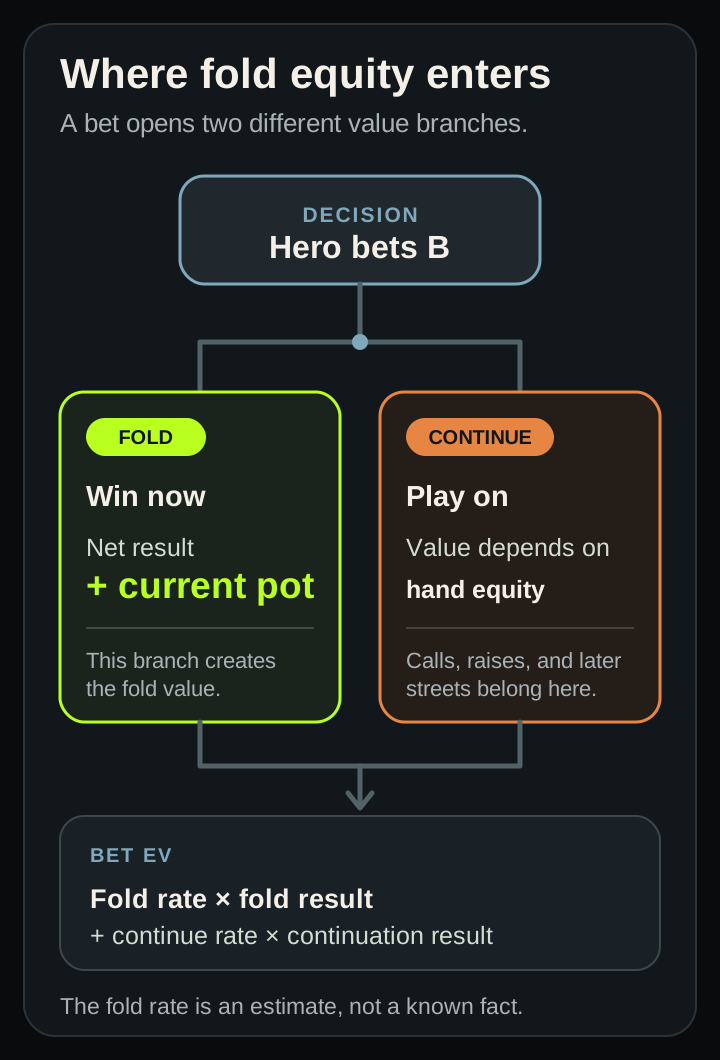
Fold equity describes the expected value created by folds. A bet has two main branches: everyone folds and you win the pot already in the middle, or at least one opponent continues and your cards, their range, and later action determine the rest of the value.
This is why betting differs from checking. A check keeps your hand's chance to win at showdown, but it cannot win the current pot immediately. A bet combines that card equity with the chance of ending the hand now. The fold branch is useful only if the opponent can realistically release enough of their range.
Separate the idea from the estimate. The existence of a fold option creates fold equity. How much exists in one spot depends on the opponent's range and response, so the percentage is an assumption to test rather than a fact produced by your bet size.
What is the break-even bluff formula?
For a heads-up river bluff with no chance to win when called, the break-even fold rate is bet divided by pot plus bet. If P is the pot before your wager and B is the amount you bet, use B ÷ (P + B). This finds how often the opponent must fold for the bluff to have zero immediate expected value.
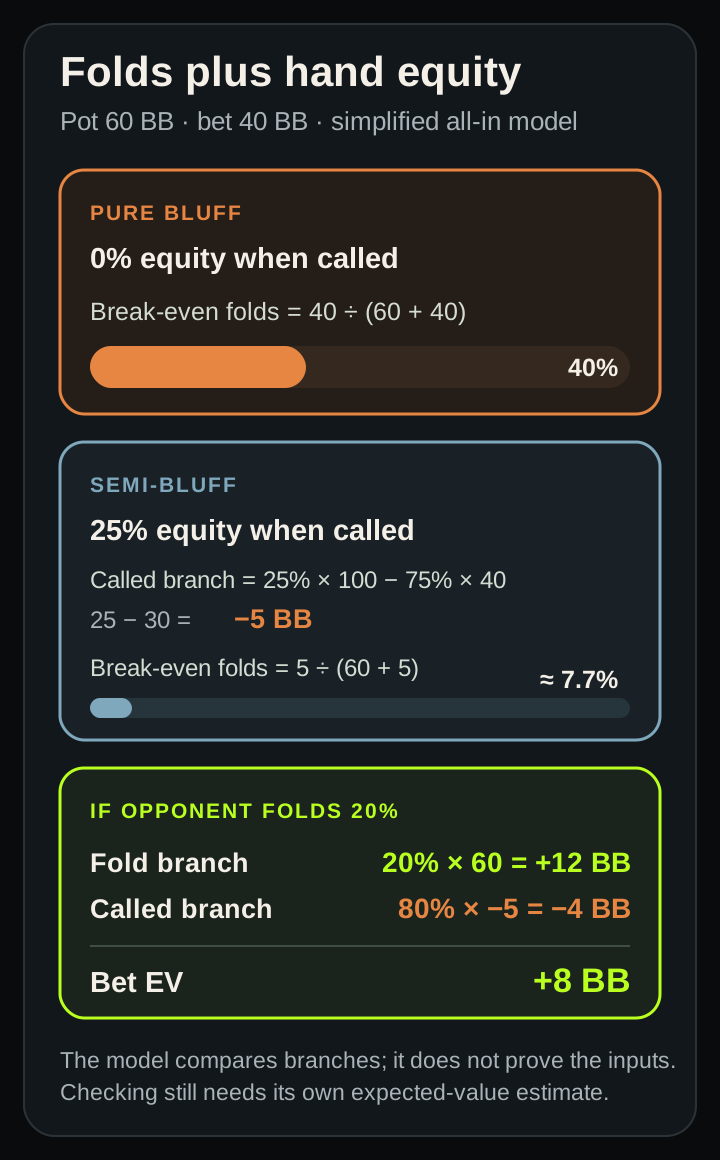
Suppose the pot is 60 big blinds and you bluff 40. You risk 40 to win the 60 already there, so the break-even fold rate is 40 ÷ (60 + 40), or 40 percent. More folds make the pure bluff profitable in this simplified model; fewer make it lose.
Do not include your own 40 as part of the amount won when the opponent folds. Your wager returns to you along with the pot, so the net reward is the 60 that was already available. Mixing gross chips returned with net profit is a common reason the threshold is calculated incorrectly.
Is fold equity the same as fold percentage?
No. Fold percentage is an estimated frequency: how often the opponent releases their hand. Fold equity is the value that those folds contribute to the bet. The same 30 percent fold estimate is worth more when the existing pot is 100 big blinds than when it is 10 big blinds, before accounting for the different amount at risk.
Players often use the phrase loosely to mean 'they may fold.' During a careful review, write the components separately: estimated fold rate, pot before the bet, wager size, and equity when called. That makes the model inspectable and prevents one vague phrase from hiding four assumptions.
How does hand equity combine with fold equity?
A semi-bluff can improve or may already beat part of the calling range, so it does not lose the full bet every time it is called. One simplified model is: bet EV = fold rate × current pot + call rate × called-branch EV. The call rate is one minus the fold rate.
For the called branch, use hand equity × (pot + bet) minus losing share × bet. This is the net result after a call: when you win, your profit is the old pot plus the opponent's matching call; when you lose, your own bet is gone. The model assumes no further betting, so it is cleanest on the river or for an all-in decision.
Earlier in a hand, future actions affect how much equity you actually realize. A draw can face another bet, make a visible card that changes action, or win less than the current model implies. Use the formula as a controlled comparison, not a promise about a multi-street outcome.
What is a complete fold-equity example?
Return to the 60-big-blind pot and 40-big-blind bet. First treat the hand as a pure bluff with zero equity when called. The fold branch wins 60 and the call branch loses 40, so the opponent must fold 40 percent of the time to break even.
Now suppose a simplified all-in model gives the betting hand 25 percent equity against the range that calls. When called, its net value is 25 percent of the 100 it can win minus 75 percent of the 40 it can lose: 25 minus 30, or negative 5 big blinds. Because a call now costs 5 in expectation rather than the full 40, the bet needs only about 7.7 percent folds to reach break-even in this model.
If the opponent folds 20 percent, the fold branch contributes 0.20 × 60, or 12 big blinds. The called branch contributes 0.80 × negative 5, or negative 4. Add the branches and the bet has an expected value of positive 8 big blinds before any omitted future-street effects.
That result does not prove betting is best. You still need the expected value of checking and a credible reason for the 25 percent equity and 20 percent fold estimates. The example shows how folds and card equity combine; it does not turn guesses into measured frequencies.
How do you estimate whether an opponent will fold?
Start with the range that reaches the decision. Remove hands that conflict with the recorded preflop and postflop action, then divide what remains into likely folds, calls, and raises. Do not begin with the fold rate you need and work backward to a convenient story.
Ask which better hands your bet can actually fold. If only missed draws release and your hand already beats those draws, the immediate folds may add less value than they appear to. If a size folds medium-strength made hands that currently beat you, the fold branch has a clearer target.
Use sensitivity checks. Calculate the bet at a conservative fold estimate, a middle estimate, and a generous one. If only the generous version works, the bluff depends on a fragile read. If several reasonable versions work and the check branch is weak, the betting case is more resilient.
How does bet size change fold equity?
A larger bet risks more, so a zero-equity bluff needs more folds. Into a 60-big-blind pot, a 30-big-blind pure bluff needs 30 ÷ 90, or 33.3 percent folds. A 60-big-blind bluff needs 60 ÷ 120, or 50 percent folds.
The harder question is whether the larger size actually creates enough additional folds to pay for the extra risk. Some parts of a range fold to either size, while stronger bluff-catchers may continue against both. Estimate how the continuing range changes instead of assuming a larger wager automatically buys the folds it needs.
Size also changes the called branch. A larger bet can win more when a strong draw improves or a made hand remains ahead, but it loses more when the hand fails. Evaluate the full tree rather than choosing a size from the fold threshold alone.
How does fold equity change in multiway pots?
In a multiway pot, a bluff wins immediately only if every remaining opponent folds. If one player folds but another calls, the immediate-win branch does not happen. That makes the combined response more demanding than beating one range.
For a simple illustration, if two opponents each folded half the time and their choices were independent, both would fold one quarter of the time: 0.5 × 0.5. Real decisions are not necessarily independent, and the ranges that reach a multiway street may be stronger, so do not borrow the 25 percent result without rebuilding the actual spot.
Also account for players yet to act. A bet that pressures the first player may still run into a strong range behind. Record every active seat during review so a heads-up formula is not quietly applied to a three-way decision.
What are the most common fold-equity mistakes?
The first mistake is treating fold equity as free value. A bet pays for the chance to win immediately, and the price rises with the size. The second is assuming any fold is useful without asking whether the folded hands were ahead of yours.
Other mistakes include using the pure-bluff formula for a hand with meaningful equity, pretending an estimated fold rate is known, forgetting raises in the continuing branch, and ignoring players behind. Another is proving only that a bet is positive in isolation without comparing it with checking.
Avoid result-based review. One opponent's fold does not prove the bluff works often enough, and one call does not prove fold equity was absent. Judge the range model and required threshold with the information available when the bet was made.
How should you review fold equity after a hand?
Write down the pot before the decision, effective stack, exact bet size, players still active, board, and action that built each range. Identify the hands you expect to fold, call, or raise. Then calculate the pure-bluff threshold as a baseline even if your real hand had equity.
Add the called branch only when you can state a reasonable equity assumption and whether future betting is excluded. Compare at least three fold estimates and one alternative size. Finally, compare the bet with checking so the review answers the real decision rather than merely showing that a bluff can sometimes win.
Save one portable lesson. For example: 'Before bluffing large, name the better hands that fold and test a lower response estimate.' That habit transfers to future reviews without pretending every opponent reacts at the same frequency.
How can Tells help with fold-equity review?
After the hand is complete, Tells Poker Replay reconstructs the streets, positions, stacks, board, pot, and action sequence. Pause before the bet to verify the inputs, then use the folded seats and later actions to keep the range discussion attached to what actually happened.
The Analysis tab organizes the saved hand into a graded street-by-street debrief with range reasoning, the main alternative, assumptions, and what-if scenarios when supported. Let that structured second opinion challenge your own post-session reasoning. Tells does not know an opponent's private strategy or make a fold estimate definitive, so test the model against the reads and conditions you recorded.
Frequently asked questions
What is the simplest definition of fold equity?
Fold equity is the value a bet gains from the chance that every opponent folds, allowing the bettor to win the existing pot without reaching showdown.
How often does a half-pot bluff need to work?
A zero-equity half-pot bluff needs folds one-third of the time. If the pot is 60 and the bet is 30, divide 30 by 60 plus 30 to get 33.3 percent.
Can a value bet have fold equity?
Yes, any bet may cause folds. But when worse hands fold to a value hand, that fold branch may be less valuable than getting called. The important question is which hands fold, not only how many.
Does a bigger poker bet always create more fold equity?
No. A larger bet may change the opponent's continuing range, but it also risks more and requires a higher break-even fold rate. The extra folds must be enough to justify the extra cost.