
To review a multiway poker hand, rebuild the exact action order and list every player still active at the decision. Give each player a separate range based on position and prior action, note who remains behind, calculate the price and effective stack for the relevant matchups, then compare each realistic response branch before judging the play.
The key difference from heads-up review is that beating one range may not win the pot. A call can be ahead of the bettor and behind the caller. A bet can fold one player without ending the hand. One opponent may be all-in while two deeper players can still create a side pot. The extra seat changes the decision tree, not just the number of cards in it.
Use multiway analysis after the hand is complete. It organizes the facts and assumptions behind a decision, but it does not produce perfect or definitive play. When a stack, position, or action is uncertain, preserve that uncertainty instead of forcing a precise verdict.
Why is a multiway poker hand harder to review?
A multiway hand has more independent ranges and more response branches. In a heads-up river spot, a call may end the action and compare your hand with one betting range. With another player involved, the call may leave a raise behind, the bettor's range may be stronger because the bet had to pass through more players, and a second continuing range can beat both you and the bettor.
Position also becomes relational. You can have position on the small blind while the button still has position on you. Likewise, one effective-stack number may describe your matchup with a short stack but not the deeper player. Labels such as “in position” or “100 big blinds effective” need the player names attached.
Do not solve this complexity by merging the opponents into one fictional range. Keep the ranges separate until you evaluate a particular branch. That makes it possible to see whether your concern comes from the bettor, the caller, or the player who has not acted yet.
What should you record before reviewing a multiway hand?
Record the format, player count, exact seats, starting stacks, hole cards, board by street, and every action with its size. For each fold, note when the player left the hand. At the decision under review, write the pot, the amount faced, every remaining stack, and who can still act.
Use a simple seat ledger: position, stack at the start of the hand, contribution on the current street, total contribution, current status, and next action. The ledger prevents a folded player from disappearing from the pot math and prevents an active player behind from disappearing from the decision tree.
Separate facts from reads. “Button bet 9 BB and small blind called” belongs in the history. “Button bets draws often” and “small blind would raise most sets” are range assumptions. You need both layers for a useful review, but only the first should control the reconstructed pot and action order.
What is a reliable multiway hand review order?
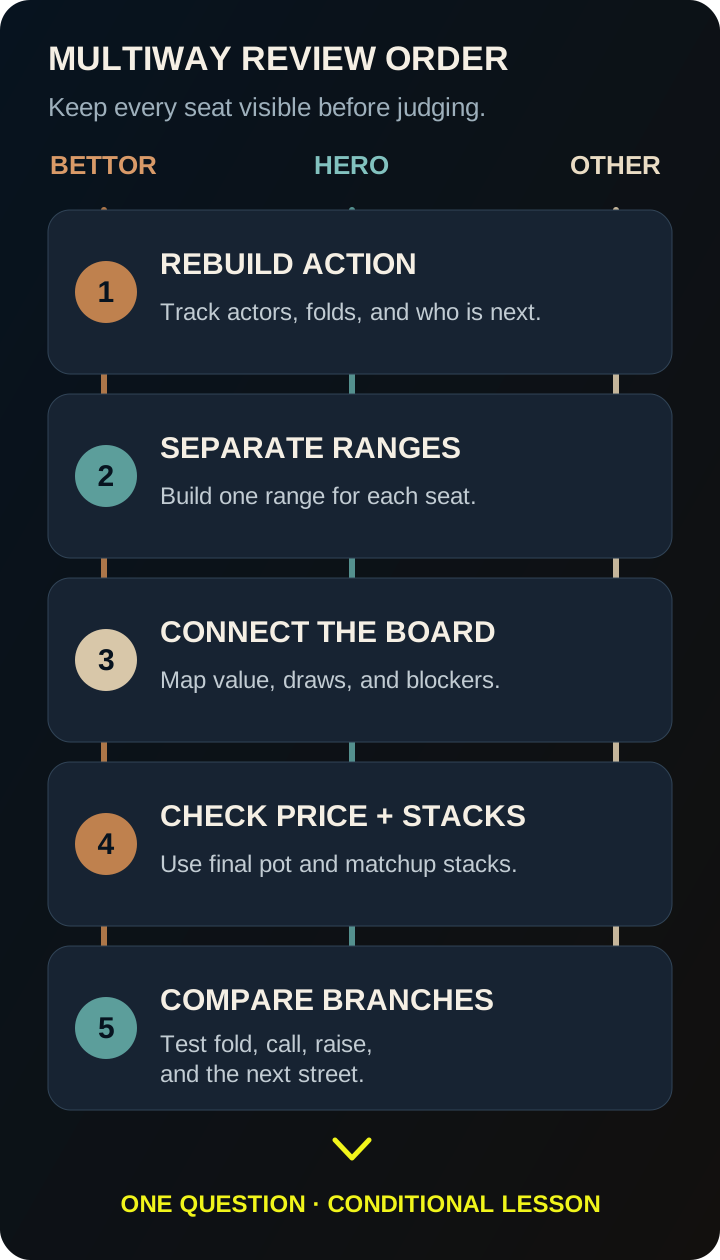
Use five passes. First, rebuild the action and active seats. Second, assign a separate arrival range to each player. Third, connect each range with the board. Fourth, calculate the price and the effective stack for each relevant matchup. Fifth, compare the response branches, including calls, raises, overcalls, folds, and future-street action.
Keep this order even when one strategic detail seems obvious. A draw-heavy board does not tell you which player owns more strong hands. Attractive pot odds do not tell you whether your equity is against one range or two. A short stack does not cap the money you can lose to a deeper player if a side pot remains possible.
End with one decision question. “Should the big blind call 9 BB after the button bets and the small blind calls?” is specific. “How should I play top pair multiway?” drops the positions, action, sizes, board, and ranges that give the hand its meaning.
How do you build ranges in a multiway pot?
Start each player from their own seat and preflop action. Then narrow that range with every check, bet, call, raise, or fold. A button raiser, a small-blind caller, and a big-blind caller did not take the same route to the flop, so they should not receive the same collection of hands.
When one player acts, update that player's range without silently changing everyone else's. If the button bets, divide the button's range into value, draws, and other plausible betting hands. If the small blind calls, narrow the small blind separately around hands that would continue by calling rather than folding or raising. Then return to the hero's decision against both surviving sets.
Card removal must be applied across the complete spot. Your cards and the board remove combinations from every opponent. The opponents cannot hold the same physical card, either. Exact multiway enumeration can become cumbersome, so a practical review can begin with named hand classes and test whether the conclusion depends on a narrow combination count.
How do pot odds work in a multiway hand?
The call-price formula does not change: amount to call divided by the final pot after your call. What changes is the equity comparison. Your hand must earn its share against every range that can reach showdown, not merely the player who made the bet.
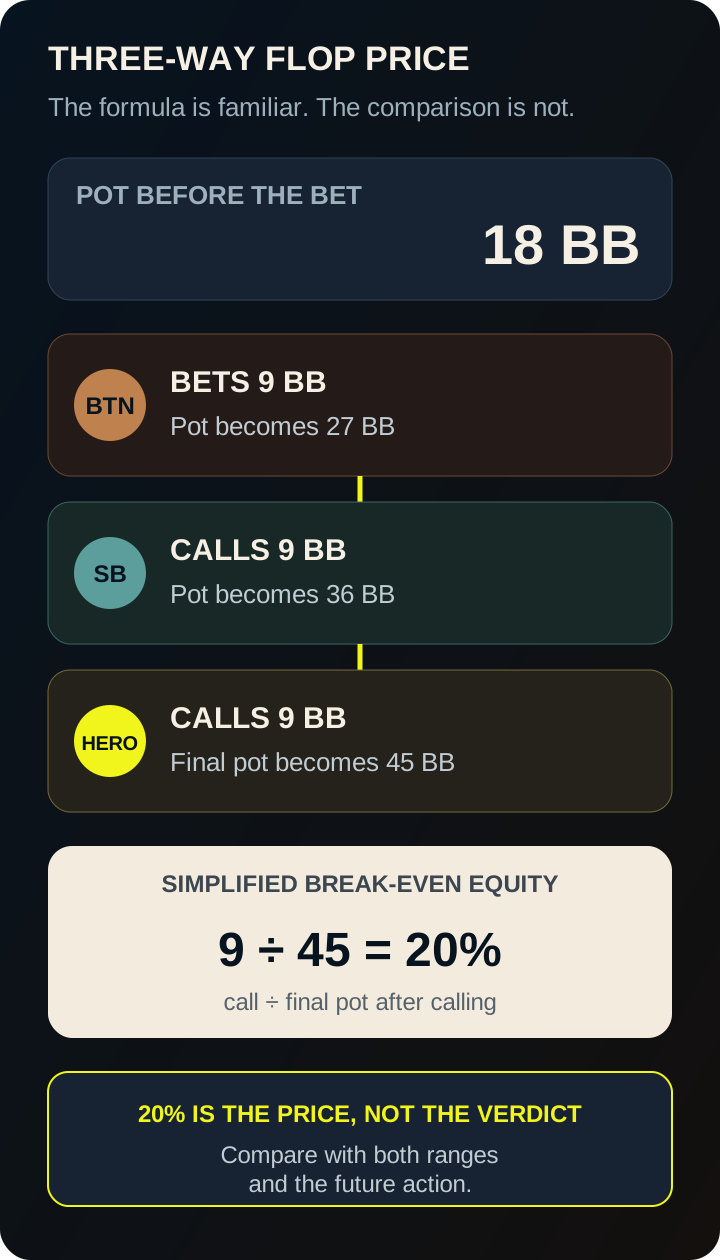
Consider a constructed three-way flop. The pot is 18 BB. The button bets 9 BB, the small blind calls 9 BB, and the big blind must decide whether to call 9 BB. A call makes the final pot 45 BB, so the simplified break-even equity is 9 divided by 45, or 20 percent, before rake and future betting.
That 20 percent is a threshold, not a recommendation. The big blind still needs an equity estimate against both the button's betting range and the small blind's calling range. Before the river, the review must also consider whether that equity can be realized through later bets, raises, and difficult runouts.
How should players behind change the review?
Mark whether your action closes the betting. A call that closes the action can move directly to the next street. A call with a player behind still has at least three important branches: that player folds, calls, or raises. Each branch changes the pot, the ranges, and whether your hand can continue.
Do not count a favorable response from the first opponent as though the hand ended. A bluff wins immediately only when every remaining opponent folds. A bluff catcher may beat the bettor's missed draw and still lose when the player behind calls with a made hand. A thin value bet may receive a call from worse in one seat but run into a raise from another.
Action order also changes the information available. A player who calls with another player behind may represent a different range from a player whose call closes the action. Preserve that context when carrying a lesson from one multiway hand into another.
How do effective stacks work with several opponents?
Calculate effective stack by matchup. If you have 90 BB behind, the button has 35 BB, and the small blind has 140 BB, you are 35 BB effective against the button and 90 BB effective against the small blind. The same shared pot can therefore lead to different future branches against each player.
If the shortest player becomes all-in, identify the main-pot layer and whether the deeper players can still contest a side pot. A hand can be strong enough to continue against the short stack yet vulnerable to action from the deep stack. One blended stack-to-pot ratio hides that distinction.
For a practical review, write the remaining stack beside each active seat before you compare sizes. Then ask which player can call, raise, or apply pressure on the next street. This is more useful than describing the table with one average stack.
What does a complete multiway review example look like?
Return to the 18 BB flop. The button bets 9 BB, the small blind calls, and the big blind holds K♠Q♠ on K♣9♦6♣. The first pass confirms that a 9 BB call closes the flop action and produces a 45 BB pot. The second pass gives the button a betting range and the small blind a distinct calling range based on how each player reached the flop.
The board pass asks how each range connects with top pair, two pair, sets, club draws, straight draws, and weaker made hands. The hero's top pair is then compared with both ranges together. The review should not assume that beating the button's draws is enough, because the small blind can still hold a made hand that called.
Next compare the branches. Folding gives up the pot. Calling costs 9 BB, closes the action, and leaves a 45 BB turn pot with the remaining stacks still relevant. Raising risks more, must define which worse hands continue and which better hands fold, and reopens the action to both opponents. The output should be conditional: which range assumptions make each branch attractive, and which turn cards or responses create the hardest continuation.
A useful lesson might be, “Before calling a multiway flop bet, name the hands in the caller's range that already beat me and the draws that can continue.” That cue is portable without claiming the same action is correct in every three-way pot.
Which multiway review mistakes are most common?
The first mistake is analyzing only the aggressor. The second is merging every opponent into one range. The third is forgetting a player behind, especially when your planned action is a call. All three turn a multiway tree into a heads-up spot that never existed.
Another mistake is using one effective stack or one position label for the whole hand. Pair the stack and positional relationship with the players involved. Also avoid importing a heads-up equity estimate into a multiway comparison; an estimate against one range does not measure your share against two.
Finally, do not treat tighter-sounding multiway advice as a universal rule. More opponents can change ranges and incentives, but the recorded action still decides which hands remain plausible. Review the specific seats, sizes, and branches instead of replacing one shortcut with another.
How can Tells Poker support a multiway hand review?
In the current Tells Poker iOS app, Guided Entry lets you choose two to nine players, select the seats, set individual starting stacks, and record action in order. Quick Capture can also preserve a completed hand from a typed or spoken description when the sequence is already clear.
After saving, Replay shows the recorded seats, stacks, cards, pot, wagers, folds, and active action as you move through the hand. Use it to confirm who remained in, whether your decision closed the action, and which stack applied to each matchup before opening Analysis.
The Analysis tab can provide a structured second opinion with street review and deterministic spot math when the saved decision supports it. Keep separate player ranges and unresolved reads visible in your own review. Tells is built for completed-hand study, not real-time assistance, and its analysis is not a claim of perfect or definitive play.
Frequently asked questions
Do pot odds change in a multiway poker hand?
The call-price formula stays the same: divide the call by the final pot after calling. The strategic comparison changes because your equity must be estimated against every continuing range, and future action may keep some raw equity from being realized.
Should you use one opponent range for a multiway pot?
No. Build a separate range for each player from that player's position and action. Combine the ranges only when evaluating a specific outcome, such as your chance to win if both players continue to showdown.
Can one player be in position and out of position in the same hand?
Yes. In a multiway pot, position is relative. A player can act after one opponent and before another, so the review should name the complete action order rather than assign one position label to the whole spot.
Does Tells Poker analyze multiway hands during live play?
No. Tells Poker is designed for completed-hand capture and post-session study. Replay and Analysis help you review the saved sequence after play, with analysis treated as a structured second opinion.