
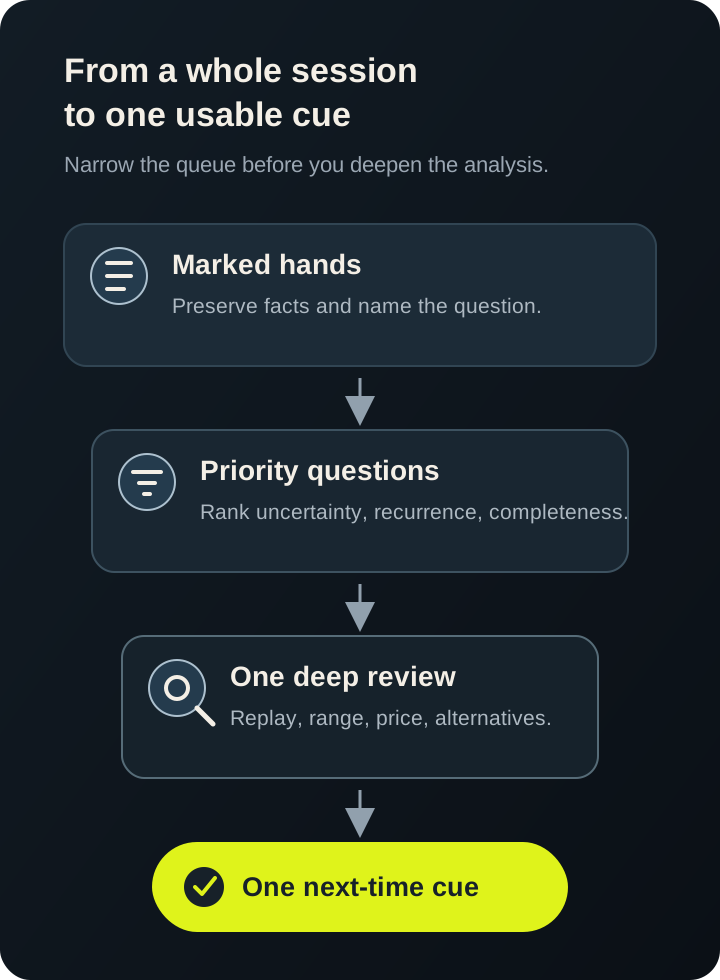
To review a poker session, capture the hands that created real decisions, wait until you can think clearly, then rank those hands by uncertainty rather than pot size. Rebuild one decision without the result, test the range, price, and alternative lines, and save one lesson you can recognize next time.
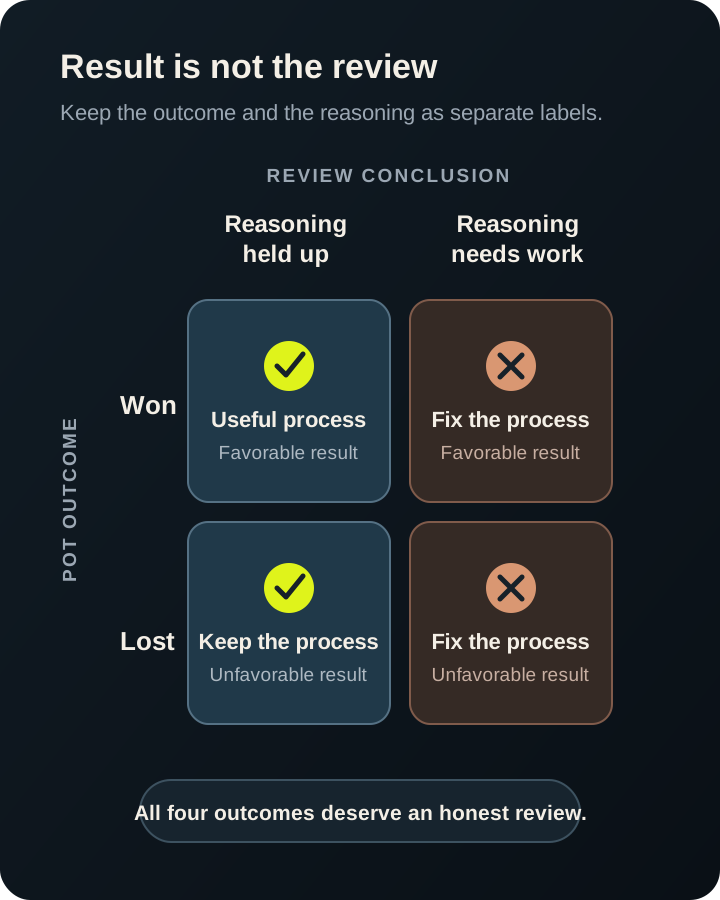
A session review is not a verdict on whether the night was good or bad. The money won or lost describes the result; the review asks whether your reasoning used the information available at each decision. Keeping those questions separate helps a big pot receive the same honest treatment as a small one.
This routine is designed for completed hands and post-session study. It does not require reviewing every hand or finding one perfect answer. The goal is to turn a crowded session into a small queue of useful questions, then carry one clear cue into the next game.
What is a poker session review?
A poker session review is a short process for choosing and studying the decisions that deserve another look. It starts with the whole session, narrows to a few candidate hands, and ends with one or more lessons stated in language you can recognize at the table.
That scope makes it different from reviewing a single hand. A hand review can examine every street in depth. A session review must first decide which hands are worth that depth, which questions repeat, and when further analysis would add little beyond the facts already recorded.
You can also review the session result, duration, and notes, but those are context rather than a grade for the decisions. A winning session can contain weak reasoning that happened to work. A losing session can contain disciplined choices that ran into unfavorable cards.
What should you capture before details fade?
After each completed hand that feels uncertain, preserve the game format, stakes or blinds, positions, effective stack, hole cards, board by street, and action sizes. Add the decision you want to revisit in one sentence. That last field is the difference between saving a story and creating a review queue.
Good markers describe the question without pretending to answer it: “river call against a polarized size,” “turn check-raise with a draw,” or “missed value bet after two checks.” Avoid labels such as “terrible punt” or “obvious cooler.” They import the emotional result before the reasoning begins.
If a detail is missing, mark it as uncertain. Do not repair memory with the showdown. A review based on an approximate stack can still be useful when the uncertainty is visible; a precise-looking reconstruction built from invented details can teach the wrong lesson.
Which hands should you review first?
Prioritize decisions with high uncertainty and a realistic chance of recurring. Useful signals include a large bet you could not place into a clear range, a close call whose price you never calculated, a size chosen without a specific target, or a line you would struggle to explain before seeing the result.
Pot size is a weak sorting rule by itself. A dramatic all-in may be straightforward once the stacks and ranges are rebuilt, while a modest turn check may expose a repeated leak in how you plan rivers. Review value comes from the decision question, not from how loud the hand felt.
Put hands into three buckets: review now, review later, and archive. Review now contains the few spots with the most uncertainty or repetition. Review later holds legitimate questions that are less urgent. Archive contains hands whose lesson is already clear or whose missing facts make deeper work speculative.
What is a simple post-session review workflow?
First, gather every hand you marked during the session. Second, triage them by uncertainty, recurrence, and completeness. Third, choose one decision for a deep review. Fourth, finish with one next-time cue. This funnel keeps the queue manageable without pretending the other hands never happened.
For the deep review, stop the hand immediately before the key action. State the pot, effective stack, price, plausible ranges, and your objective. Compare the action you took with one or two realistic alternatives. Then change one uncertain assumption and see whether the preferred branch changes.
End the review when you can explain what would trigger the lesson again. “Be more careful” is too vague. “Before calling a large river bet, list the missed draws and value hands that reach it” is observable and reusable.
How do you review without being results-oriented?
Hide or postpone the final result until you have rebuilt the key decision. Ask what information was available at that moment, which ranges fit the previous action, what the wager accomplished, and which alternatives were practical. Only after writing that first-pass view should you reveal later cards or a showdown.
Next, label the outcome and the reasoning separately. Won and lost describe what happened to the pot. Reasoning held up and reasoning needs work describe what your review found under its stated assumptions. All four combinations are possible, so no result can stand in for the second label.
A showdown is still evidence. It may reveal that one exact holding was possible or that an opponent took an unexpected line. Use it to update future assumptions after the decision review, not to rewrite what you could have known before acting.
What does a complete session review example look like?
Suppose you marked five hands from a live cash session. One was a large pot you won with a river call, one was a routine preflop fold, one was a turn fold followed by an opponent showing a bluff, one was a missed thin value bet, and one has an uncertain stack size and missing flop action.
The preflop fold goes to archive because the decision is already clear. The incomplete hand also goes there unless the missing action can be recovered. The river call, turn fold, and missed value bet become the priority queue because each contains a decision question and enough context to rebuild it.
You choose the turn fold first because similar turn decisions recur. Before looking at the shown bluff, you reconstruct the pot, size, remaining stack, draws, value hands, and hands that could apply pressure. Your conclusion is not “never fold because this one was a bluff.” It is a next-time cue: “Against a large turn bet, check whether the value range and bluff candidates both fit the earlier street.”
Then run a sensitivity check. Add one plausible value hand, remove one questionable bluff, or adjust the assumed preflop range. If the decision changes easily, save the spot as assumption-sensitive. If it stays stable across several reasonable versions, the lesson is more robust even though it is still a structured review rather than a perfect answer.
How many hands should you review from one session?
Review as many hands as you can examine carefully, which is often fewer than you marked. One complete deep review is usually more useful than skimming ten hands and saving ten vague conclusions. Leave the remaining candidates in a queue for another short block or a study-group discussion.
Use a time boundary if the session was long. For example, reserve a brief first pass for triage, then one focused block for the top decision. The exact minutes matter less than protecting the sequence: select first, analyze second, summarize last.
Stop when fatigue turns ranges into guesses or every conclusion starts sounding the same. A session review is meant to improve the next decision, not extend a late night until the reasoning becomes less reliable than the memory you started with.
What should you save from each review?
Save four things: the key decision, the assumptions that mattered, the best alternative you considered, and one next-time cue. If the conclusion changes under a reasonable alternative range, note that sensitivity instead of flattening the hand into a rule.
Write the cue as a trigger followed by an action. For example: “When a river size represents most of the pot, count plausible value and bluff combinations before using the call price.” The trigger tells you when the lesson applies; the action tells you what to do with it.
Periodically group saved cues by theme. Repeated notes about blind defense, turn barrels, or thin river value are more useful as a study direction than a chronological list of wins and losses. A pattern should earn attention because it repeats in your decisions, not because one pot was memorable.
How can Tells help you review a poker session?
In Tells Poker, Quick Capture lets you type or say a completed hand, while Guided Entry records it one question at a time. The Hands feed can filter saved hands by time, month, position, or an exact two-card holding, which helps you gather a recent session or revisit a repeated spot.
Open a selected hand in Replay and move to the decision before the result. The Analysis tab presents the key decision, a next-time takeaway, assumptions, street-by-street reasoning, what-if scenarios when available, and a link back to the relevant replay point. Treat that debrief as a structured second opinion and challenge any assumption that does not match the game you played.
Ledger can keep the session result, duration, and notes in a separate session record. That separation supports the same review discipline: use Ledger to remember the night, and use completed hand records to study the decisions inside it.
Frequently asked questions
Should you review every hand from a poker session?
No. Start with hands that contain uncertainty, a repeated situation, or a choice you cannot yet explain. Archive routine decisions and incomplete hands that would require invented details.
Should you review a poker session immediately?
Capture important details soon after each completed hand, but do the deeper review when you can think clearly. A short delay can reduce emotion without sacrificing the recorded facts.
How do you avoid results-oriented poker analysis?
Pause before the result, reconstruct the information available at the decision, and write a first-pass conclusion. Reveal the later cards or showdown only after that reasoning is recorded.
What is the best output from a session review?
Save one specific cue that connects a future trigger to an action, plus the assumptions and alternative line that made the lesson useful.