
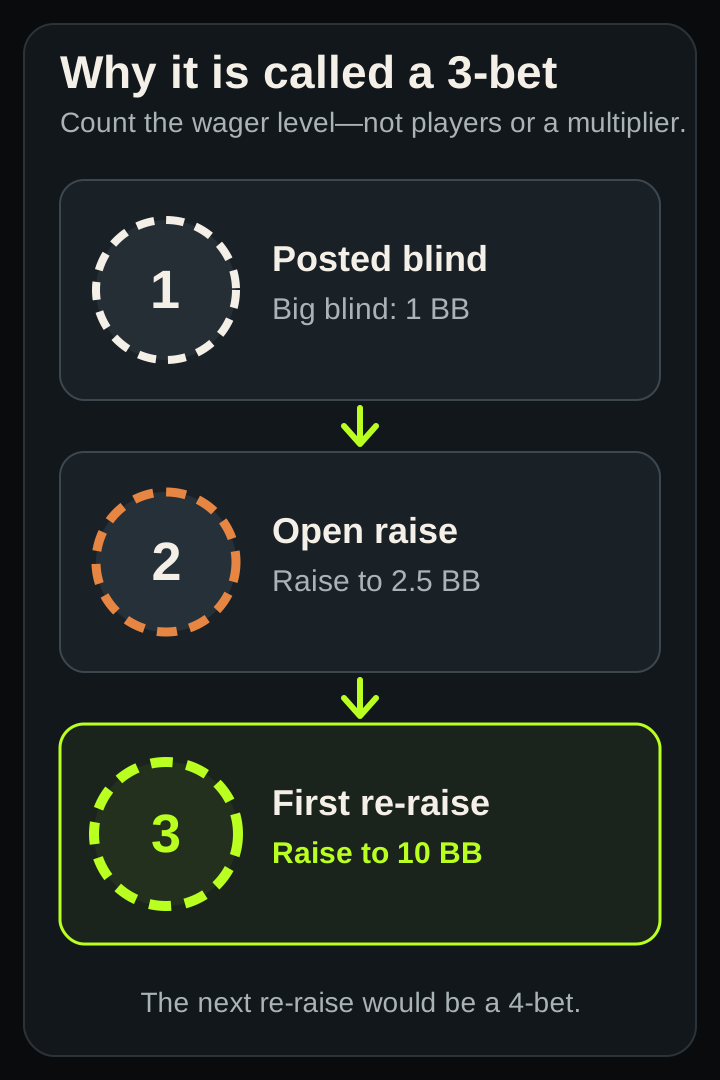
A 3-bet in poker is the first re-raise in a betting sequence. Preflop, the big blind is the first wager, the opening raise is the second wager, and a re-raise is the third wager—the 3-bet. If the button opens to 2.5 big blinds and the big blind raises to 10 big blinds, the big blind has 3-bet.
The name does not mean three players entered the pot, and it does not mean the raise must be three times the previous size. It identifies the level of the wager. A re-raise can also be a 3-bet after the flop, although players most often use the term when discussing preflop action.
A 3-bet usually creates a larger pot, a smaller stack-to-pot ratio, and narrower continuing ranges than a single-raised pot. Those changes make the exact positions, starting stacks, raise-to amount, callers, and response essential parts of a useful post-session review.
Why is a re-raise called a 3-bet?
The count begins with the existing wager. Before the flop, the big blind is the first bet. An open raise is therefore the second bet, even though poker players usually call it an open rather than a 2-bet. The first player to re-raise makes the third bet in the sequence, so that action is called a 3-bet.
If another player re-raises again, that action is a 4-bet. The count can continue to a 5-bet or beyond. The label tracks the wager level, not how many chips are used and not how many players remain in the hand.
What is the difference between a 3-bet, 4-bet, and squeeze?
A 3-bet is the first re-raise. A 4-bet is the next re-raise after that. An all-in does not have a separate place in the count: an all-in can be an open raise, 3-bet, or 4-bet depending on the action that came before it.
A squeeze is a 3-bet made after one player opens and at least one other player calls. The extra caller changes the pot and adds another range that can respond. Every squeeze is a 3-bet, but a heads-up 3-bet with no caller between the raisers is not a squeeze.
What does a 3-bet change in the hand?
First, it changes the price. The opener must now fold, call the additional amount, or 4-bet. Second, it changes the pot geometry. When the 3-bet is called, more chips enter before the flop, so the flop begins with a larger pot and fewer effective chips behind.
Third, it filters both ranges. The 3-bettor chose to re-raise rather than call or fold, and the opener's response narrows the hands that continue. That does not make either range one exact holding. A useful review keeps strong hands, medium hands, and possible bluffs visible until later action gives a reason to adjust them.
What should a 3-bet be trying to accomplish?
Give the re-raise a job. With a strong hand, ask which worse hands can continue and how a call or 4-bet affects the plan. With a bluffing candidate, ask which better hands may fold, which hands are likely to call, and whether the chosen cards interact usefully with the opener's continuing range.
Then plan the response. What will you do if the opener calls? Which flops fit each range? What happens if the opener 4-bets? If the reasoning ends at “apply pressure,” the review is incomplete because it never explains which response the 3-bet was designed to create.
How do you choose a 3-bet size?
Record a 3-bet as the total raise-to amount. If the opener makes it 2.5 big blinds and you raise to 10, you add enough chips to reach 10; you do not add 10 more. Confusing “to” with “by” changes both the pot and the stack remaining for every later calculation.
There is no single correct multiplier for every table. Start with the open size, positions, effective stack, and whether anyone called between the opener and you. Then ask what price your size gives the opener, how much room remains for a 4-bet, and what stack-to-pot ratio a call would create.
Treat in-position and out-of-position spots separately because the postflop action order changes how easily each player can use the remaining stack. A familiar default can be a starting point, but the review should explain why the actual size fits this configuration rather than defending it as a universal rule.
What is a complete 3-bet pot example?
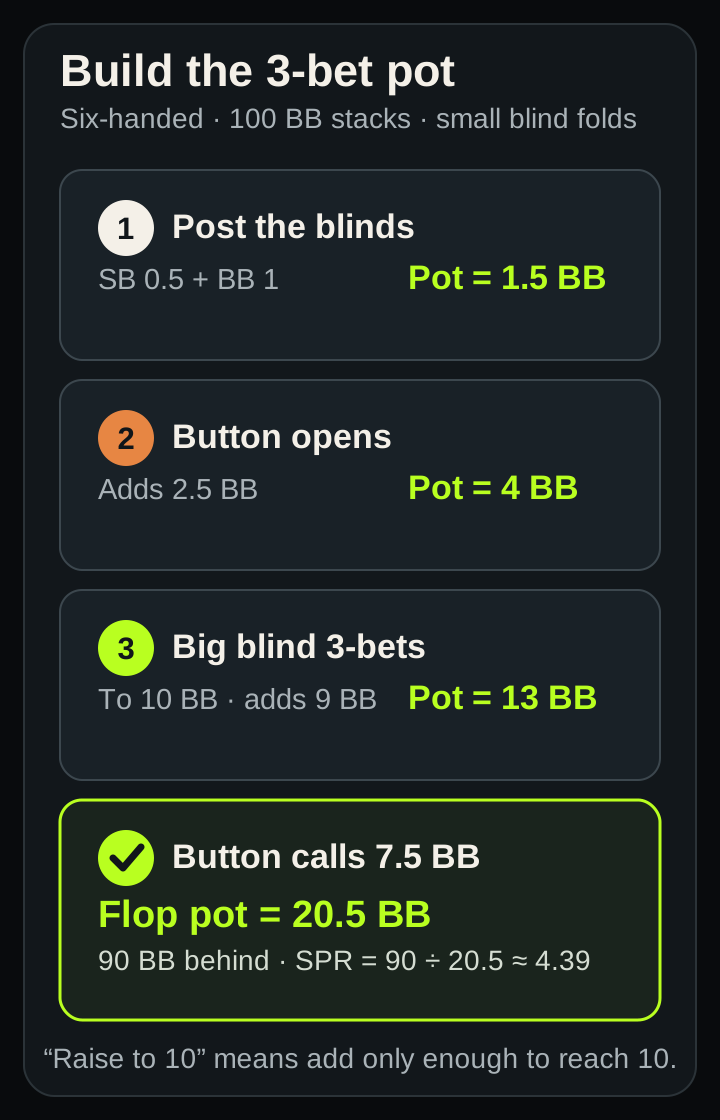
In a six-handed cash game, every player begins with 100 big blinds. The button opens to 2.5 big blinds, the small blind folds, and the big blind 3-bets to 10 big blinds. The button calls. The 3-bet is to 10, so the big blind adds 9 after already posting the 1-big-blind forced bet. The button adds 7.5 after the original open.
Count the pot in order. The blinds begin at 1.5 big blinds. The button's open makes it 4. The big blind's additional 9 makes it 13. The button's additional 7.5 creates a 20.5-big-blind flop pot. Both active players have 90 big blinds behind, so the flop SPR is 90 divided by 20.5, or about 4.39.
At the button's preflop decision, calling costs 7.5 to contest a final pot of 20.5. That is an immediate break-even equity threshold of about 36.6 percent before rake and postflop equity realization are considered. The number gives the price; the assigned ranges and future action determine whether a particular hand can use it.
How should you respond when facing a 3-bet?
The normal branches are fold, call, or 4-bet. Start with the range you opened from that position, then compare the 3-bettor's position, size, effective stack, and plausible range. A hand near the top of one opening range can occupy a different branch when the open came from another seat or the 3-bet came from a tighter configuration.
For a call, check the additional amount rather than the full 3-bet size, then consider position and equity realization after the flop. For a 4-bet, name which hands can continue against it and what happens if the 3-bettor raises again. For a fold, confirm that you are not discarding a hand merely because the pot became uncomfortable.
What are the most common 3-bet mistakes?
One mistake is calling any preflop raise a 3-bet. An unopened pot raised once has only an open raise; the 3-bet requires a re-raise. Another is writing “3-bet 10” without saying whether that means to 10 or by 10. Use the full raise-to amount so another player can rebuild the hand.
Strategic mistakes include using the same range and size from every position, forgetting a caller when reviewing a squeeze, and assuming a 3-bet always represents one narrow kind of hand. The result can also distort the story: winning after a loose re-raise does not prove the choice was sound, and losing with a strong hand does not prove the re-raise was wrong.
How do you review a 3-bet pot after the session?
Write the positions, starting stacks, open size, 3-bet size, intervening calls or folds, and the opener's response. Rebuild the pot one contribution at a time. Then separate the facts from the assumptions: the recorded sizes are facts; the ranges, reasons, and likely responses are models to test.
Ask four questions at the decision: What hands am I targeting? What price does this size offer? What effective stack remains if called? What will I do against the next raise? Finish by comparing one realistic alternative, such as calling instead of 3-betting or using a different raise size, without letting the final board decide which line looks best.
How can Tells help review a 3-bet?
After a completed hand, Tells Poker Guided Entry records raises and re-raises with their total amounts in big blinds. Quick Capture can also parse labels such as three-bet and four-bet from a typed or spoken hand. Review the extracted action before saving so a raise-to amount is not mistaken for an added amount.
Replay then reconstructs the preflop sequence with seats, stacks, committed chips, pot, and each action. The Analysis tab can include a graded preflop review, quick take, reasoning, and the main alternative line. Use it as a structured second opinion for post-session study, not as live assistance or a claim that one line is perfect for every opponent and game.
Frequently asked questions
Can a 3-bet happen after the flop?
Yes. A postflop bet is the first wager, a raise is the second, and a re-raise is the third. In everyday poker discussion, however, 3-bet most often refers to a preflop re-raise.
Does a 3-bet have to be three times the open raise?
No. The 3 refers to the wager level, not a size multiplier. Choose and record the total raise-to amount based on the positions, open size, callers, and effective stack.
Is a squeeze the same as a 3-bet?
A squeeze is a specific 3-bet made after an open raise and at least one call. A 3-bet made directly against an opener with no caller in between is not a squeeze.
What happens after someone 3-bets?
The opener and any other eligible players can fold, call, or raise again. That next raise is a 4-bet. The available choice still depends on the action order and any players left to act.