To choose a bet size in poker, start with what the bet should accomplish. Then compare which hands are likely to call, fold, or raise at each realistic size, and check how the wager changes the pot and effective stack. The useful size is the one that fits the objective and ranges—not simply a familiar fraction of the pot.
A smaller bet risks less and offers the opponent a lower price to continue. A larger bet risks more, offers a higher price, and usually asks a narrower part of the opponent's range to continue. Neither is automatically better. The board, positions, prior action, remaining stacks, and your exact hand all change the comparison.
Study sizing after the hand is complete. Reconstruct the pot before the action, express each candidate as both big blinds and a percentage of the pot, and compare a short menu: check, small, medium, and large. Treat any analysis as a structured second opinion, not perfect or definitive play.
What does a bet size represent?
A bet size is the amount wagered relative to the pot and the stack still available. If the pot is 12 big blinds and a player bets 8 big blinds, the bet is about 67% of the pot. That description makes sizes comparable across stakes without pretending that every 67% pot bet serves the same purpose.
The amount changes three things at once: the price offered to a caller, the range that may continue, and the size of the next decision. A review that discusses only the current street misses the stack and pot left behind if the bet is called.
What should the bet be trying to accomplish?
Name the objective before naming the number. A value bet tries to get called by enough weaker hands. A bluff tries to fold out enough stronger hands. A protection-oriented bet charges hands that can improve and may deny them a free card. Some bets also build a pot for later streets or simplify the remaining stack path.
One bet can serve more than one purpose, but the main objective should be clear. Saying “I bet 8 BB for value” is incomplete until you can name the weaker hands expected to call. Saying “I bet large as a bluff” is incomplete until you can name the stronger hands expected to fold.
Checking belongs in the comparison. It can preserve weaker hands in the opponent's range, protect your checking range, control the pot, or realize equity without facing a raise. A sizing review that compares only two bet amounts can overlook the best alternative.
Which hands should call, fold, or raise?
For every candidate size, divide the opponent's plausible range into calls, folds, and raises. Use hand classes rather than one exact holding: strong value, ordinary pairs, draws, missed draws, and weak bluff catchers. Then ask how those groups change when the bet becomes larger or smaller.
This range response is the heart of sizing. If a smaller value bet gains calls from several weaker hands that fold to a larger bet, the extra calls may matter more than the larger amount. If both sizes receive action from nearly the same hands, the larger size may collect more when called—but only if that range assumption is sound.
For a bluff, identify the better hands near the opponent's folding boundary. Betting larger without naming additional folds is not a complete reason. Betting smaller without checking whether too many better hands continue is not complete either.
How do common bet sizes change the price?
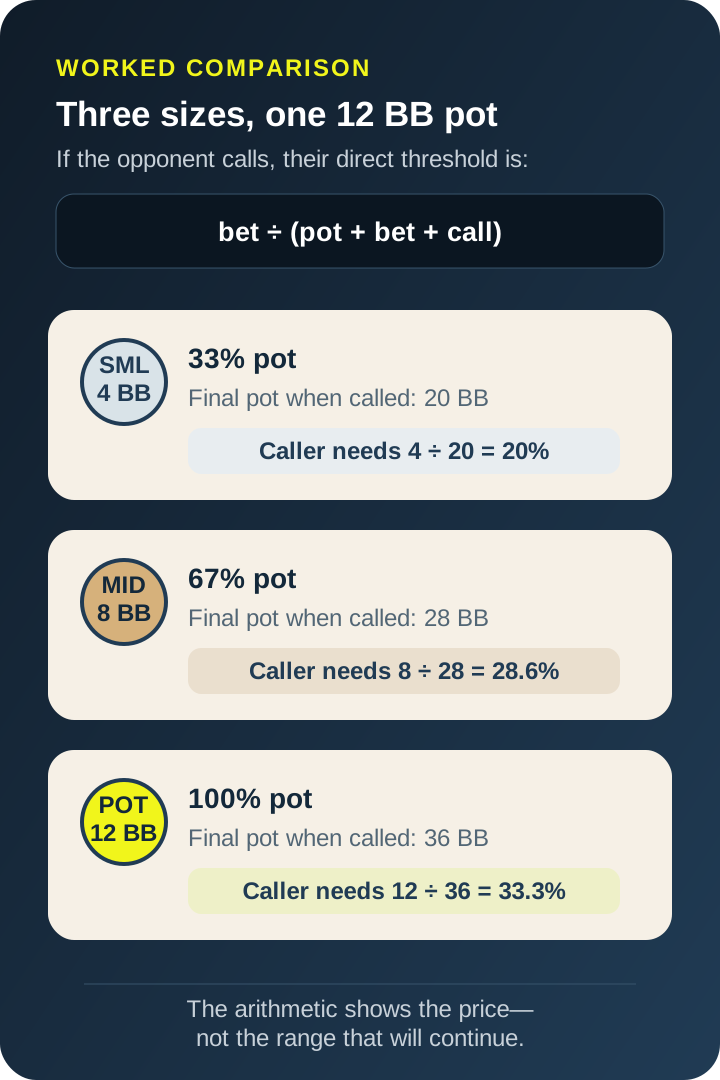
When a player bets B into a pot P and the opponent must call B, the caller's direct break-even equity is B divided by P plus B plus the call. The denominator is the final pot after the call. This number checks the price offered; it does not tell you which hands are in the betting range or calling range.
Into a 12 BB pot, a 4 BB bet makes a 20 BB final pot if called, so the caller needs 4 divided by 20, or 20% equity. An 8 BB bet makes a 28 BB final pot and asks for about 28.6%. A 12 BB pot-sized bet makes a 36 BB final pot and asks for about 33.3%.
Those thresholds explain why size changes the opponent's decision. They do not prove that the opponent will respond correctly, and they do not choose your action. Continue by assigning a plausible range and checking which parts can meet the price.
What does a complete river sizing example look like?
Suppose the river pot is 12 BB. You hold K-club Q-diamond on K-spade 9-diamond 4-club 2-heart 2-club, and the opponent checks. Before choosing a size, rebuild the hands that reach the river this way. Plausible groups might include stronger made hands, weaker kings, nines, pocket pairs, and missed draws, depending on the earlier action.
Now compare check, 4 BB, 8 BB, and 12 BB. The 4 BB size offers the lowest price and may keep more nines or pocket pairs in the calling range. The 8 BB size asks whether weaker kings can continue often enough. The 12 BB size puts the highest price on a call, but the continuing range may become concentrated around stronger kings, trips, and slow-played hands.
The example does not declare one universal winner because the missing preflop, flop, and turn action controls the range. Its purpose is to make the decision testable: name the intended weaker calls for each size, name the stronger hands still present, and compare the expected response with checking.
How do stack depth and future streets change sizing?
Before the river, a bet also creates the next street's pot and remaining stack. If 30 BB remains behind and the pot is 12 BB, betting 4 BB and getting called creates a 20 BB pot with 26 BB behind. Betting 8 BB creates a 28 BB pot with 22 BB behind. Those branches produce very different river choices.
Use the effective stack between the players who can continue. A size that leaves an awkward fraction of the pot behind may make the next decision harder; a different size may create a cleaner check, bet, or all-in branch. That is a planning consideration, not a rule that every hand should force the same stack-to-pot ratio.
Board texture matters too. More draws and changing river cards create more branches to consider. On a stable river, there is no future card, so the review can focus more directly on which worse hands call a value bet or which better hands fold to a bluff.
How does bet sizing change in a multiway pot?
In a multiway pot, the bet must pass through more than one range. A size that receives a loose call heads-up may face a stronger continuing range when another player remains behind. The chance of a raise or overcall also comes from more than one seat.
Review each player separately: position, prior action, effective stack, and hands that can call, fold, or raise. Do not combine everyone into one generic opponent. A smaller size is not automatically safer, and a larger size is not automatically more protective when several ranges can respond.
What is a simple post-session sizing process?
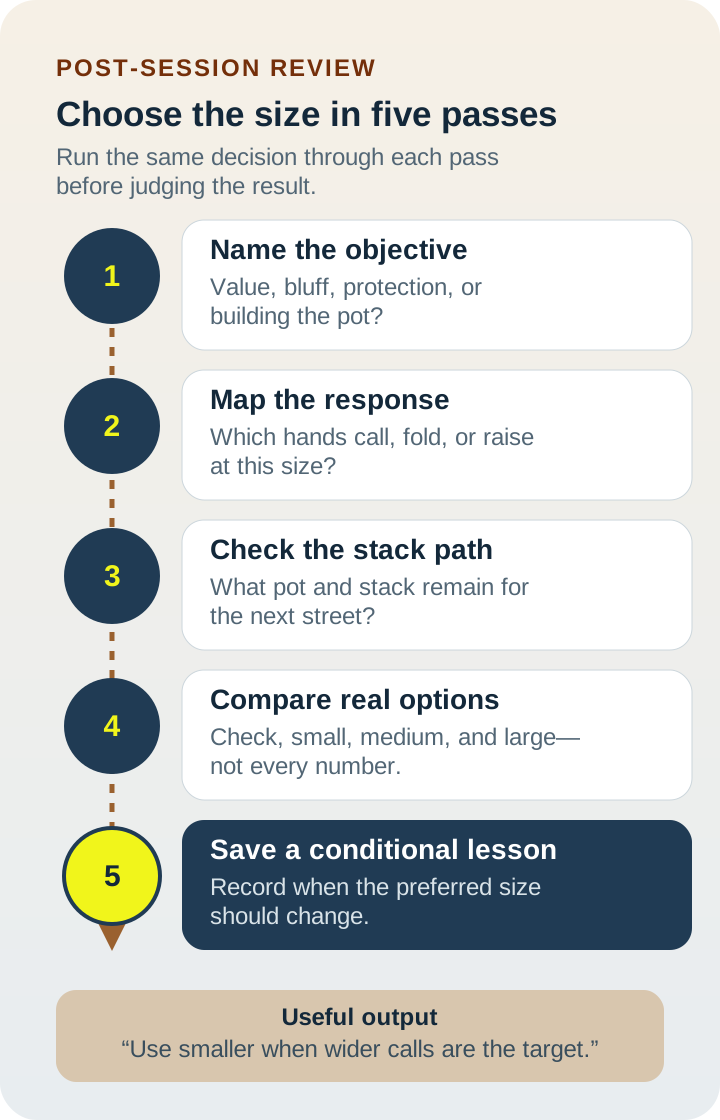
First, name the objective without mentioning a size. Second, map the opponent's likely calls, folds, and raises. Third, calculate the pot and effective stack created if the bet is called. Fourth, compare a short set of realistic options, including checking, instead of testing every possible number.
Fifth, save a conditional lesson. “Use the smaller value size when the wider calling range includes second pair” can be tested in another hand. “Always bet one-third pot on dry boards” ignores ranges, stacks, positions, and the action that came before.
If an assumption changes the answer, keep it in the lesson. A size may work only when a particular weaker hand class reaches the river, when a draw completes, or when enough stack remains for another bet. Conditional notes travel better than universal rules.
How can Tells help with bet-size review?
After a completed hand is saved, Tells Poker Replay reconstructs the action with the visible board, seats, remaining stacks, committed wagers, and total pot. Pause before the sizing decision and verify that the recorded amount and pot follow from the earlier action. If the record is wrong, correct the hand before relying on the review.
The Analysis tab can show verified decision math for a recorded wager, including the pot before the action, bet size in big blinds, and percentage of the pot when available. Its street review also explains the recorded line and a main alternative, giving you a structured second opinion to compare with your own range assumptions.
Tells is built for completed-hand review and post-session study, not assistance during a live hand. The analysis cannot know an unsupplied read or guarantee a perfect size. Use it to sharpen the question: which weaker hands call, which better hands fold, and what stack path does this amount create?
Frequently asked questions
What is the best bet size in poker?
There is no single best size for every spot. Choose among realistic sizes by comparing the objective, both ranges, board, position, effective stack, and the pot or stack that remains after a call.
Should bet size always match hand strength?
No. If one size is reserved only for strong hands, the pattern can reveal too much. Review how value hands and bluffs can use the same size for compatible reasons, while accepting that different range groups may support different sizes.
Is a pot-sized bet always strong?
No. A pot-sized bet may contain value hands, bluffs, or both. The size sets the caller's direct price at 33.3% equity, but the action and range composition determine what the bet represents.
Can Tells Poker choose a perfect bet size?
No. Tells provides a structured post-session second opinion based on the recorded hand. Missing reads, uncertain action, and different range assumptions can change the preferred size.