
A value bet is a bet made because you expect worse hands to call often enough to make betting preferable to checking. The question is not simply whether your hand is strong. It is which weaker hands can reach this decision, which of them continue for this size, and what stronger hands do in response.
On the river, no future card can improve your hand. That makes the call range especially clear to study: write down the weaker calls you hope to receive, the stronger calls or raises you risk, and the hands likely to fold. Then compare the proposed bet with checking under those assumptions.
Use this as a post-session review method, not a fixed rule for an active hand. The opponent's range is an estimate, and Tells Poker analysis is a structured second opinion rather than perfect or definitive play.
What makes a bet a value bet?
The main purpose of a value bet is to be called by hands you beat. A hand can be strong in absolute terms and still have a poor value bet if the opponent folds nearly every weaker hand and continues mainly with better ones. A modest hand can sometimes earn a value bet when many weaker holdings can call.
Ask the question at the exact decision point. Position, earlier action, board cards, remaining stacks, and the chosen size all affect which hands are plausible and willing to continue. A label such as top pair is only a starting description; it is not an answer to the betting question.
How is a value bet different from a bluff?
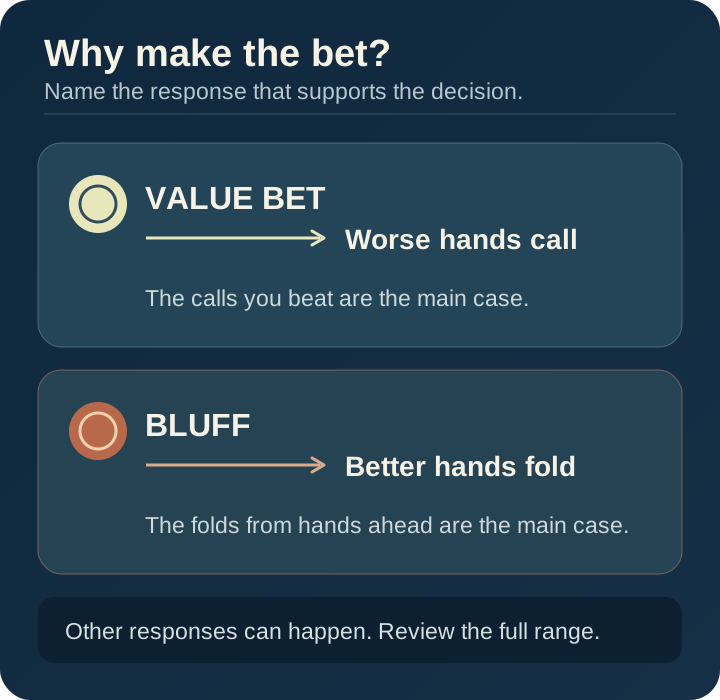
A value bet seeks calls from worse hands. A bluff seeks folds from better hands. Both bets may sometimes get other responses: a value bet can win immediately when the opponent folds, and a bluff can be called. Classify the bet by the response that makes its main case work, not by the single response you eventually saw.
There is also a middle zone. A bet with a made hand can get some weaker calls and sometimes push out a stronger hand. In review, name each response separately rather than forcing every bet into one pure category.
Which worse hands could call in a river example?
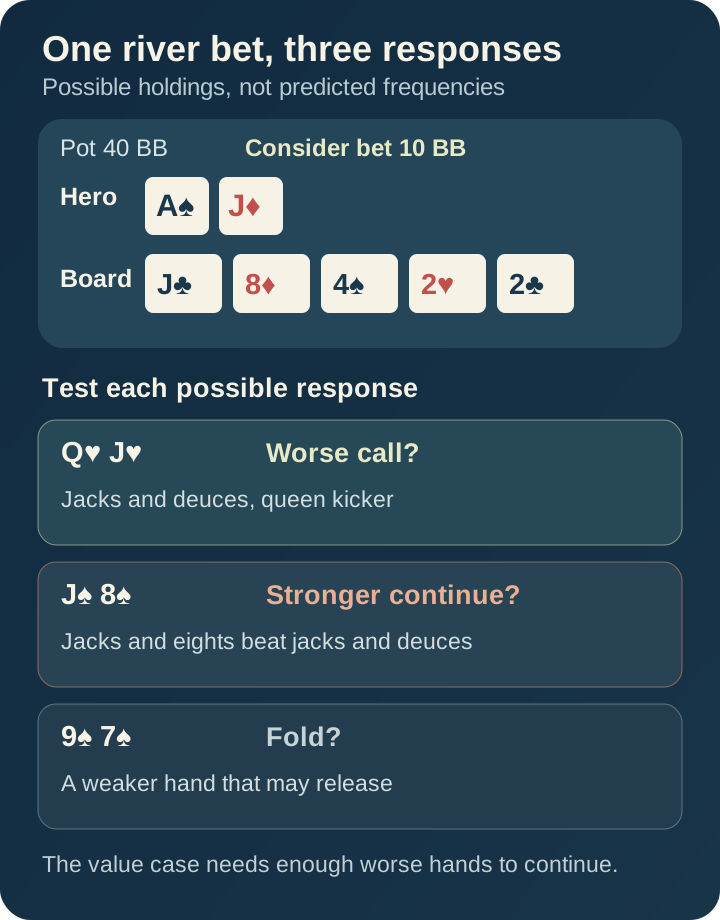
Consider an original heads-up study spot. The river pot is 40 big blinds. The button holds A♠ J♦ on J♣ 8♦ 4♠ 2♥ 2♣, and the big blind checks. The button has jacks and deuces with an ace kicker. Suppose the button is considering a 10 big blind bet with 30 big blinds effective behind before betting.
A plausible weaker call to investigate is Q♥ J♥: it also has jacks and deuces, but the queen kicker loses to the ace. A stronger hand to investigate is J♠ 8♠: its jacks and eights beat jacks and deuces. A hand such as 9♠ 7♠ may simply fold. These are three separate, possible opponent holdings used to test the question, not a claim about how any specific player will act.
The 10 big blind size puts 10 at risk to win another 10 when a worse hand calls, compared with checking to the same showdown. It loses another 10 when a better hand calls under that same simplified comparison. A fold by a weaker hand adds nothing to the value case. Raises, better-hand folds, and changes in the opponent's checking behavior need their own branches; this illustration leaves them open rather than pretending the three examples form a complete range.
How should bet size change the value question?
A larger bet wins more from each weaker hand that still calls, but it can also lose more when a stronger hand continues. It may change the opponent's call range. Compare a 10 big blind bet and a 30 big blind bet into the same 40 big blind pot by listing the weaker hands that would call each size, then the stronger hands that would continue. Do not assume the list stays the same.
For this board, ask whether a hand like Q♥ J♥ would call both sizes, only the smaller one, or neither. Ask the same question about weaker pairs and stronger two-pair or full-house hands. Without credible response estimates, the example cannot identify the best size. It identifies the assumptions that would make one size preferable.
When can checking be the better choice?
Checking deserves comparison when your proposed size is unlikely to receive enough calls from worse hands, or when a raise creates a costly decision. It also preserves a showdown against hands that would fold. Sometimes a hand strong enough to call a bet is still too weak to bet for value against a narrow continuing range.
Write the check line beside the bet line before looking at the result. On a completed river, the comparison depends on the opponent's likely response to a check as well as to a bet. Do not declare a bet good solely because it was called, or a check bad solely because it missed a possible payment.
How do you review a value bet after the hand?
Rebuild the action to the decision and hide the showdown. Record the pot, effective stack, exact board, your hand, and the size you chose or considered. List worse hands that could call, better hands that continue, folds, and possible raises. If a category is uncertain, mark it uncertain rather than filling it with the hand you later saw.
Compare at least one alternative size and a check. Change one assumption at a time: perhaps the opponent calls a small bet with second pair but folds it to a larger bet. Save a conditional lesson such as “the small river bet needs weaker jack-x calls,” then reveal the result. One showdown is evidence of one holding and one response, not proof of the full range.
How can Tells help with post-session value-bet review?
In the Tells Poker iOS app, record the completed hand and open Replay. Move to the river checkpoint to inspect the recorded board, pot, stacks, and action before judging the outcome. The Analysis tab can provide a street-by-street debrief and reasoning to compare with your own response list.
Use that analysis as a structured second opinion. If the recorded hand lacks an exact size or earlier action, correct the record or keep the review conditional. Share the completed spot with a study partner when another view of the opponent's possible calls would help.
Frequently asked questions
Does a value bet need to be called?
No. The label describes the reason for betting at the decision point: you expect enough weaker calls to justify the bet. One fold does not erase that reasoning, though repeated folds may change your assumptions.
Can top pair be a value bet on the river?
Yes, when enough weaker hands can call the chosen size. Top pair alone does not settle it; the board, action, opponent range, and response to the size matter.
Is a bigger river value bet always better?
No. A bigger bet wins more per weaker call, but the set of hands willing to call may shrink and stronger calls cost more. Compare response ranges rather than sizes in isolation.