To compare similar poker hands for study, pause both at the same decision, convert the amounts to big blinds, and match the format, positions, players involved, stacks, and earlier action. Then identify differences in board texture, exact cards, bet size, and opponent assumptions before deciding which lesson can transfer.
Two hands with the same starting cards can ask different questions. Two hands played at different stakes can ask nearly the same question. The useful comparison is between decision contexts, rather than between the cards you held or the size of the final result.
Use this method after the hands are complete. It is a way to organize post-session study and challenge a familiar conclusion, not a shortcut to perfect play or assistance during an active hand.
What makes two poker hands comparable?
Comparable hands share enough of the decision structure that a difference has meaning. Start with the street and available actions. A river call-or-fold decision belongs beside another river response to a bet; a turn decision with a draw and another betting street is a different problem even if the pot looks similar.
Next match the game format, relative positions, number of opponents, effective stack, pot, and path to the decision. A button facing the big blind after two check-calls is not facing the same arrival range as a button facing an early-position raiser after two large bets. Record that distinction before comparing recommendations.
You do not need an exact duplicate. You need to know what is matched and what is different. A pair with one clear contrast can teach something useful. A pair with several unrecorded differences can encourage a broad rule that neither hand supports.
Which details should you match before comparing actions?
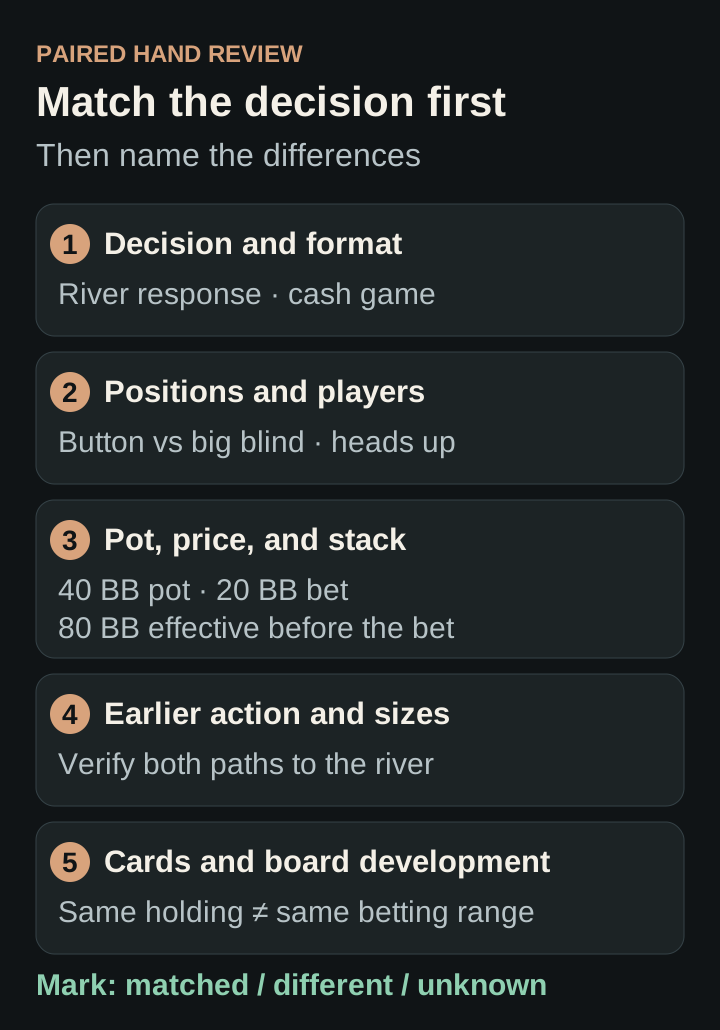
Use five checks: the decision and format; positions and active players; pot, price, and effective stack; earlier actions and sizes; and exact cards with board development. Mark each check as matched, different, or unknown. This makes the comparison explicit instead of relying on a feeling that both hands were similar.
Some differences change the problem immediately. A player still behind can raise after your call. A shorter stack can remove a later betting branch. A different preflop sequence can reshape both ranges before the first board card arrives. Keep those hands as a contrast case, or choose a closer pair for the original question.
An unknown belongs in the record. If you cannot remember whether one turn wager was small or nearly pot-sized, compare plausible versions or leave that hand out. Do not fill the gap with whichever amount makes the two hands match.
How do you compare hands played at different stakes?
Convert every amount to big blinds by dividing it by that game's big blind. Then calculate each bet as a share of the pot before the wager. Matching those units separates the scale of the money from the structure of the decision.
For example, a river pot of $80 with a $40 bet in a $1/$2 game is a 40 BB pot facing a 20 BB wager. A $200 pot with a $100 bet in a $2/$5 game has the same 40 BB pot and 20 BB wager. Both bets are half pot. A call creates an 80 BB final pot, so its immediate required equity is 20 divided by 80, or 25 percent, before other costs.
If the remaining effective stacks before the bets are $160 and $400 respectively, both checkpoints also have 80 BB behind. The price and stack scale match. That does not prove the opponents use the same ranges or that the same hand should call in both games. Unit conversion removes one difference; it does not remove all of them.
Can the same hand and bet size lead to different reviews?
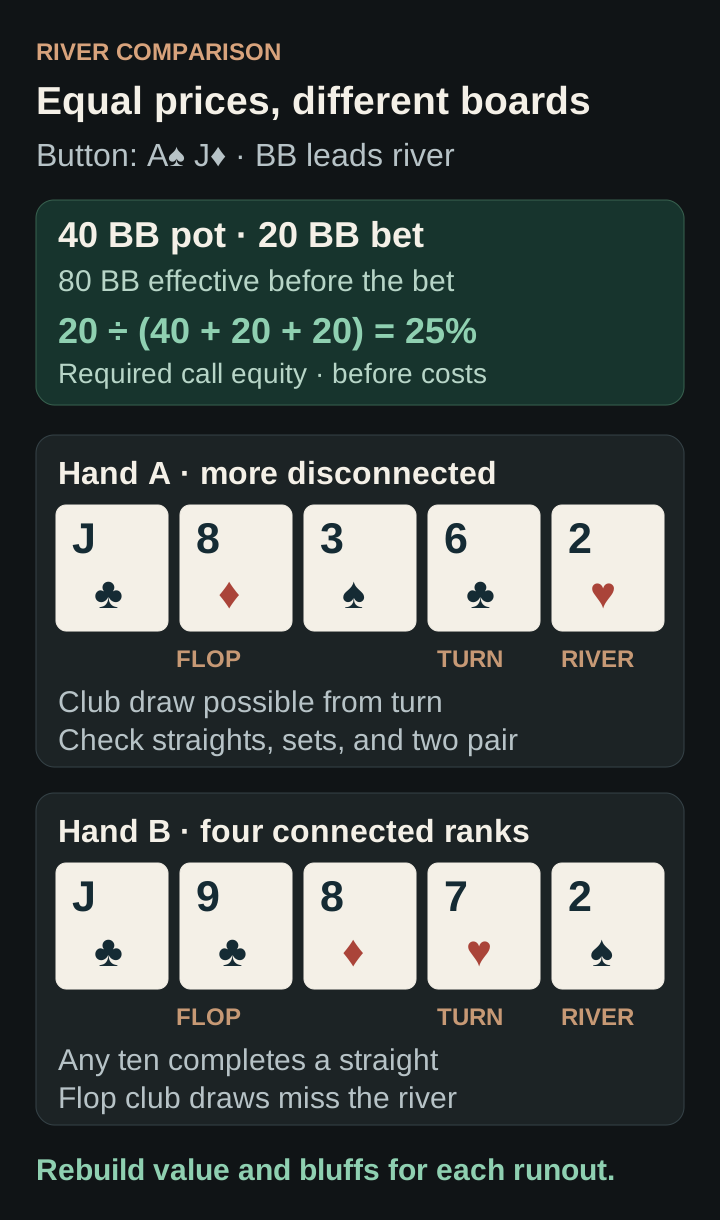
Yes. Consider two original river checkpoints using the normalized amounts above: heads up, button versus big blind, 40 BB in the pot, and 80 BB effective before the wager. The big blind check-called the flop and turn, then leads the river for 20 BB. The button holds A♠ J♦ in both hands. These are supplied study checkpoints; a real comparison must verify the earlier sizes that built each pot.
In Hand A, the board arrives J♣ 8♦ 3♠, then 6♣, then 2♥. In Hand B, it arrives J♣ 9♣ 8♦, then 7♥, then 2♠. The button has top pair with an ace kicker in both, and the same half-pot bet offers the same 25 percent call threshold. The board creates a different range problem.
Hand A has a more disconnected runout, though sets, two pair, and possible straights still deserve consideration. Hand B has four connected ranks: any ten completes at least a jack-high straight using 7, 8, 9, and J from the board. Club draws were present on Hand B's flop and missed by the river; Hand A developed a possible club draw only on the turn.
Build each betting range separately. Which better hands could check-call twice and lead this river? Which missed draws could use the same line? Does top pair beat any thinner value bets? The comparison reveals why copying a call from Hand A into Hand B needs more reasoning. It does not declare either call correct without a credible range.
How is a real-hand comparison different from a what-if?
Two recorded hands are observations from different situations. They can differ in opponent, timing, earlier size, exact suits, and several board cards at once. If the action you prefer changes, those records alone do not identify which difference caused it.
A what-if changes one stated input in a model while holding the others fixed. For example, keep one completed river hand's positions, pot, stack, and prior action, then compare a 20 BB wager with a 40 BB wager into the same 40 BB pot. The call threshold changes from 25 percent to about 33.3 percent. Whether the betting range also changes is a separate assumption to state.
Use real pairs to discover a question, then a controlled what-if to examine one part of it. Label the hypothetical clearly and use physically possible cards and sizes. A hypothetical branch can expose a dependency; it cannot tell you what an opponent would certainly have done.
What should you save from a paired hand review?
Save a short comparison note with four parts: the shared decision, the important differences, the assumption that changes your preference, and the boundary of the lesson. For the river pair above, the shared decision is a half-pot lead into top pair. The important differences include straight availability and when the club draw became possible.
A useful takeaway is conditional: before carrying a river call between similar hands, rebuild the value and missed-draw regions for each runout. A weak takeaway is that top pair always calls half pot, or that a connected board always forces a fold. Both erase the range work that made the comparison useful.
Keep the outcome outside the first-pass note. A won pot and a lost pot are not opposing grades for the same reasoning. Reveal the later result only after writing what each decision required under the information and assumptions available there.
How can Tells help you find and compare saved hands?
In the Tells Poker iOS app, open Hands and use Filter to narrow the saved history by position, time, or month. Choose exact hand selects two specific cards, including their suits. Use that filter for an exact holding; leave it clear when your study question covers a broader class such as top pair or different ace-jack suits.
Open each candidate in Replay and move to the same decision checkpoint. Check the recorded action, seats, board, pot, and remaining stacks, then keep your comparison note alongside the two hand records. Work through the hands one at a time with the checklist above.
The Analysis tab can add a street-by-street debrief and an alternative line when available. Compare the reasoning and assumptions behind each suggestion, rather than comparing only the grades. Treat analysis as a structured second opinion, never perfect or definitive play, and keep the study after the session.
Frequently asked questions
Do two poker hands need the same hole cards to be comparable?
No. Similar positions, action, stacks, board interaction, and decision price can matter more than identical starting cards. Exact cards still matter when they change hand strength, draws, or blockers.
Does converting to big blinds make different stakes identical?
No. It puts pot, bet, and stack amounts on the same scale. Opponent ranges, game format, costs, and earlier action still need separate checks.
Can a pair of hands prove a poker leak?
No. A pair can reveal a repeated question or an assumption worth investigating. Keep the lesson conditional and examine more complete examples before treating it as a persistent pattern.