
To give useful poker hand feedback, confirm the action and pot first, state the range assumption behind your answer, recommend one action with a reason, compare one realistic alternative, and name the uncertain read that could change the conclusion. That turns a reaction into a lesson another player can test.
Good feedback does not need to declare a perfect play. It needs to make its reasoning visible. “Call” is a verdict; “call if enough missed draws reach this river and bet” is a conditional claim that can be checked against the hand history and challenged by a friend.
Keep the discussion after the hand is complete. Work from the information available at the decision, hide the result at first, and treat any app analysis or outside opinion as a structured second opinion rather than definitive play.
What makes poker hand feedback useful?
Useful poker hand feedback helps the player understand why an action may fit the spot. It identifies the relevant facts, the assumed ranges, the price or purpose of the decision, and the main alternative. The reader should be able to see which part is certain and which part depends on an estimate.
The goal is not to sound decisive. It is to make the answer portable. A reply such as “bet smaller when second pair remains in the calling range” can guide the next review because it includes a condition. “Always bet small here” hides the reason and may be carried into a hand where the ranges are different.
A useful reply also stays independent of the result. A call can lose and still have been supported by the price and range. A bluff can work and still have targeted too few better hands. Judge the decision with the information available before the cards were revealed.
What should you verify before giving advice?
Verify the game format, positions, effective stack, board by street, action order, bet sizes, and pot at the decision. If the hand record says the river pot was 20 BB but the earlier actions produce 16 BB, resolve that difference before calculating a call or recommending a size.
Pause at the exact choice being reviewed. Later cards, showdown holdings, and the final pot should stay hidden during the first pass. This keeps the feedback tied to what the player could know at that moment rather than to how the hand ended.
Confirm the question too. “How did I play this?” invites a review of every street. “Should I call the 10 BB river bet?” gives the responder one decision to solve. If the question is broad, choose one pivotal spot or ask the player which action felt uncertain.
How do you separate facts from assumptions?
Facts are details preserved by the hand history: the button opened to 2.5 BB, the big blind called, the turn paired the board, and the river bet was half the pot. Assumptions are your model of what those actions contain: which value hands bet, which draws bluff, or which weaker hands call a raise.
State assumptions in plain language before using them. Instead of saying “they are polarized,” name the two regions you mean: strong made hands for value and missed draws as bluffs. Instead of saying “this size gets called,” name the worse hand classes expected to continue.
Confidence belongs with the assumption. If a player-specific read was available before the decision, include it. If the read comes only from seeing the showdown, leave it out of the first review. When information is missing, use conditional branches rather than quietly inventing a precise range.
What is a useful poker hand feedback structure?
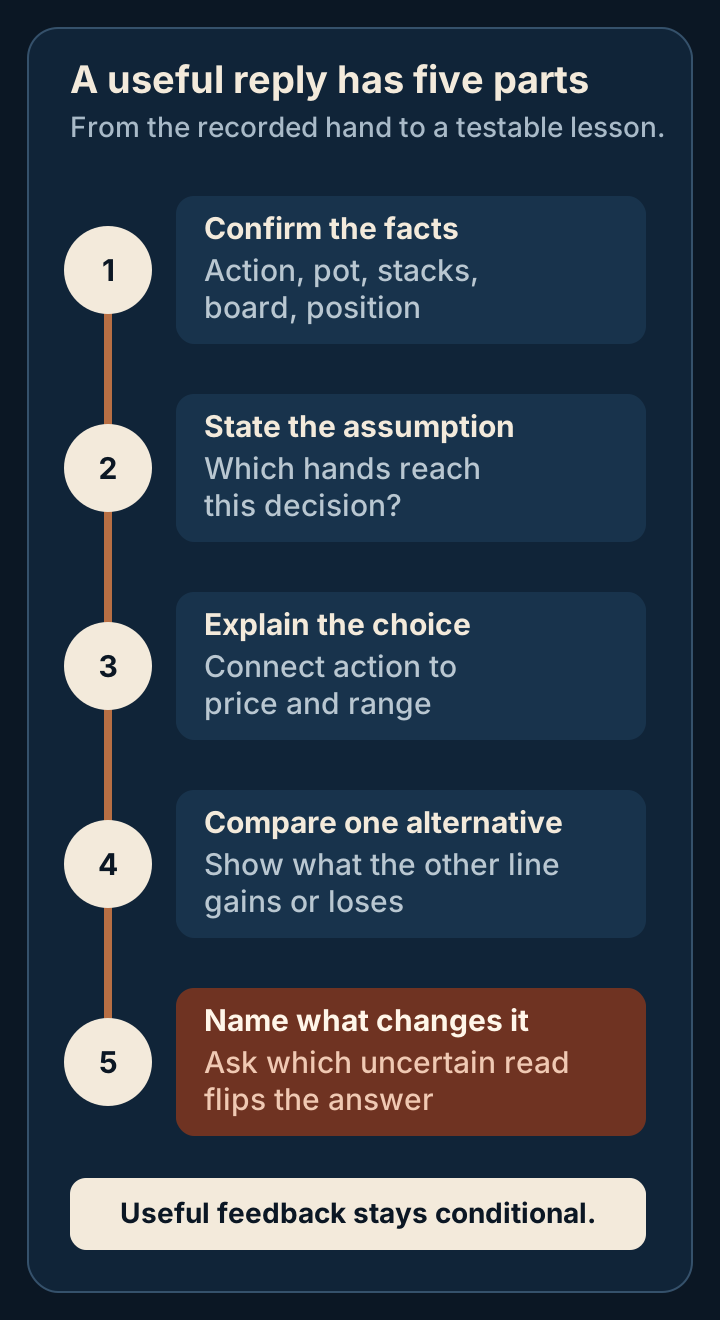
Use five parts. First, confirm the recorded facts. Second, state the range or response assumption that drives the answer. Third, choose an action and connect it to the price, range, or objective. Fourth, compare one realistic alternative. Fifth, name the read or range change that would flip the recommendation.
The reply can be short. For example: “The turn pot is 12 BB and 30 BB remains effective. I prefer a 6 BB value bet because weaker top pairs and draws can continue. Checking preserves bluffs but misses those calls. I would check more often if the opponent's range contains many check-raises.”
That structure leaves room for disagreement without becoming vague. A friend can challenge whether weaker top pairs really call or whether the check-raise region is large. The debate now has a location instead of becoming a contest between two unexplained actions.
What does useful feedback look like in a river example?
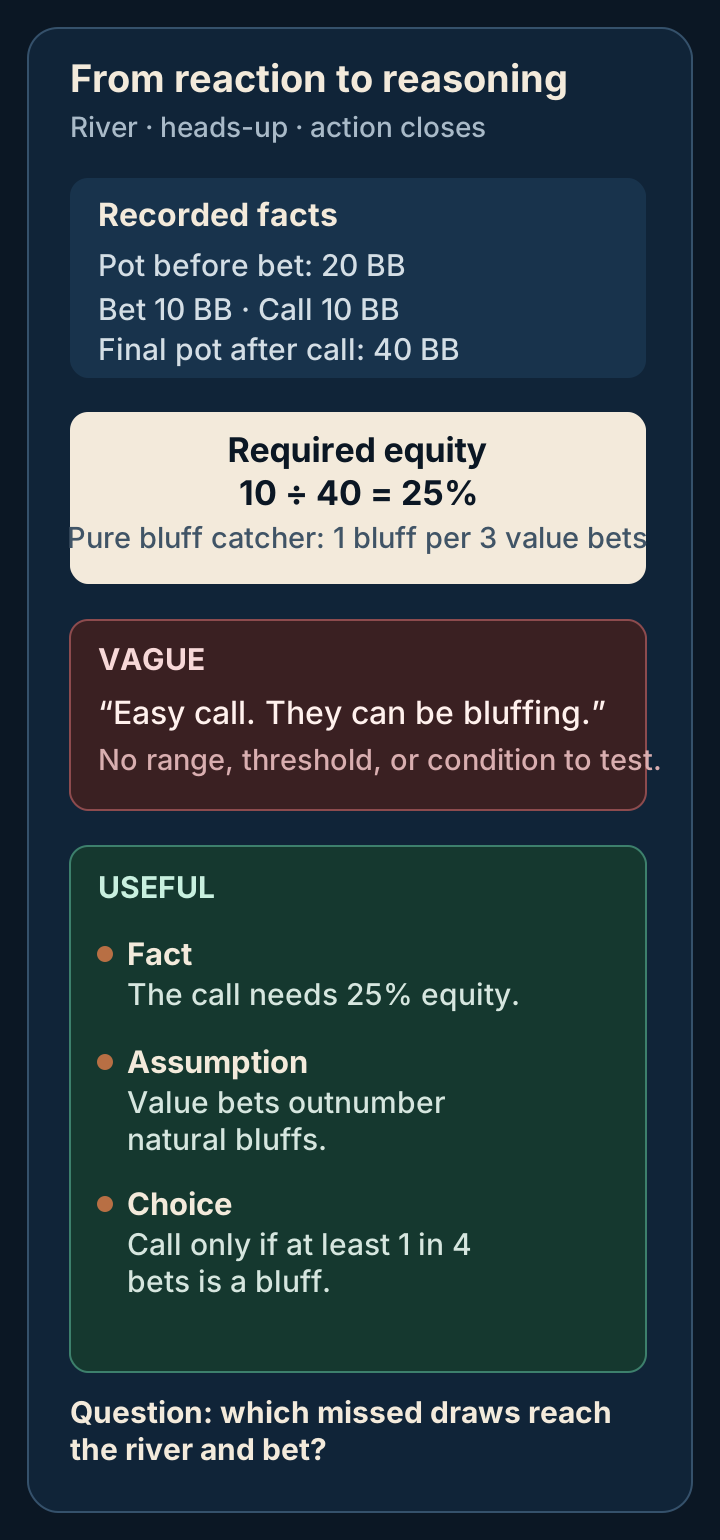
Suppose a heads-up river decision has a 20 BB pot before the bet. The board is A-heart 8-diamond 4-heart 2-club 2-spade, and the big blind holds 9-spade 8-spade. The cutoff bets 10 BB and the action closes. Calling 10 BB would create a 40 BB final pot, so the call needs 10 divided by 40, or 25% equity.
For a simplified first pass, treat the pair of eights as a pure bluff catcher: it loses to the value region and wins against the bluff region. The betting range therefore needs to contain at least one bluff for every three value bets, or one bluff in every four total bets, for the call to break even before other adjustments.
“Easy call—they can be bluffing” does not test that threshold. A useful reply is: “The call needs 25%. I call only if at least one quarter of this half-pot betting range is made of missed heart draws or other hands the eights beat. I fold if ace-x and higher pocket pairs bet while most missed draws check. Which missed draws reach the river through the earlier action and still bet?”
The response can then compare folding. Folding gives up the pot but avoids paying a range that may be too value-heavy. Calling captures enough bluffs only if the assumed candidates actually arrive and bet. The arithmetic is known; the disputed betting range is the part friends should examine.
What should you do when hand details are missing?
Do not repair the hand from intuition. Mark the missing detail and explain why it matters. If the exact river size is unknown, show how the price changes for two plausible sizes. If a suit is missing, explain whether it controls a completed flush, a blocker, or the list of missed draws.
Use branches that are broad enough to be honest. “Call against a half-pot bet if the missed draws bluff; fold against a pot-sized bet when that same range becomes value-heavy” is more useful than assigning an exact frequency without support. The branch shows the player what to remember next time.
If the missing fact changes the entire decision, stop there. The best feedback may be a capture lesson: record the effective stack, the turn size, or the suits before trying to solve the spot.
How should friends handle disagreement?
Find the first assumption where the replies split. Two friends may agree that the call needs 25% but disagree about how many missed draws bet. They may agree on the range but disagree about which size keeps worse hands calling. Name that fork before arguing about the final action.
Change one assumption at a time. Remove the weakest bluff, add a thin value bet, or change the expected response to a small size. If the preferred action flips quickly, label the spot close or assumption-sensitive. That is a useful conclusion, not a failure to decide.
Experience can suggest a range, but it should not end the discussion. Translate “players underbluff here” into the actual candidate bluffs believed to check. Translate “this size looks weak” into the value and bluff hands expected to use it. Specific disagreement creates a question the group can revisit.
Which feedback habits waste the discussion?
Avoid verdicts without reasons, result-based judgments, and universal rules built from one hand. “Bad call,” “nice hand,” and “you should always raise” may express a reaction, but they do not show which range, price, or response makes the action preferable.
Do not solve every street when the player asked about one decision. Reconstruct earlier action only as far as it changes the ranges at the chosen checkpoint. A focused answer is easier to question and remember than a long tour of unrelated possibilities.
Do not use a solver, app, coach, or confident friend as the final argument. Bring the conclusion back to the hand: what assumptions went in, what alternative was compared, and what new information would change it.
How can Tells support feedback between friends?
After a completed hand is saved, a Tells share link keeps Replay, Table Talk, and Analysis attached to the same hand. A friend can step through Replay before responding, which makes it easier to verify the action, pot, seats, board, and decision point instead of rebuilding them from a chat summary.
Table Talk supports comments and replies on the shared hand. The hand owner can also create a poll around a detected decision, so friends can choose an action before explaining their assumptions. That independent first choice helps prevent the earliest confident comment from anchoring everyone else.
When an Analysis is available, use its street review, decision math, range reasoning, and alternative line as another structured perspective after the independent replies. Tells is designed for post-session study, not assistance during a live hand, and its analysis is a second opinion—not a guarantee of perfect or definitive play.
Frequently asked questions
Should poker hand feedback start with an action or a question?
Start by confirming the decision and facts, then give the action you prefer with its main condition. End with a question when an uncertain range or read could change the answer.
Do you need an exact poker range to give useful feedback?
No. Start with plausible hand classes such as strong value, ordinary pairs, draws, and missed draws. Be clear about uncertainty instead of inventing exact frequencies.
Should the result be revealed before friends respond?
Usually no. Let everyone answer at the decision with only the information available then. Reveal the later action or showdown afterward without treating it as proof that the earlier choice was right or wrong.