
A check-raise in poker happens when a player checks, lets an opponent bet, and then raises that bet during the same betting round. The first check does not end the player's action. It passes the immediate choice to the opponent, creating the chance to respond if a bet follows.
A check-raise can build a larger pot with a strong hand, pressure a bet with a bluff or draw, or change which range controls the street. It is not automatically strong, deceptive, or correct. Its quality depends on which hands take the line, what calls or folds, the chosen size, and what happens on later streets.
The cleanest way to review a check-raise is to separate the sequence from the purpose. Reconstruct the pot and raise-to amount first. Then ask why checking was better than betting, which hands the raise targets, and whether the remaining stack supports a clear plan after a call.
What does check-raise mean in poker?
A check-raise is one player's two-action sequence on a single street: check first, then raise after another player bets. For example, the big blind checks the flop, the button bets, and the big blind raises. That final action is a check-raise because the same player made the opening check and the later raise.
A check followed by a call is a check-call, not a check-raise. A player who bets and then raises again after facing a raise is re-raising, not check-raising. Naming the sequence correctly keeps the action order clear when you rebuild a hand.
The play can happen on the flop, turn, or river whenever action returns to the player who checked. If every remaining player checks behind, the betting round ends and there is no opportunity to check-raise that street.
Why would a player check instead of betting?
Checking can keep the opponent's betting range available. If that opponent bets hands that would fold to a direct wager, checking may let those bets enter the pot before the raise. The tradeoff is real: the opponent can check behind, and the street may end without more money going in.
Position shapes the opportunity. An out-of-position player often gets the first chance to check, while an in-position player decides whether to bet behind. The check-raiser gives up immediate control of the action in exchange for a possible second decision after the bet.
Do not justify the play with surprise alone. A useful reason names the target: worse made hands or draws that may call, better hands that may fold, or a betting range that contains enough weak hands to pressure. Without a target, the raise is only extra motion.
What is a value check-raise?
A value check-raise expects enough worse hands to continue. Those hands may call the raise, re-raise, or put more money in on a later street. The relevant question is not whether your hand looks strong in isolation; it is whether the opponent's betting-and-continuing range contains hands you beat.
A strong hand can still prefer a check-call when raising would fold out most worse hands and continue mainly against better ones. It can also prefer a direct bet when the opponent is likely to check behind. Compare all three lines against the same plausible range rather than treating the check-raise as the default reward for strength.
What is a bluff or semi-bluff check-raise?
A bluff check-raise tries to make stronger hands fold. A semi-bluff check-raise also has ways to improve when called, such as a flush draw or straight draw. Both lines need fold targets; the mere possibility of improving does not make a raise useful if the opponent continues with nearly every hand that bet.
Review the bluff in two parts. First, identify the betting hands you expect to fold to the chosen size. Second, identify the hands that continue and how your exact cards perform against them. Blockers, draw quality, and backdoor possibilities can change the second part, but they do not replace the first.
River check-raise bluffs have no future card to provide extra equity. Their case rests on the value hands represented, the blockers held, the size, and whether the opponent can fold enough of the hands that bet. Avoid inventing a precise bluff frequency when the hand provides no basis for one.
How do you choose a check-raise size?
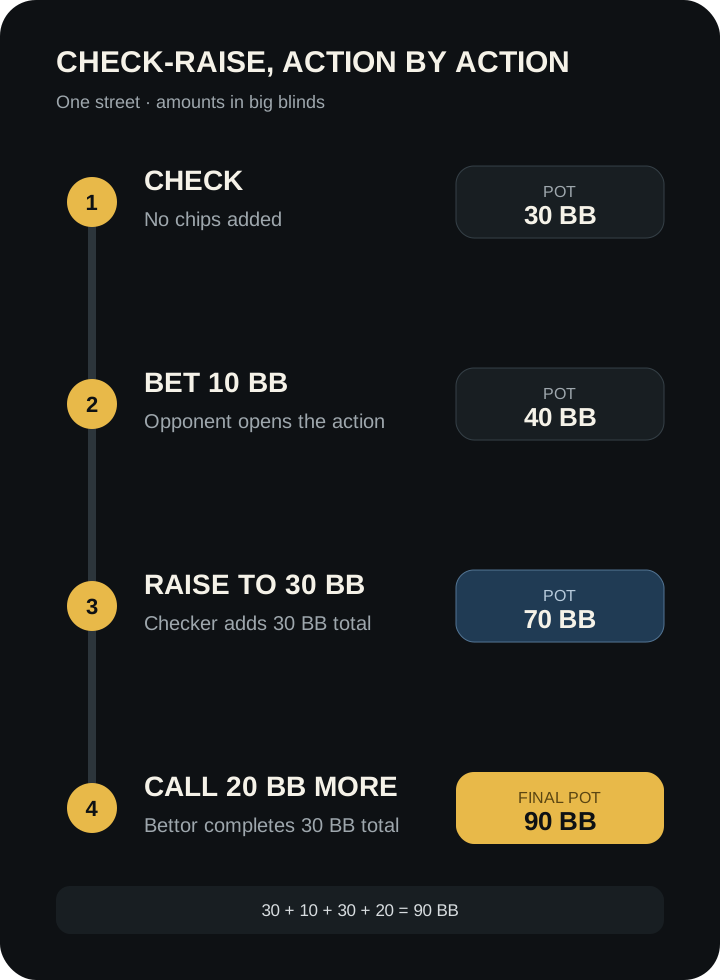
Start by clarifying whether a number means raise to or raise by. In a 30 BB pot, suppose an opponent bets 10 BB and you announce a raise to 30 BB. You contribute 30 BB, not 20. The bettor has already put in 10 BB and must add 20 BB to call. If called, the pot becomes 90 BB: 30 + 10 + 30 + 20.
There is no universal check-raise size. A useful size fits the pot after the bet, the effective stack, the board, position, and the hands expected to continue. Smaller raises offer the bettor a cheaper call and preserve more stack for later streets. Larger raises charge more now but can narrow the continuing range and create a shallower next-street pot.
Check the geometry before choosing. Calculate the pot after the bet, the extra amount the bettor must call, and the stack that remains after a call. A size that looks forceful but leaves an awkward or unexplained turn decision may be less coherent than a size chosen with the next street in view.
What does a complete check-raise example look like?
In a cash-game example, the button opens to 2.5 BB and the big blind calls. Ignoring rake, the flop pot is 5.5 BB. The flop is Q♠ 8♣ 4♠. The big blind holds 8♠ 4♥, checks, and faces a 1.8 BB continuation bet.
The big blind considers a raise to 7.5 BB. That raise asks the button to add 5.7 BB after the original 1.8 BB bet. If the button calls, the flop pot becomes 20.5 BB: the starting 5.5, the button's total 7.5, and the big blind's 7.5.
The value case is that top-pair hands, overpairs, and draws may continue while the two pair is ahead. The countercase is that a check-call keeps the button's weaker bets in and avoids narrowing the range too sharply. The best line depends on how those regions are built; the example demonstrates the decision, not a definitive answer for every opponent.
Before raising, the big blind should also map the turn. A spade, queen, eight, four, or blank can change the board and the opponent's continuing range in different ways. The check-raise is one branch of a multi-street plan, not the end of the analysis.
What should you ask before check-raising?
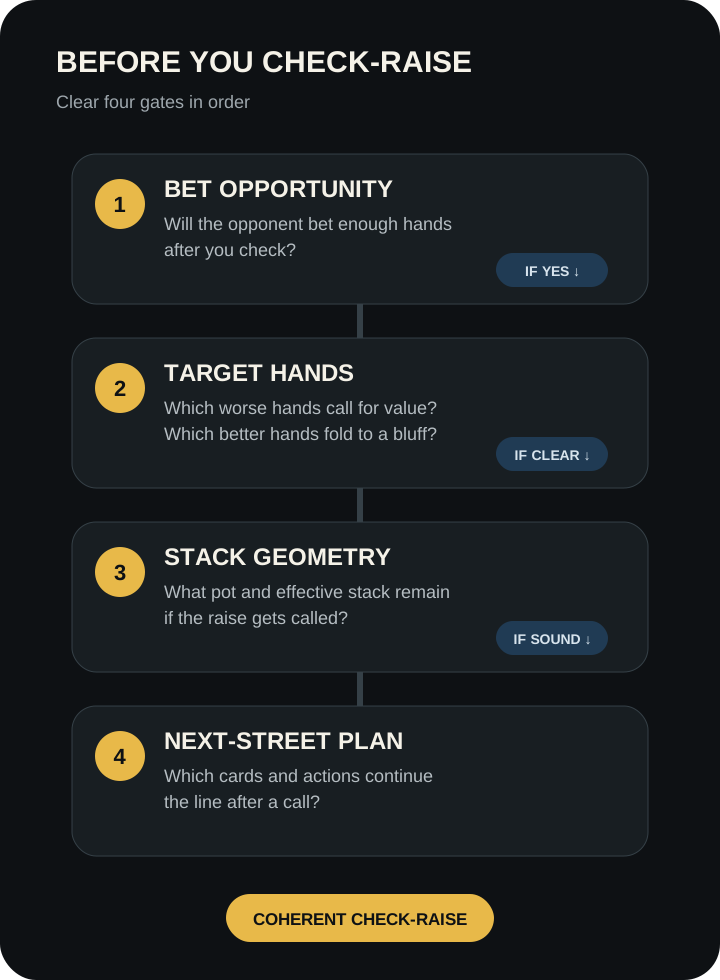
Use four questions. Will the opponent bet often enough after your check? Which worse hands call a value raise, or which better hands fold to a bluff? Does the raise size leave sensible stacks if called? Which turn cards and actions continue the plan?
A weak answer to the first question can defeat the whole line because the opponent checks behind. A weak answer to the second means the raise has no clear target. A weak answer to the third or fourth means the flop action was chosen without accounting for the pot it creates.
The questions are linked, but keep them separate during review. That makes it easier to find whether the issue was the initial check, the decision to raise, the amount, or the plan after the call.
How does a check-raise change in a multiway pot?
In a multiway pot, a check does not create one predictable response. More than one player may still act, a bet may receive a call before action returns, and players behind the bettor can continue after the raise. The check-raiser must account for every eligible player rather than treating the spot like heads-up poker.
A bet and call can make the pot larger but also represent more continuing strength. A bluff must get through multiple ranges, while a value raise has more possible callers. Reconstruct the exact order and the players still in the hand before applying a heads-up lesson.
What are the most common check-raise mistakes?
The first mistake is check-raising because the hand feels too strong to call. Strength does not identify which worse hands continue. The second is bluffing without fold targets. If the opponent's betting range is already strong or the raise is too small to pressure it, the bluff may simply build a larger pot against hands that continue.
Another mistake is confusing the raise-to amount with the additional amount. That error corrupts the pot, price, and remaining-stack calculations. State both numbers plainly: raise to 30 BB; the bettor calls 20 BB more.
Finally, do not stop the review on the flop. Many check-raises get called. If the line has no response to changing board cards, a second bet, or a check-back opportunity, the first raise was not fully planned.
How should you review a check-raise after the hand?
First, reconstruct the street in order: pot before action, your check, the opponent's bet, your raise-to amount, the call or re-raise amount, and the effective stack left. Mark any missing size rather than estimating it silently.
Second, build the opponent's bet range before building the response to your raise. Separate hands that bet-fold, bet-call, and bet-raise. Then place your own value hands, draws, and bluffs into the check-raise line and ask whether each category has a clear purpose.
Third, compare the check-raise with a direct bet and a check-call. Continue the most plausible branches through at least one next-street card. Finish with a portable cue such as: “Before raising, name the target and the turn plan.”
How can Tells help review a check-raise?
After the hand is complete, Tells Poker can keep the cards, positions, stacks, pot, and actions together in Replay. Move through the recorded frames to verify the check, bet, raise, and response in order before judging the result.
The Analysis view can add a graded street review, deterministic decision metrics when available, an alternative line, and a what-if branch. Use those pieces to compare the check-raise with checking and calling or leading the street, while keeping uncertain opponent assumptions visible.
Use the analysis as a structured second opinion to question, not a promise of perfect or definitive play. Tells supports study after a completed hand and is not intended to help while a hand is in progress.
Frequently asked questions
Can you check-raise before the flop?
No in a standard hand. If action reaches the big blind without a raise, the big blind may check, but that check closes preflop action rather than passing it to another player. The familiar check-raise sequence begins on a later street.
Is a check-raise always a strong hand?
No. A check-raise can contain value hands, bluffs, and semi-bluffs. Its composition depends on the board, positions, stack depth, sizing, and the opponent's betting range.
What happens if the opponent checks behind?
The betting round ends, so the original checker cannot raise that street. This is the main structural risk of checking with a hand that wanted to build the pot.
Does raise to 30 mean adding 20 after a 10 BB bet?
Not for the player who checked and has put in nothing on that street. That player contributes 30 BB total. The original bettor has 10 BB committed and would add 20 BB to call.