
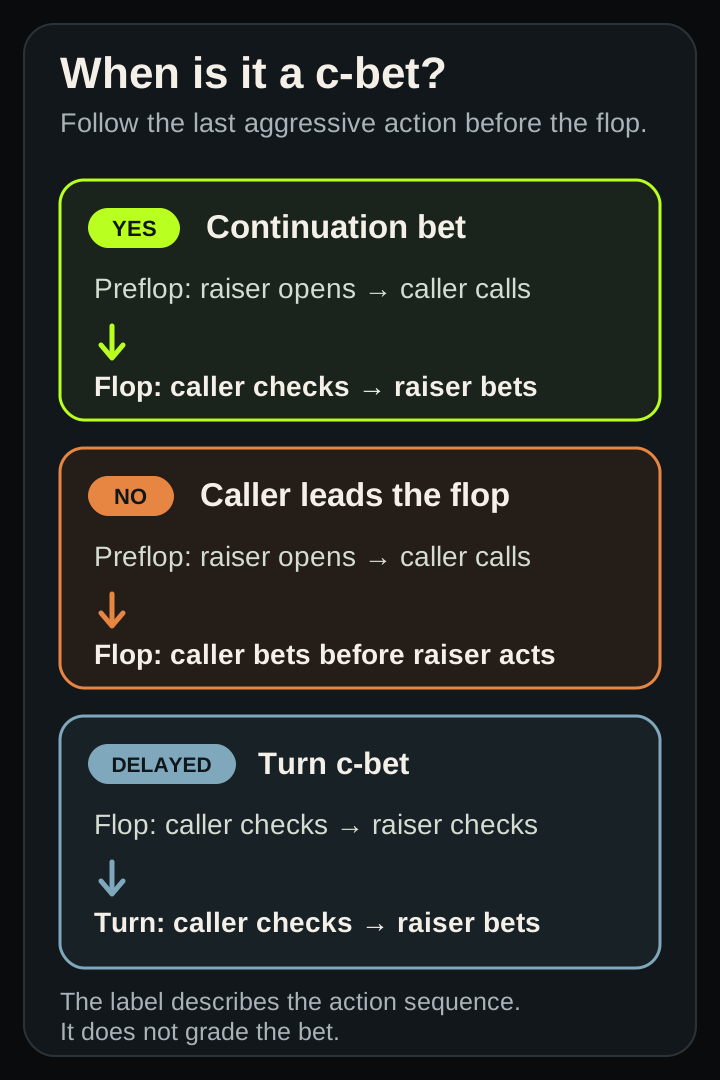
A continuation bet in poker, usually shortened to c-bet, is a flop bet made by the player who took the last aggressive action before the flop. If the button raises, the big blind calls, and the button bets after the big blind checks the flop, the button has made a continuation bet.
The label describes the action sequence, not the quality of the bet. A preflop raiser is allowed to check, and a caller who bets into that raiser is not making a c-bet. In a re-raised pot, the last player to raise before the flop becomes the potential continuation bettor.
Review a c-bet by asking how both ranges meet the board, which worse hands can call, which better hands can fold, what price the size offers, and what happens on the next street. Those questions are more useful than betting only because you were the preflop aggressor.
Why is it called a continuation bet?
The bet continues an aggressive line from one street to the next. A player raises before the flop, receives one or more calls, and then bets the flop. The raise and flop bet are separate decisions, but the name connects them because the same player made the last aggressive action before the flop and the first bet after it.
If the caller acts first and bets before the raiser can act, that is a lead into the preflop aggressor rather than a continuation bet. If the preflop raiser checks the flop and later bets the turn after being checked to again, players commonly call that a delayed c-bet.
Keep the naming question separate from the strategy question. You can identify a bet as a c-bet from the action alone. Deciding whether that bet has a useful purpose requires the cards, ranges, positions, stacks, size, and likely responses.
Can a c-bet happen in a 3-bet or multiway pot?
Yes. In a 3-bet pot, the 3-bettor made the last raise before the flop. If that player bets the flop, the wager is a continuation bet. The original opener called the re-raise and is no longer the last preflop aggressor, so a flop bet from that player after the 3-bettor checks is not a c-bet.
The label also works in a multiway pot. If one player raises and two players call, a flop bet from the raiser is still a continuation bet. The review is more demanding because the wager must pass through two continuing ranges, and either opponent may call or raise.
What should a continuation bet accomplish?
Give the bet a concrete job. A value c-bet should name the worse hands expected to continue. A bluff should name the better hands that may fold. A bet can also charge draws or keep overcards from realizing their chance to improve for free, but that benefit matters only when those hands are actually part of the caller's range.
One wager can have more than one purpose. A top-pair bet may collect value from weaker pairs while charging a draw. An unpaired hand may fold out some better high-card holdings while denying a free turn to hands it currently beats. The useful test is not which label sounds best; it is whether the expected responses make the size and future plan coherent.
How does the flop change a c-bet decision?
Start with range interaction. Ask which player can arrive with the strongest hands, which player has more medium-strength hands, and which draws exist. A disconnected flop with one high card creates different value and bluff regions than a connected flop with several straight and flush possibilities.
Then use your exact cards. A hand with clear value, useful backdoor possibilities, or cards that remove likely calls may fit a betting range differently from a hand that has showdown value but folds out mostly worse hands. The board does not issue a universal bet-or-check command; it changes which purposes are available.
Position matters too. An in-position raiser can check and still act after the opponent on the turn. An out-of-position aggressor who checks gives the caller the next choice immediately. Compare the branch created by betting with the branch created by checking rather than studying the board in isolation.
How do you choose a continuation-bet size?
Measure the bet against the pot before the wager. A 2-big-blind bet into a 6-big-blind pot is one-third pot; the same 2-big-blind bet into a 12-big-blind pot is one-sixth pot. Writing both the amount and the starting pot makes the price reproducible during review.
Choose a size by working backward from the hands you want to call or fold and the stack you want to leave behind. A smaller bet risks less and offers the caller a lower price. A larger bet asks more of the continuing range and builds a bigger next-street pot. Neither effect proves that one size belongs on every board.
Also plan for resistance. Which hands raise this size? Which hands call and reach the turn? How much remains if the bet is called? A size is incomplete until you can explain the next branch it is meant to create.
What is a complete continuation-bet example?
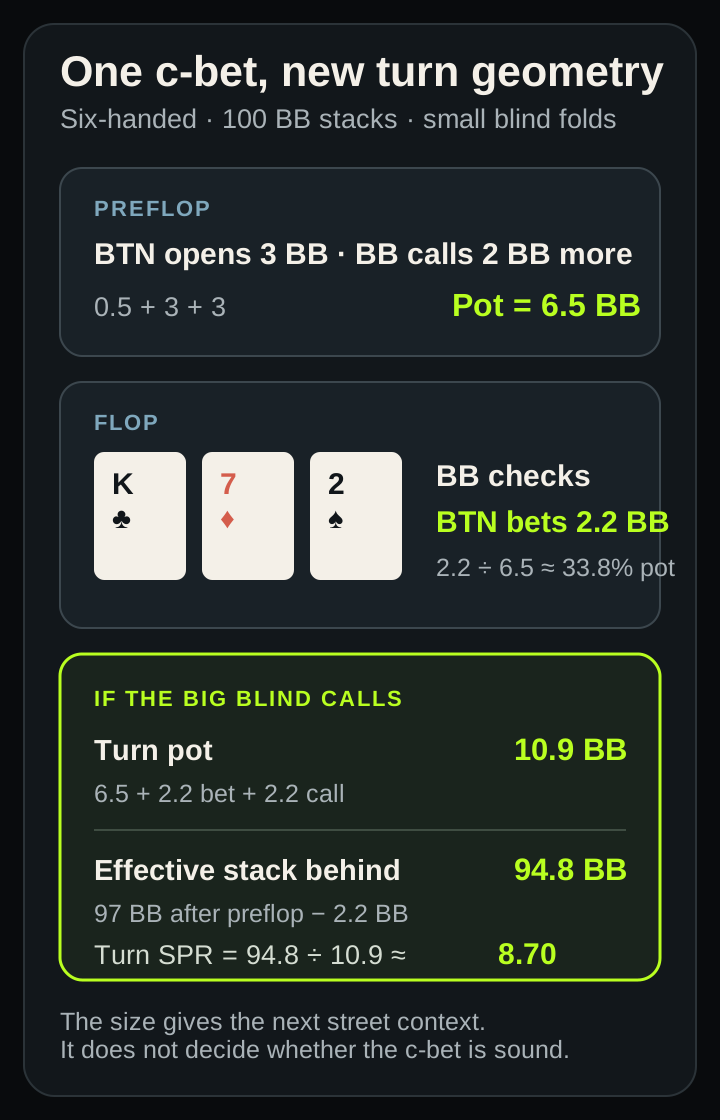
Six players are seated in a 100-big-blind cash game. Action reaches the button, who raises to 3 big blinds. After the small blind gets out of the way, the big blind contributes 2 more to match. Add the dead 0.5 blind to the two 3-big-blind contributions for a 6.5-big-blind flop pot.
The flop is K♣ 7♦ 2♠. The big blind checks, and the button considers betting 2.2 big blinds. Because the button made the last aggressive preflop action, that wager would be a c-bet. It is about 33.8 percent of the pot, but the percentage identifies only the price—not whether every button hand should use it.
Review the button's range in parts. Strong hands can ask which worse pairs continue. Unpaired hands can ask which better hands fold and which live overcards are denied a free turn. Hands with useful showdown value can compare those gains with checking. If the big blind calls, the turn pot becomes 10.9 big blinds, both players have 94.8 behind, and the turn SPR is about 8.70.
That next-street geometry belongs in the flop decision. The 2.2-big-blind size leaves substantial room for later betting, so the button still needs a turn plan for different cards and responses. The final outcome cannot tell you whether the flop wager had that plan when it was made.
When should the preflop raiser check instead?
Check when betting does not have a convincing target or creates a worse future branch than taking a free card. A hand may already beat most of the folds and lose to most of the calls. Another hand may benefit from seeing the turn without facing a raise. Some strong hands can also check when keeping weaker hands in the opponent's range is valuable.
Do not treat checking as surrender. It can preserve showdown value, control how quickly the pot grows, and keep both strong and weak hands in your checking range. The next decision still depends on the turn card and the opponent's action; checking simply chooses that branch over the immediate bet.
What are a delayed c-bet and a double barrel?
A delayed c-bet happens when the preflop aggressor checks the flop and then bets a later street after the action permits it. In the common heads-up in-position sequence, the caller checks the flop, the raiser checks back, the caller checks the turn, and the raiser bets. The delay changes the ranges because both players declined a flop bet.
A double barrel is a turn bet that follows a flop bet from the same player. If the preflop aggressor c-bets the flop, receives a call, and bets the turn, that second wager is the next barrel. Review the turn as a new decision: the called flop and new card have changed which value hands, draws, and bluffs remain.
What are the most common c-bet mistakes?
The first mistake is betting automatically because you raised preflop. The second is judging the bet only by whether the opponent folded. A successful bluff can still target the wrong range, and a value bet can be sound even when the opponent happens to fold.
Other mistakes include calling any flop bet a c-bet, using one size on every board, ignoring a second caller in a multiway pot, and planning the flop without considering a raise or turn call. Another is explaining a bet with vague pressure instead of naming the hands expected to respond.
How should you review a continuation bet after the session?
Reconstruct the preflop action first and identify the last aggressor. Record the positions, effective stack, flop, pot, bet size, and every player still able to act. Then separate the facts from the model: the action and cards are facts; the ranges and expected responses are assumptions to test.
Ask five questions at the flop. Which worse hands call? Which better hands fold? Which hands may raise? What turn pot and stack does a call create? Which turn cards support another bet, a check, or a response to aggression? Compare the actual wager with checking and at least one realistic alternative size.
Finish with one portable lesson rather than a command to always c-bet or never c-bet that board. A useful note might be: “Before betting one-third pot, name the worse calls and better folds, then check the turn SPR.” That instruction can guide another review without pretending two lineups are identical.
How can Tells help review a c-bet?
After the hand is complete, Tells Poker Replay moves through the saved action one step at a time with the streets, seats, board, stacks, pot, and action log together. Pause on the flop to confirm who made the last preflop raise, how much was in the pot, and which player made the next bet.
The Analysis tab can organize the hand into a graded street-by-street review with a quick take, reasoning, the main alternative line, and a what-if branch. Use that debrief as a structured second opinion for post-session study. It is not live assistance, and it does not make one c-bet size perfect or definitive for every range and opponent.
Frequently asked questions
Does a continuation bet have to happen on the flop?
The standard c-bet is a flop bet by the last preflop aggressor. If that player checks the flop and bets a later street, the wager is commonly described as a delayed continuation bet.
Can the 3-bettor make a continuation bet?
Yes. The 3-bettor made the last aggressive action before the flop, so a flop bet from that player is a c-bet. The original opener became the caller after facing the re-raise.
Is every flop bet a c-bet?
No. The bettor must have made the last aggressive preflop action. A caller who leads into the raiser, or a player who bets a flop after no preflop raise, is not making a continuation bet.
What percentage of the pot should a c-bet be?
There is no single percentage for every hand. Choose a size from the ranges, board, position, effective stack, hands you want to call or fold, and the next-street pot the bet creates.