
Poker equity is the percentage of the pot a hand or range expects to receive if the remaining possibilities are played out from the current decision. Wins count as a full share and ties count as a partial share. Equity changes with the known cards, the opponent range, the street, and the future runouts still available.
Equity describes a repeated-outcome model, not what must happen once. A hand with 45 percent equity can win the next showdown, and a hand with 80 percent can lose it. The single result does not confirm or disprove the estimate.
Use equity during post-session study, when you can rebuild the hand and make the range assumption visible. The number becomes useful when you can say what it was calculated against and which details would move it.
What does equity mean in poker?
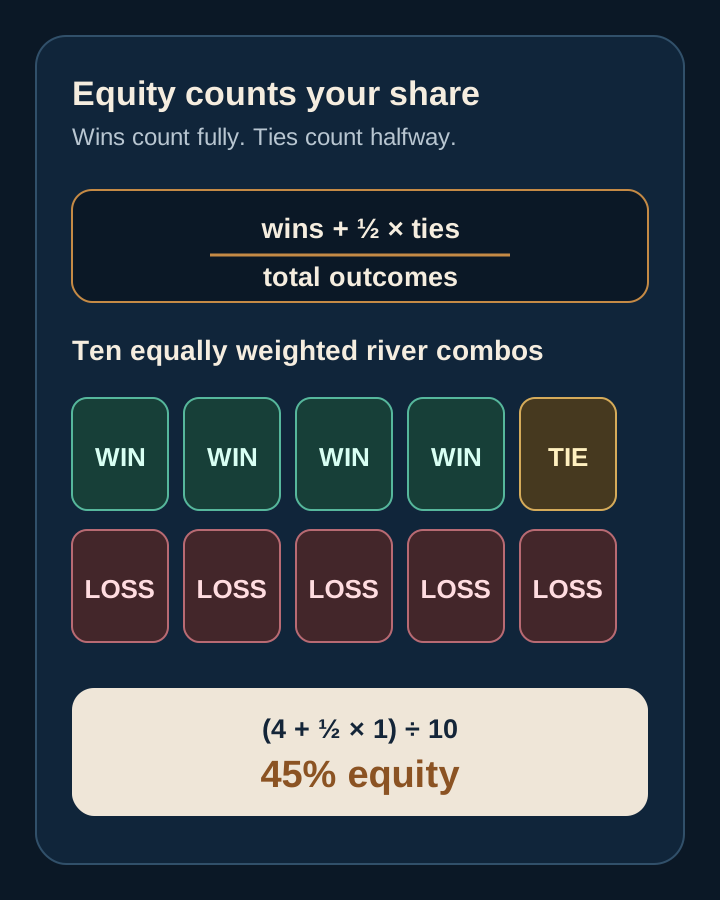
Equity is your expected share of the pot across the outcomes included in a model. If every outcome is a win, you have 100 percent equity. If every outcome is a loss, you have zero. A tied pot contributes only the fraction you receive, so a heads-up tie normally contributes half of a win.
The model must name both sides. Your cards do not have one permanent equity number. A pair can have high equity against a range full of missed draws and much lower equity against a range concentrated on stronger made hands. On an earlier street, the unseen turn and river cards add another layer of possible outcomes.
How do you calculate poker equity?
For equally weighted outcomes, use equity = (wins + tie share) divided by total outcomes. In a heads-up model, each tie contributes one-half. In a three-player tie, it contributes one-third because that is the share of the pot the hand receives.
Consider a constructed river range with 10 equally weighted combinations. Your hand beats four combinations, ties one, and loses to five. The equity is (4 + 0.5) divided by 10, or 45 percent. The five losing combinations still matter even if the hand shown at showdown came from the winning group.
Before the river, a calculation also has to evaluate the available runouts. Each legal future board is paired with each opponent holding that remains possible after card removal. Software can enumerate or sample those branches, but the output still depends on the cards and range supplied to it.
What is the difference between hand-versus-hand and hand-versus-range equity?
Hand-versus-hand equity assumes the opponent's exact cards are known. On the turn, for example, the calculation can compare the two revealed holdings across every legal river. This is useful for checking an all-in result, but it uses information you often did not have when the decision was made.
Hand-versus-range equity replaces one known holding with a set of plausible holdings. Each live combination contributes according to its weight, and blockers remove combinations that conflict with your cards or the board. The answer is more faithful to a real decision, but it is also conditional on how the range was built.
A range should follow the action. Start with hands that fit the position and preflop choice, then narrow them with each bet, check, call, or raise. Recalculate when an assumption changes instead of treating the first percentage as a fact about hidden cards.
How is poker equity different from pot odds?
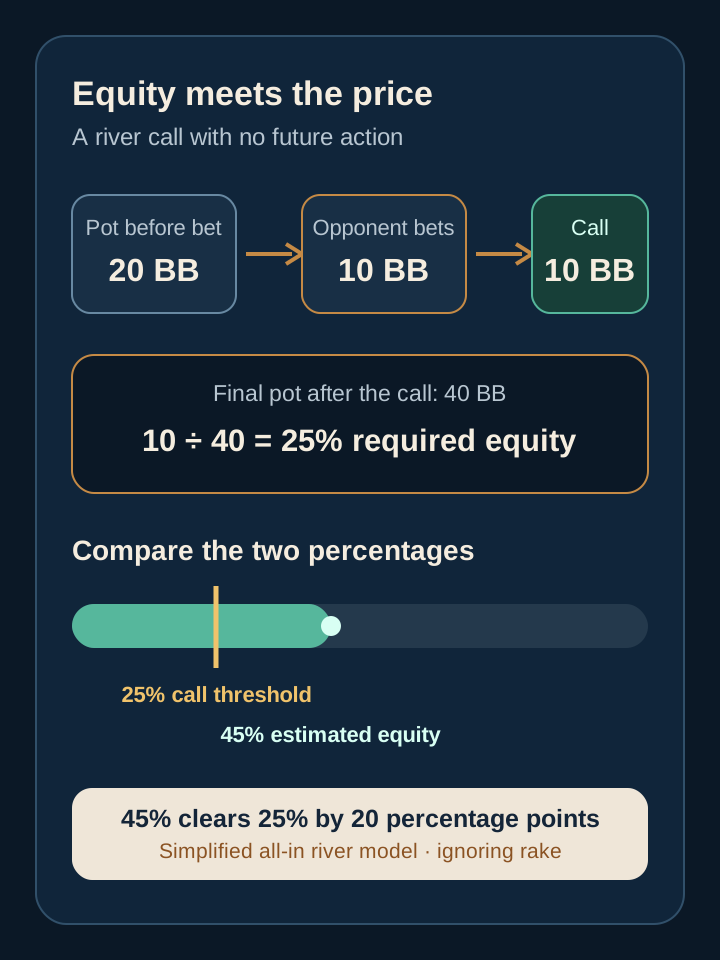
Equity estimates your share of the possible outcomes. Pot odds convert the price of a call into the share you need to break even in a simplified model. Compare the two only after both are calculated from the same decision point.
Suppose the pot is 20 big blinds and an opponent makes a final 10-big-blind all-in bet. Calling costs 10, and the final pot after your call would be 40. Required equity is 10 divided by 40, or 25 percent. If the range model gives you 45 percent equity, the call clears that price by 20 percentage points before rake.
That comparison is clean on the river because no cards or betting remain. Earlier streets require more care: future bets, position, implied odds, and the chance that a hand must fold before showdown can prevent raw equity from turning into the same share of the pot.
Why does equity change from street to street?
Every new community card removes future runouts and changes which hands are made, drawing, or blocked. A strong draw can hold substantial flop equity and then lose much of it on a turn that misses. A made hand can gain equity when a blank turn removes one chance for the opponent to improve.
Action also changes the range. When an opponent calls the flop and raises the turn, some hands that reached the flop no longer fit the line. Even if your two hole cards are unchanged, your equity can move because the comparison set has become different.
Save equity with its street and range label. Writing only “I had 52 percent” leaves out the board, the opponent model, and the point in the hand where the number applied.
What is equity realization?
Raw equity describes the share produced by the stated cards, range, and runouts. Equity realization asks how much of that share a hand can actually capture when betting continues. The two ideas match most closely when the players are all-in and no future decisions remain.
Before an all-in, a hand may be forced to fold on later streets, miss chances to receive value, or face difficult bets while out of position. Another hand may win extra pots by betting or reach showdown more comfortably. Those paths mean two hands with similar raw equity can perform differently within a strategy.
Do not repair this uncertainty by inventing a more precise equity number. Keep the raw estimate, then write the realization factors separately: position, remaining stack, likely future sizes, and which runouts permit continued action.
How should you use equity in a post-session review?
First, freeze the hand immediately before the decision. Record the hole cards, board, positions, pot, amount to call, effective stack, and every earlier action. Second, build an opponent range from information available at that moment rather than from the cards later revealed.
Third, calculate or estimate your equity against that range. Fourth, calculate the required equity when you are facing a bet. Fifth, test sensitivity by changing the uncertain part of the range: remove a bluff class, add a value class, or alter a weight and see whether the conclusion crosses the price.
Finish with a conditional lesson. “The call clears the price only when the missed draws remain in the betting range” is more useful than “I had enough equity.” It identifies the assumption to watch in a similar future spot.
Which poker equity mistakes are most common?
One mistake is calculating against the opponent's actual showdown hand and pretending that was the decision-time range. Another is confusing outs with equity. Outs list particular improving cards; equity also includes times you are already ahead, ties, every legal runout, and the weights of the opponent's holdings.
Players also compare equity with the wrong denominator. The required percentage for a call uses the amount to call divided by the final pot after calling. Comparing equity with the opponent's bet as a percentage of the current pot produces a different number and answers the wrong question.
Other errors include forgetting ties, leaving blocked combinations in the range, giving every holding equal weight without a reason, using a heads-up number in a multiway pot, and reporting extra decimal places while the range itself is uncertain.
How can Tells help with an equity review?
After the hand is complete, Tells Poker can capture the cards and action through guided, text, or voice input, then Replay can help you verify the sequence before analysis. Accurate cards, sizes, and action matter because they determine both the price and which range assumptions remain plausible.
When a debrief has enough card and range detail, the Analysis view can show your calculated equity against an estimated opponent range, the combination count for each range group, and the required equity for a priced call. The opponent range is still an estimate built from the recorded action; the displayed equity is calculated against that estimate.
Use the result as a structured second opinion for post-session study. Change the questionable assumption, compare the new result, and bring the full hand to a friend when the answer depends on how the opponent range was constructed.
Frequently asked questions
Is poker equity the same as the chance of winning?
Not exactly. Win probability counts outright wins, while equity counts your expected share of the pot. A heads-up tie adds half a pot to equity even though it is not an outright win.
Can the same poker hand have different equity numbers?
Yes. Equity changes with the board, street, number of opponents, future runouts, and the range assigned to each opponent. The cards alone do not create one permanent percentage.
Does higher equity always mean you should call or bet?
No. A call must compare equity with its price, and decisions before the river also depend on future action and equity realization. Betting adds questions about folds, worse calls, stronger continues, and size.
Do you need a solver to understand poker equity?
No. You can learn the concept with small outcome models and exact river examples. Software becomes useful when a range contains many combinations or the remaining runouts are too numerous to count by hand.