
An out in poker is an unseen card that improves your hand to one that is likely to win against the opponent range you are considering. To count outs, list the exact helpful cards, remove cards already visible, count overlapping cards only once, and test whether each improvement would actually move you ahead. Clean outs can stay in the count; dirty or false outs need to be reduced or removed.
The number of outs is not automatically your equity and it is not a command to call. Outs describe particular cards that may arrive. Equity also includes the times you are already ahead, ties, runner-runner paths, and the chance that you improve but still lose. Pot odds answer a different question: how much equity a call needs at its current price.
Use outs during post-session study, when you can reconstruct the cards and action without rushing. A precise count is only useful when the underlying range assumption is visible. If changing the opponent's plausible holdings changes which cards are clean, save that condition with the lesson.
What does an out mean in poker?
An out is a specific unseen card that improves your current hand into a hand expected to beat enough of the relevant opposing range. If you hold four cards to a flush, each unseen card of that suit begins as a candidate out. It becomes a useful out only after you check that the completed flush is likely to be best.
Outs are always attached to a decision point. On the flop, you may be counting cards that can improve you on the turn. On the turn, you count cards that can improve you on the river. The board, your hole cards, known exposed cards, and the action so far determine which card identities are still available.
The opponent range matters because the same card can be clean against one holding and useless against another. An ace that gives you top pair may beat a missed draw but remain behind two pair or a set. Calling every apparent improvement an out makes the count look precise while hiding the most important assumption.
How do you count poker outs step by step?
First, freeze the hand at the decision and write every known card. In hold'em, your two hole cards plus the three flop cards leave 47 unseen cards. After the turn, six cards are known and 46 remain unseen. Do not subtract folded players' cards unless those cards were actually exposed.
Second, name the hand you are trying to make and list the exact unseen cards that can make it. Third, combine the lists and remove duplicates. A card that completes both a straight and a flush is one physical card, so it is one out rather than two.
Fourth, test each candidate against the opponent's plausible range and the remaining runout. Mark cards as clean, dirty, or false instead of forcing every candidate into a full count. Fifth, convert the range-tested count into a probability and compare that information with the price and future action.
Why must overlapping outs be counted once?
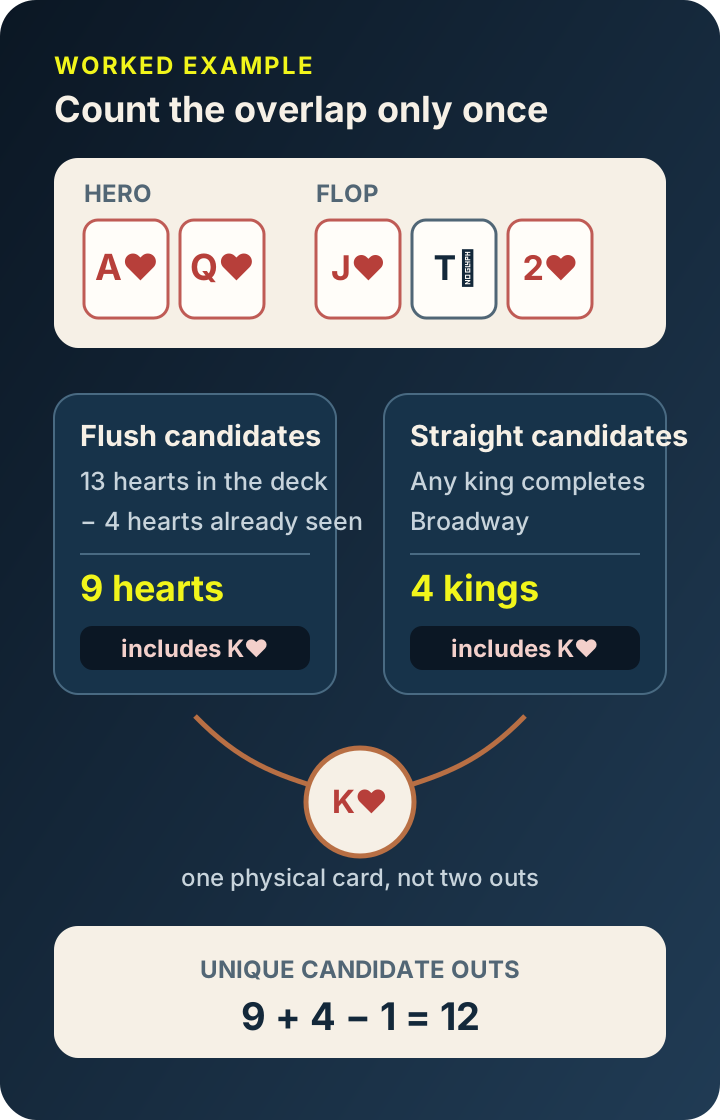
Suppose you hold A-heart Q-heart on a J-heart T-club 2-heart flop. Four hearts are visible, so nine hearts remain unseen. Any one of those hearts completes a flush. Any king also completes an ace-high straight, giving four king candidates.
Adding nine and four produces 13, but K-heart appears in both lists. It is simultaneously a heart and a king, yet it can appear only once on the next street. The unique candidate count is therefore 9 plus 4 minus 1, or 12.
This is still a candidate count. Before treating all 12 as clean, compare the made flush or straight with hands that fit the earlier action, including sets, two pair, competing draws, and hands that could tie. The arithmetic removes duplication; the range check decides whether the cards deserve full credit.
What are clean, dirty, and false outs?
A clean out is a card that is likely to put you ahead of the range being reviewed. A dirty out improves your hand but can also complete a stronger hand for part of that range, create a tie, or leave the opponent with a strong redraw. A false out looks helpful by hand label but does not actually make you the likely winner.
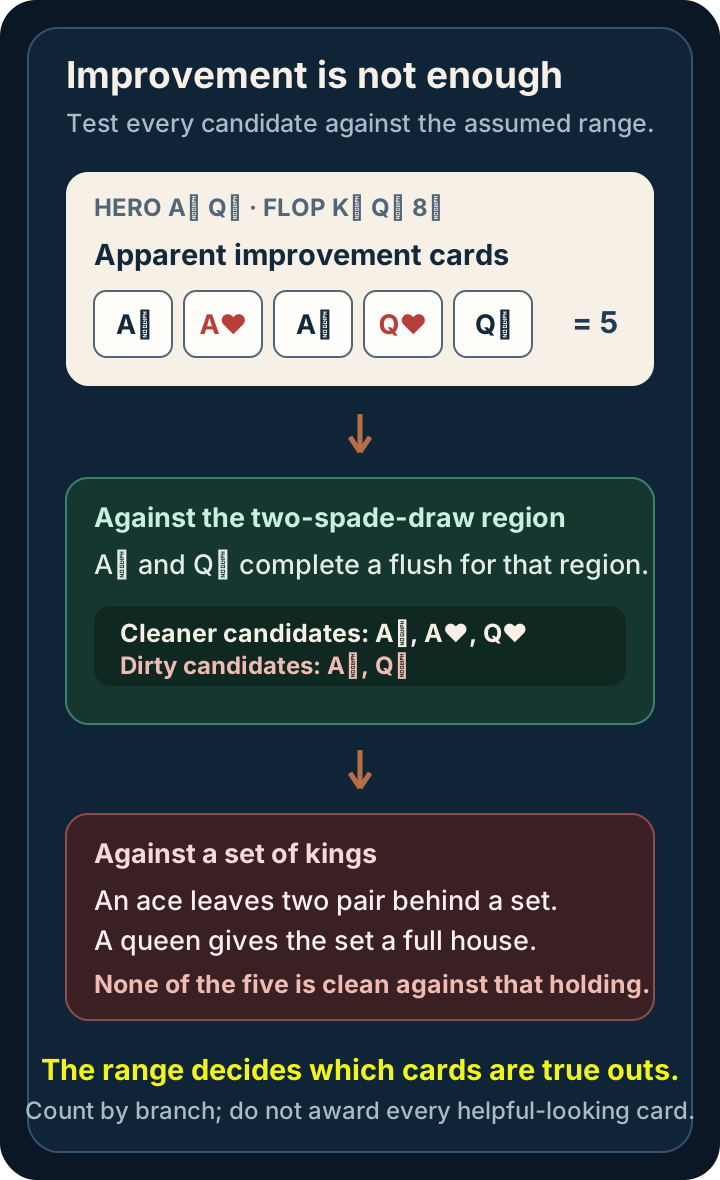
Consider A-club Q-club on K-spade Q-diamond 8-spade. Three aces and two queens appear to improve one pair, so the first list contains five cards. Against the part of an opponent's range holding two spades, however, A-spade and Q-spade complete a flush for that opponent. Those two cards are dirty in that branch.
The range test can be harsher. If the opponent holds K-diamond K-club for a set, an ace leaves your two pair behind three kings. A queen gives you three queens but pairs the board, making kings full for the opponent. None of the five apparent improvements is clean against that exact holding.
Do not solve the uncertainty by inventing a fractional count without explanation. Split the range into understandable branches, note which candidates work in each branch, and test how sensitive the decision is. A conditional count teaches more than an unexplained number with a decimal.
How do you turn outs into a probability?
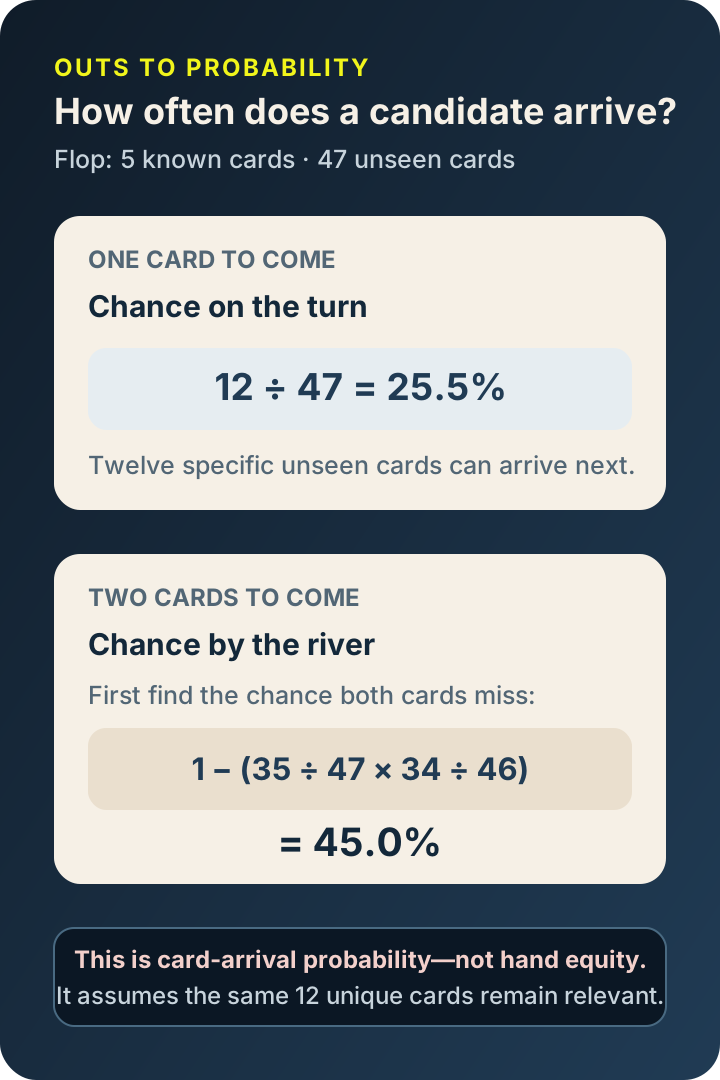
For one card to come, divide the number of unique relevant outs by the number of unseen cards. From the flop to the turn, use outs divided by 47. From the turn to the river, use outs divided by 46. With 12 clean outs on the flop, the next-card probability is 12 divided by 47, or about 25.5%.
With two cards to come, calculate the chance of missing both cards and subtract it from 1. Under the simplified assumption that the same 12 cards remain relevant, 35 of 47 unseen cards miss on the turn. After one miss, 34 of 46 miss on the river. The probability of seeing at least one of the 12 cards is 1 minus 35 divided by 47 times 34 divided by 46, or about 45.0%.
The two-card number is appropriate only when both remaining cards are part of the decision you are modeling. If calling the flop leads to another wager on the turn, the 45.0% runout probability does not mean you automatically buy both cards for the current call. Future prices, folds, and range changes still belong in the tree.
These calculations measure the arrival of specified card identities. They do not prove that the resulting hand wins, so the clean-out test comes first. If a turn card changes which river cards are helpful, build separate branches rather than carrying one fixed count through every runout.
Are outs the same as poker equity?
No. Outs count selected improvement cards, while equity is your share of the pot across all possible outcomes against an assumed range. You can have equity without needing to improve because your current hand may already be ahead. You can also hit an out and later lose, tie, or face a redraw.
Runner-runner paths create another difference. A hand may improve only when two particular cards arrive in sequence, even though neither first card by itself fits a simple final-hand out count. Full equity can include those paths; a basic one-card outs calculation usually does not.
Keep the labels separate during review. Write the clean candidate cards, calculate their arrival probability, then discuss how often the resulting hand wins against the range. That sequence prevents a familiar outs shortcut from being mistaken for a complete equity calculation.
How should you use outs with pot odds?
Pot odds give the immediate equity threshold for a call. Outs can help describe one source of future winning outcomes, but comparing the two requires matching the same time horizon. A 25.5% chance to hit on the next card is not the same input as a 45.0% chance to see a card by the river if another decision may occur in between.
When the remaining cards will run without another wager, the full runout matters more. When future betting remains, ask whether you will see the next card only, whether a miss can continue, and whether an apparent hit can face a difficult river. Then add implied-odds or reverse-implied-odds assumptions explicitly rather than treating future money as already available.
The useful conclusion is conditional: the call reaches its price if enough clean winning paths remain and can be realized under the expected action. The count supports that argument; it does not replace the opponent range, stack depth, or the purpose of the decision.
Which mistakes make an outs count unreliable?
The first mistake is double-counting a card shared by two draws. The second is counting every overcard or pair-improving card without checking whether it moves ahead of the betting range. The third is treating dirty outs as fully clean because the hand name improves.
Another mistake is using a by-the-river probability when the current payment buys only the next card. Players also subtract unseen folded cards they never observed, or forget that a known card has already removed one suit or rank from the deck.
Finally, do not judge the count by the result. Missing every clean out does not make the call wrong, and hitting a dirty card does not make the count sound. Recheck the list and assumptions at the decision before revealing the later streets.
How can Tells help with an outs review?
After a completed hand is saved, Tells Poker Replay keeps the hole cards, board, positions, actions, committed wagers, remaining stacks, and total pot together as you move through the hand. Pause at the decision and verify the known cards before building an outs list. If the hand record is incomplete, mark the uncertainty instead of silently filling it in.
For a facing-bet decision, the Analysis view can show the required equity for the call based on the recorded pot and amount to call. The app labels that figure as the price of the call, not an estimate of your hand's equity. Use your range-tested outs and wider equity reasoning as a separate side of the comparison.
Tells is designed for completed-hand review after the session, not assistance during a live hand. Treat its debrief as a structured second opinion rather than perfect or definitive play, especially when an unsupplied opponent range changes which apparent outs are clean.
Frequently asked questions
How many outs does a flush draw have?
A standard four-card flush draw begins with nine unseen cards of that suit because 13 exist and four are known. Range, exposed cards, higher flushes, paired boards, and redraws can make some of those candidates dirty or false.
Can one card count as two poker outs?
No. A card may complete more than one draw, but it is still one physical card. Combine the draw lists and count each unique card identity once.
Do you use 47 or 46 unseen cards when counting outs?
From the flop to the turn, five cards are known, so 47 are unseen. From the turn to the river, six cards are known, so 46 are unseen. Do not subtract folded cards that were never exposed.
Can outs alone tell you whether to call?
No. Outs help estimate card-arrival paths. A call also depends on the opponent range, required equity, future betting, equity realization, ties, redraws, and whether the listed outs are actually clean.