Board texture in poker describes how the community cards relate to one another and to the players' possible hands. Look at the ranks, suits, gaps, pairs, and cards added on later streets. Then ask which made hands and draws each range can hold. The strategic meaning of a dry or wet board is not complete until you compare it with those ranges.
A dry board creates relatively few immediate draws or strong two-card connections. A wet board creates more straights, flush draws, pair-plus-draw hands, or future cards that can change the strongest holdings. Those labels are useful summaries, not instructions to bet or check by themselves.
Use board texture during post-session review to organize the decision. First describe the board without strategy language. Next connect it to both ranges. Finally compare the available actions and update the description when the turn or river changes what is possible.
What does board texture mean in poker?
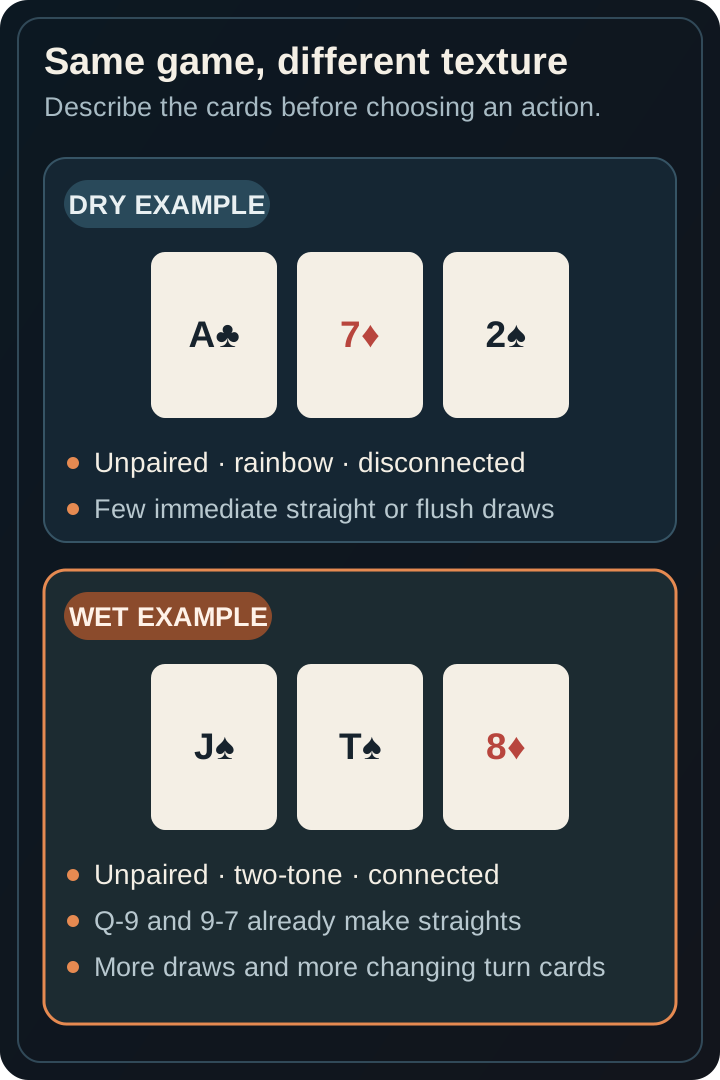
Board texture is the pattern formed by the shared cards. An unpaired K-club 7-diamond 2-spade flop is king-high, rainbow, and disconnected. A J-spade 10-spade 8-diamond flop is jack-high, two-tone, and connected. Those factual labels reveal which holdings can already be strong and which draws can continue.
Texture is only the first layer. The same flop can favor different players after different preflop actions. An opener, a blind caller, and a cold caller do not arrive with identical ranges. Describe the cards first, but judge the decision only after placing those cards against the actual positions and action.
How do dry and wet boards differ?
A dry board has limited coordination. Its cards may be far apart in rank, use three suits, and avoid a pair. Fewer two-card holdings make strong draws, so many hands keep roughly the same relative strength on the next card. Dry does not mean harmless: sets, two pair, and strong one-pair hands can still exist.
A wet board has more connections. Close ranks create straight possibilities, repeated suits create flush possibilities, and some holdings combine a pair with a draw. More turn cards can rearrange the strongest hands. Wet does not mean one player must already be behind; it means the decision tree contains more meaningful changes.
Compare the two boards by naming what is possible rather than by memorizing a label. On A-club 7-diamond 2-spade, there is no immediate flush draw and the ranks are separated. On J-spade 10-spade 8-diamond, Q-9 and 9-7 already make straights, two spades can make a flush draw, and many overcards or middle cards alter the next street.
Which features should you check on every board?
Start with the highest rank and whether the board is paired. A paired board changes how many combinations of trips, full houses, and two pair are available. Next count the suits: rainbow uses three suits on the flop, two-tone repeats one suit, and monotone uses one suit for all three flop cards.
Then inspect rank connectivity. Adjacent ranks support more straight combinations than widely separated ranks. One-gap patterns can still create open-ended or gutshot draws with the right hole cards. Finally, note how the exact cards interact with the preflop ranges. A low connected board may meet a caller's continuing range differently from a high disconnected board, but the earlier action must support that conclusion.
Use precise observations before broad labels. “Unpaired, two-tone, and connected” gives another reviewer something they can verify. “Dangerous board” hides which feature is supposed to matter.
How does board texture change from flop to river?
Board texture must be updated after every new card. A turn can repeat a suit, connect two ranks, pair the board, place an overcard above the flop, or complete a draw. A river can finish one draw while missing another, create a new top pair, or pair a rank that changes the strongest value hands.
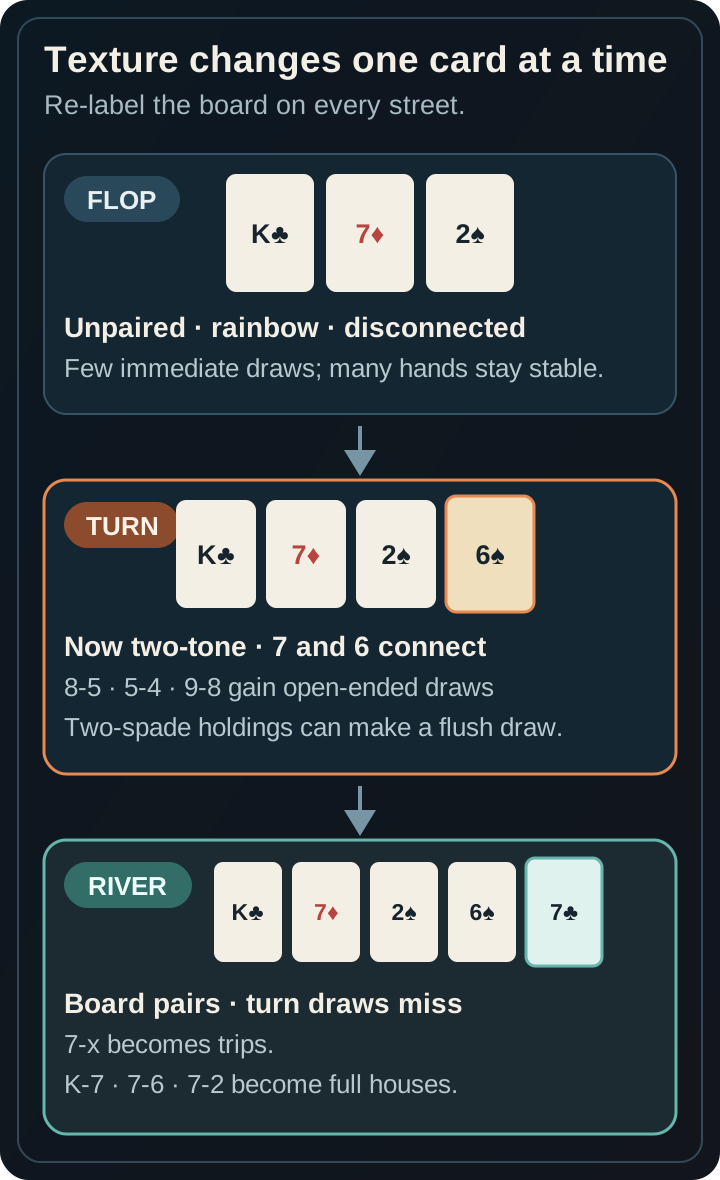
Consider K-club 7-diamond 2-spade. The flop is unpaired, rainbow, and disconnected. The 6-spade turn makes the board two-tone and connects 7 with 6. Hands such as 8-5, 5-4, and 9-8 now have open-ended straight draws, while two-spade holdings can have a flush draw.
The 7-club river pairs the board without completing the spade draw or those open-ended straight draws. Seven-x improves to trips, and some two-pair holdings become full houses. The final review should not keep calling the board the same dry king-high texture it was on the flop.
How should texture change a hand review?
Texture changes the questions, not the answer by itself. On a dry flop, ask which worse made hands can continue and whether betting folds hands you already beat. On a wet flop, add the draws, pair-plus-draw hands, raises, and difficult turn cards. In both cases, compare betting with checking against the same ranges.
Separate range advantage from your exact hand. A board may fit your overall range while one holding still prefers to check. Another board may fit the opponent's range while your exact hand can value-bet or raise. Move from board, to ranges, to hand, to action in that order so one shortcut does not replace the full decision.
Also preserve stack and pot context. The same texture creates a different decision when little remains behind than when several large bets are possible. Position matters because the player acting later sees one more action before choosing how to continue.
What is a simple board-texture review process?
First, write the board by street and label only visible features: paired or unpaired, suit pattern, highest card, and rank connectivity. Second, rebuild both ranges from the positions and prior action. Third, list the strongest made hands, ordinary value hands, draws, and weak holdings that plausibly remain.
Fourth, compare the realistic actions. For a bet, name weaker calls, stronger continuations, folds, and raises. For a check, describe which hands reach the next street and who acts first. Fifth, reveal the next card and repeat the texture description instead of assuming the flop plan survives unchanged.
Finish with a conditional lesson. “On turns that add both a repeated suit and adjacent rank, rebuild the continuing range before betting again” is useful. “Never bet wet boards” is too broad to survive different positions, ranges, sizes, and stacks.
How does board texture work in multiway pots?
In a multiway pot, the community cards must be compared with more than one continuing range. A board that gives one caller several draws may give another player more sets or two-pair combinations. A bet also has to pass through every player who can still act.
Do not collapse those ranges into one generic opponent. Record who entered from which position, who has folded, who acts next, and which player has the effective stack for each possible branch. The visible texture is shared, but its relationship to each player is not.
How can Tells help with board-texture review?
After a completed hand is saved, Tells Poker Replay shows the board as it appeared on each reached street alongside the seats, remaining stacks, total pot, and recorded action. Move one step at a time or jump by street so the turn and river are not allowed to rewrite how the flop looked at the original decision.
Pause before the action you want to study and describe the texture yourself. Then use the Analysis tab as a structured second opinion on the street-by-street decisions. If the cards or action are wrong, correct the saved hand before trusting the review; board analysis cannot repair an inaccurate record.
Tells is designed for completed-hand review and post-session study, not assistance during a live hand. Its analysis is not perfect or definitive play, and the useful output remains a clear question you can test against the recorded facts and range assumptions.
Frequently asked questions
Is a paired board always dry?
No. Pairing reduces some unpaired combinations, but the board can still contain a flush draw, straight draws, or close ranks. Describe every relevant feature instead of assigning one label from the pair alone.
Is a rainbow flop always dry?
No. Rainbow means the three flop cards use three suits, so there is no immediate flop flush draw. The ranks can still be highly connected and create many straight draws.
Does a wet board mean you should bet larger?
Not automatically. Size depends on both ranges, your exact hand, position, stacks, and the hands expected to call, fold, or raise. Wetness identifies more changing branches; it does not choose the bet.
Should you describe the board before building ranges?
Yes. Start with factual card relationships, then connect them to the ranges created by the positions and prior action. This keeps a strategic conclusion from being smuggled into the board label.