To correct a poker hand history before analysis, return to the decision you want to study and verify the facts that define it: game format, positions, effective stack, hole cards, board by street, action order, and every relevant size. Recalculate the pot from the actions, fix only details you can support, and mark anything still unknown.
Correct the record before interpreting the strategy. A swapped position can change the action order and plausible ranges. A wrong wager can change the pot, the price of a call, and the remaining stack. A wrong suit can change draws and blockers. Precise analysis built on one false input is still pointed at the wrong hand.
The goal is a faithful study record, not a cleaner story. Preserve the original version when possible, create a corrected copy, and review that copy without using the result to fill memory gaps. When two versions remain plausible, compare both instead of choosing the one that makes the decision look better.
Which hand-history details should you correct first?
Correct the details with the widest downstream effect first. Start with the game and player count, then the seats and effective stack. Next verify hole cards, board cards in street order, and who acted when. Finish the factual pass with bets, calls, raises, all-ins, folds, and the amount each action was made to.
These facts form a dependency chain. Positions determine action order. Earlier wagers determine the pot and remaining stacks. Cards determine hand strength, available draws, and card removal. If an early input changes, recheck every later number that depends on it rather than patching only the line where the error became visible.
Keep opponent reads in a separate layer. “Cutoff raised to 2.5 BB” is a hand-history fact. “Cutoff was opening wide” is an observation or range assumption. Both can help a review, but editing the first should not silently turn the second into a fact.
What is a reliable poker hand correction workflow?
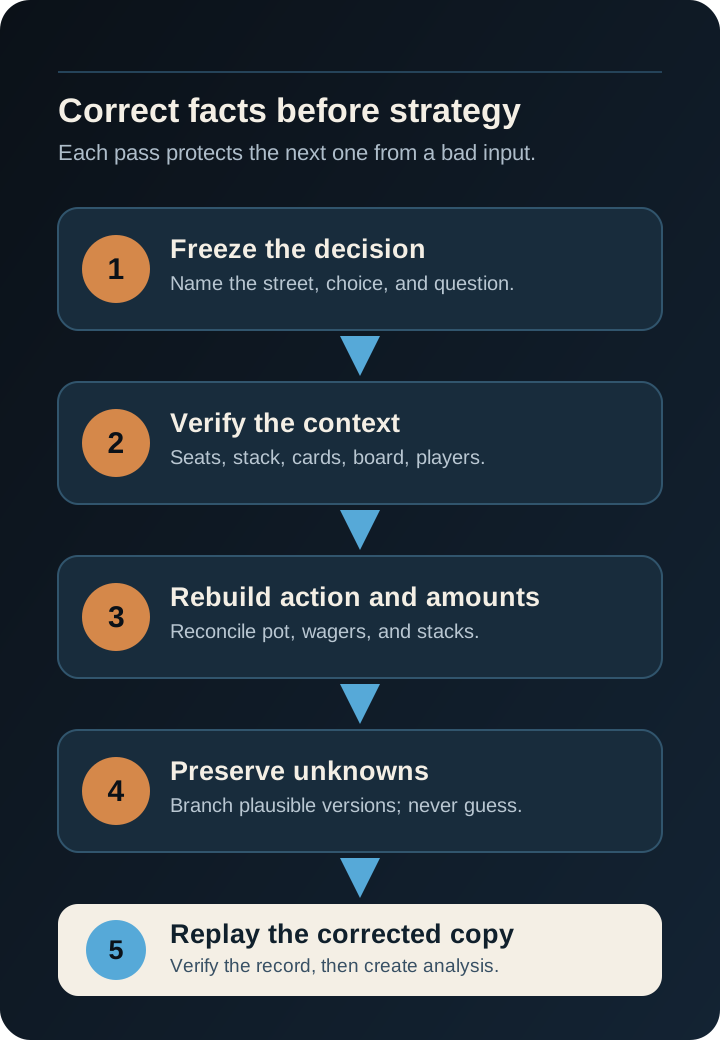
Use five passes. First, freeze the hand at the decision under review. Second, verify the fixed context: format, seats, cards, and effective stack. Third, rebuild the action in order and reconcile every amount. Fourth, label unsupported details as unknown or create explicit branches. Fifth, replay the corrected version before asking for analysis.
Work from the earliest reliable point forward. If the preflop raise size is wrong, the flop pot and every pot-relative size after it may also be wrong. If only the river card is wrong, the earlier pot can remain intact while the river hand classes and ranges need to be rebuilt.
End with one plain-language decision question. “Should the button call 12 BB on this river?” is testable. “Did I play the hand badly?” invites the result and the later correction to blur together. A narrow question makes it easier to see whether the repaired fact actually changes the review.
How do you check a poker hand history for pot errors?
Rebuild the pot as a ledger. Begin with the blinds and any antes. Add each player's actual contribution once, using the extra amount committed rather than repeating the full raise-to amount. After each betting round, the next street's opening pot should equal the prior pot plus all completed wagers and calls, before rake or other stated deductions.
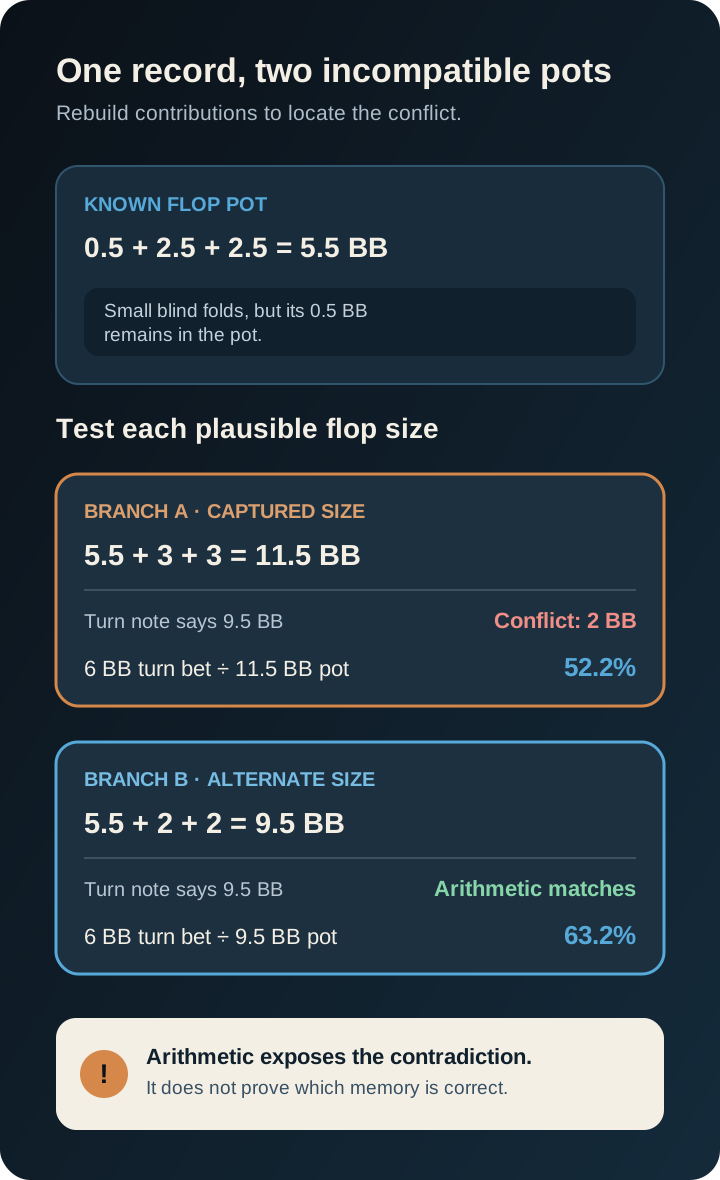
Consider a six-handed example in big blinds. The small blind posts 0.5, the big blind posts 1, the button raises to 2.5, the big blind calls the extra 1.5, and the small blind folds. The flop pot is 0.5 + 2.5 + 2.5 = 5.5 BB. The folded small blind's 0.5 BB remains in the pot.
Now suppose the captured history says the button bet 3 BB on the flop, the big blind called 3 BB, and the turn pot was 9.5 BB. Those statements cannot all be true under this simplified no-rake model: 5.5 + 3 + 3 = 11.5 BB. A 9.5 BB turn pot instead matches a 2 BB bet and call. The arithmetic exposes the conflict; it does not prove which remembered size is correct.
That difference can change the language of the next decision. A 6 BB turn bet is about 52.2% of an 11.5 BB pot, but about 63.2% of a 9.5 BB pot. Confirm the missing flop size if you can. If you cannot, save both branches and avoid a conclusion that depends on only one of them.
What should you do when a hand detail cannot be recovered?
Mark the detail unknown and state what it controls. An unknown suit may change flush draws or blockers. An uncertain effective stack may change whether a later raise was possible. An approximate wager may change pot odds, stack-to-pot ratio, and which hands plausibly continue.
When the uncertainty matters, build a small branch for each credible version. Compare 2 BB versus 3 BB, button versus cutoff, or a club versus a non-club only when both versions are genuinely possible. Change one input at a time so you can see which conclusion depends on it.
Sometimes the right correction is to stop. If the missing action changes who was the aggressor or whether another player remained in the pot, a detailed strategic verdict may be unsupported. Save a capture lesson instead: record the raise-to amount, the player still behind, or the exact turn card next time.
Should you overwrite the original hand history?
Prefer a corrected copy when the tool supports one. Keeping the original preserves what was first captured, while the copy records the facts you later repaired. That separation makes it easier to compare versions, notice what changed, and avoid rewriting the memory until it matches a preferred result.
Name the correction in a short note: “flop bet changed from 3 BB to 2 BB; turn pot now reconciles to 9.5 BB.” If a read changed rather than a fact, say that explicitly. A visible change log is more useful than a polished history whose edits cannot be reconstructed.
A corrected copy is not automatically accurate. It is a new claim about the hand. Run the same verification passes again, especially if natural-language capture reparses the edited text into structured cards and actions.
Which correction mistakes create misleading analysis?
The first mistake is fixing only the final number. Changing a turn pot without correcting the earlier action leaves two versions of the hand inside one record. The second is confusing a raise-to amount with the extra amount added. “Raise to 18 BB” means the player's total on that street becomes 18 BB; it does not always mean 18 new big blinds entered the pot.
Another mistake is using the showdown to invent an earlier read. Seeing a bluff can remind you which cards appeared, but it does not prove the bettor's full range was bluff-heavy. Correct exposed facts and keep strategic assumptions open until the factual record is stable.
Finally, do not add false precision. A remembered “around half pot” bet should not become exactly 50% without support. Use an approximate branch or leave the sizing-sensitive part of the review unresolved. Honest uncertainty protects the lesson better than a confident guess.
How do you correct a saved hand in Tells Poker?
In the current Tells Poker iOS app, open the saved completed hand and choose to correct a hand detail before creating a new analysis. The correction editor lets you revise cards, amounts, actions, or an opponent read. Saving creates a corrected copy and opens that new hand; the original hand and its existing analysis remain saved.
Review the corrected copy in Replay before creating its analysis. Check the seating order, hole cards, board by street, wagers, pot, and remaining stacks at the decision. If the structured replay does not match the correction you intended, revise the hand again rather than asking the analysis to reason around a parsing error.
The correction flow uses the plan's normal capture and analysis allowances. Use it for completed-hand study, not advice during an active hand. Once the record is stable, Analysis can provide a structured second opinion with street review, range reasoning, and deterministic spot math when the recorded decision supports those elements.
How do you verify the corrected hand before analysis?
Make one final pass without the result. Pause Replay immediately before the decision and say the spot aloud: positions, effective stack, board, pot, amount faced, and players still able to act. Then move backward one street and confirm that the displayed pot and stacks can be produced by the saved actions.
Check the exact question against the corrected fact. If you fixed a suit, confirm that the new suit changes the draw or blocker under discussion. If you fixed a wager, recalculate the call price or pot-relative size. If the repair does not affect the question, avoid overstating its importance.
Only then compare the Analysis tab with your own reasoning. Treat the output as a structured second opinion, never perfect or definitive play. A correction improves the input; it does not remove uncertainty about an opponent's hidden cards, frequencies, or intentions.
Frequently asked questions
Can you analyze a poker hand with missing information?
Sometimes, but the conclusion should stay conditional. Mark the missing detail, explain what it changes, and compare a small number of plausible branches. If the missing action changes the whole decision, stop before claiming a precise answer.
How can you tell whether a poker hand history pot is wrong?
Add the blinds, antes, and each player's actual contributions street by street. The next street's opening pot should match the prior pot plus completed wagers and calls, subject to any stated rake or deductions.
Does Tells Poker overwrite the original hand when you correct it?
No. The current iOS correction flow creates a corrected copy while keeping the original hand and its existing analysis saved. You can verify the copy in Replay before creating a new analysis.
Should the result be included when correcting a poker hand?
Use the result only to restore facts you genuinely remember or can verify. Do not let the revealed hand decide what the earlier range, read, or correct action must have been.