
To record a poker hand by voice, speak five things in order: the game and effective stack, the positions and hole cards, the preflop action, each board street with its actions and sizes, and the exact decision you want to review. Say raise-to amounts explicitly, mark details you do not remember, then read the transcription and replay the saved action before requesting analysis.
The goal is not to sound polished. It is to preserve a sequence that another player—or your future self—can reconstruct without guessing. A short voice note with one honest unknown is more useful than a confident story that changes a suit, stack, or bet size.
Use this workflow after the hand or session is complete. Voice capture helps you create a study record; it should not be used for advice while a hand is in progress. Any later analysis is a structured second opinion, not perfect or definitive play.
What should a spoken poker hand history include?
A useful spoken hand history includes the format, player count, effective stack, hero position, hole cards, relevant opponent positions, action in order, board cards by street, bet and raise-to amounts, and the decision you want to examine. Include the result only after you have stated the decision, if the result matters at all.
Separate facts from reads. “Cutoff opened to 2.5 big blinds” is a recorded fact. “Cutoff seemed aggressive” is an observation. “Cutoff always bluffs this river” is a conclusion that needs testing. Keeping those categories distinct prevents a read from quietly becoming part of the hand history.
Use big blinds consistently when possible. If you remember chips or dollars instead, say the stakes and the exact amounts without converting them in your head. A correct original amount is better than a quick conversion that changes the pot.
What is the best order for a poker voice note?
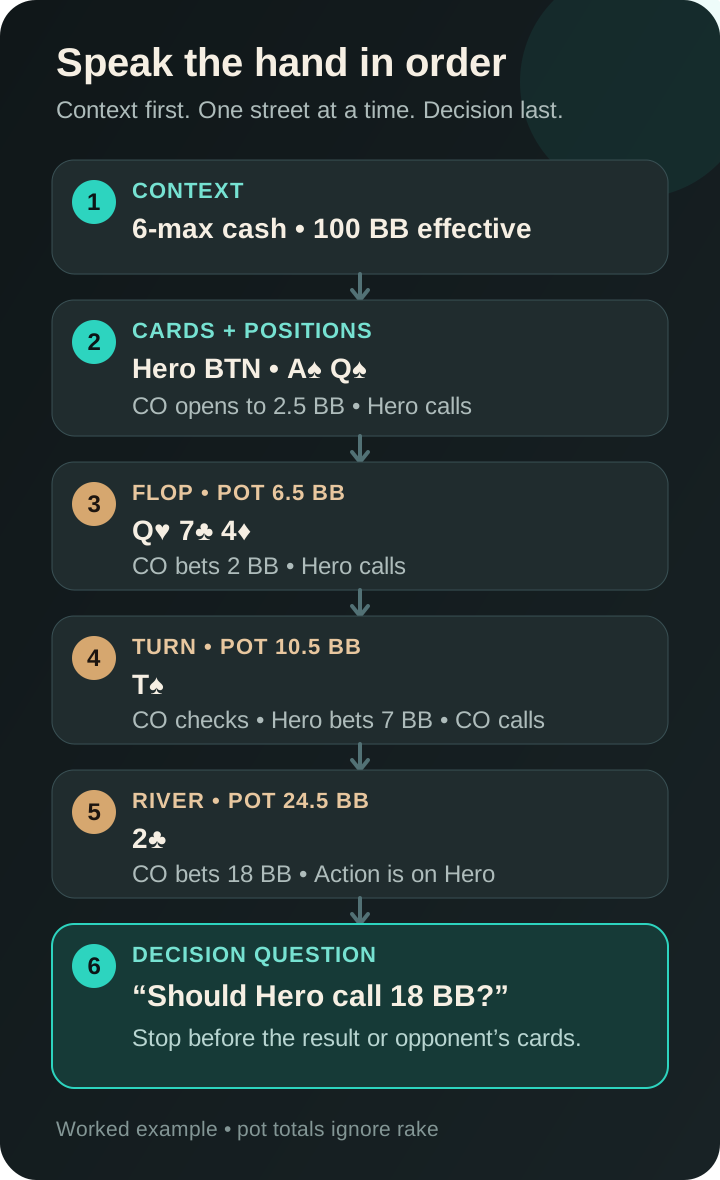
Start wide and move toward the decision. First name the game context and effective stack. Second, name hero's position and cards. Third, give preflop action in table order. Fourth, announce each board street before its action. Last, stop at the decision and ask one question.
This order gives every amount a home. A number spoken after “turn” is less likely to be confused with a flop size, and a card named after “river” is less likely to be added to the wrong board. It also makes omissions easier to notice when you read the transcript.
What does a complete voice recording sound like?
Here is a compact example: “Six-max cash, 100 big blinds effective. I am on the button with ace of spades, queen of spades. Cutoff opens to 2.5 big blinds, I call, small blind and big blind fold. Flop is queen of hearts, seven of clubs, four of diamonds. Pot is 6.5. Cutoff bets 2, I call. Turn is ten of spades. Pot is 10.5. Cutoff checks, I bet 7, cutoff calls. River is two of clubs. Pot is 24.5. Cutoff bets 18. My decision is whether to call. I did not see the opponent's cards.”
The example names the actors again when the action changes. That repetition is useful, not wasteful. It prevents “he bets, I call” from becoming ambiguous when more than two seats entered the hand or when a transcript drops a sentence.
The pot amounts are checkpoints, not substitutes for action. If the spoken action and spoken pot disagree, keep the actions and flag the pot for review. Do not silently change a bet to force the arithmetic to match.
How should you say cards, positions, and suits?
Say full card names when accuracy matters: “ace of spades, queen of spades” is clearer than “ace-queen suited.” The shorthand describes the starting hand but not the exact suits needed to reconstruct blockers, flush draws, and the board.
Use standard position names such as cutoff, button, small blind, and big blind. If you do not know a seat's formal label, identify it relative to a known seat and mark the uncertainty. Do not rename every opponent “villain” when several opponents took different actions.
Announce the street before its cards: “flop is,” “turn is,” and “river is.” For a paired or monotone board, still name each card. The board label may feel obvious in memory, but exact ranks and suits are what make the later replay testable.
How should you describe bets and raises?
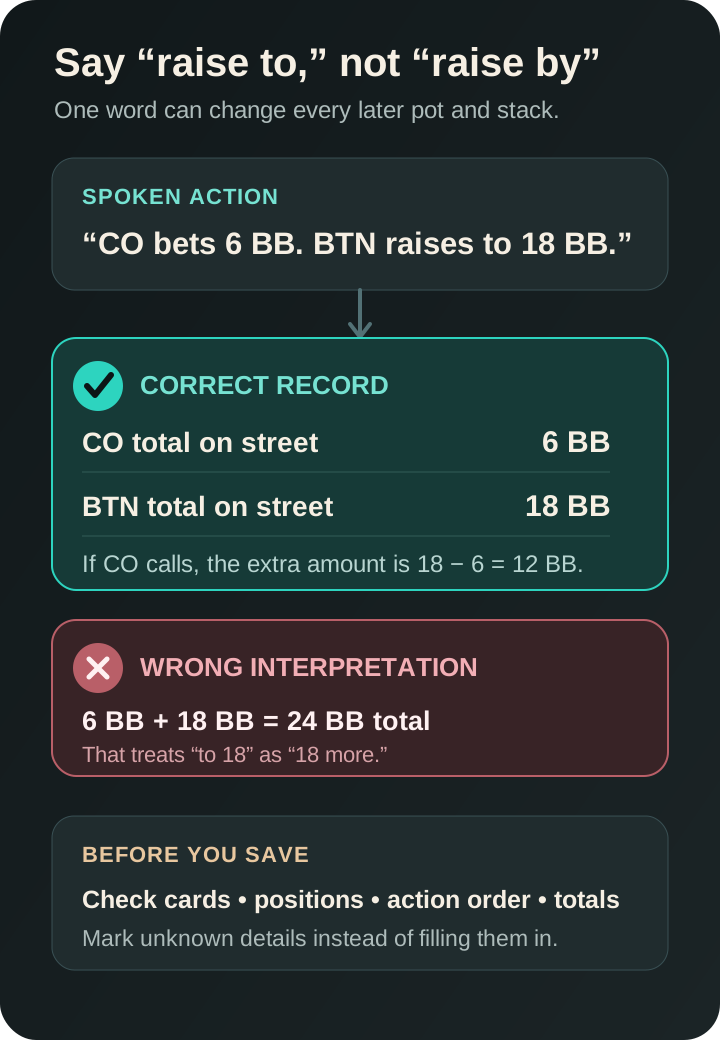
For a bet, state the player's total wager on that street: “cutoff bets 6 big blinds.” For a raise, say the new total: “button raises to 18 big blinds.” The word “to” matters because “raises 18” can mean an 18 big blind total or 18 more than the previous bet.
When the distinction is important, say both numbers: “button raises to 18, so cutoff has 12 more to call.” That creates a built-in arithmetic check. If the original bettor calls, both players finish the street with 18 big blinds committed on that street.
Use the same rule for preflop re-raises and all-ins. State the total amount reached, not just the extra chips moved forward. If you only remember that the raise was roughly pot-sized, record the amount as unknown instead of inventing an exact total.
What should you do when a detail is missing?
Name the gap. Say “turn bet size unknown,” “I do not remember whether the flop was two-tone,” or “the effective stack was about 80 big blinds.” An explicit unknown tells the reviewer which conclusions may change. A guessed detail looks like a fact and can produce false precision.
Prioritize details nearest the decision. Exact cards, positions, stack depth, action order, and the amount faced usually matter more than table talk or how long someone paused. If memory is incomplete, preserve the smallest reliable version of the hand instead of padding it with atmosphere.
When too many structural details are missing, use a guided workflow to rebuild the hand deliberately. Voice is fastest when the sequence is already clear; it is not a reason to rush through uncertainty.
When is voice capture better than guided entry?
Voice capture is useful when you remember the hand as a continuous story and can speak it in street order. It is especially practical during a post-session review when several hands are still fresh and typing each action would interrupt recall.
Guided entry is better when the action is complicated, several players reached the flop, stacks differ by seat, or you keep losing the order of raises and responses. One question at a time makes structural gaps visible before the hand is saved.
The two methods can support the same habit: capture quickly, then verify slowly. Choose the input that reduces friction, but judge the record by whether its cards, positions, actions, and amounts survive review.
How do you verify a voice hand history before analysis?
Use three passes. On the first pass, read the transcript for card, suit, position, and amount errors. On the second, walk through the action in order and recalculate the pot from the wagers. On the third, replay the hand and pause at the decision to confirm the acting player, amount to call, effective stack, and players still eligible for the pot.
Check raise-to wording separately. A transcription can contain every spoken number and still build the wrong pot if a total was interpreted as an addition. Compare each raise with the previous wager and the amount the original bettor would need to call.
Only then review strategy. If a factual correction changes the board, action, or stack, treat it as a new version of the record rather than editing the lesson while keeping the old facts. This keeps the chain from memory to replay to analysis auditable.
How does Tells Poker support voice hand capture?
In the Tells Poker iOS app, Quick Capture lets you type or record a plain-language description after the hand. The transcription appears in the Hand notes field, where you can read and edit it before choosing Save hand. The expandable Hand context keeps the player count, hero position, and stack alongside the description.
After saving, use Replay to check the parsed cards and action before starting the debrief. If the saved record is wrong, the correction flow creates a corrected copy while keeping the original hand and analysis available. Review the corrected copy in Replay before analyzing it.
Tells can then organize the completed hand into a replay and a street-by-street study workflow. Treat the debrief as a structured second opinion: the quality of the review still depends on the facts you captured and the assumptions you make about unseen hands.
Frequently asked questions
Do you need to use exact poker notation in a voice note?
No. Plain language works, but full card names, standard positions, street labels, and explicit raise-to amounts reduce ambiguity. Use shorthand only when it preserves the same facts.
Should you include the result of the hand?
State the decision before the result. Hiding the outcome during the first review helps you judge the available information rather than explaining what happened afterward.
What if you cannot remember the exact bet size?
Mark the size as unknown or approximate. Do not invent an exact number. Review which conclusions depend on that size, and use guided entry when the missing amount breaks the action sequence.
Can you correct a voice-captured hand in Tells Poker?
Yes. You can edit the transcription before saving. For a saved hand, the correction flow creates a corrected copy and preserves the original so you can verify the new version in Replay before analysis.