
A blocker in poker is a known card that reduces the combinations of a hand or range another player can hold. Your hole cards and the board are all known cards, so they remove exact possibilities from every opponent's range. A blocker changes probability; it does not prove what anyone has or prescribe an action by itself.
Blockers are useful because poker decisions depend on ranges made from combinations. If one of your cards appears in several value hands, those value combinations become less available. If it appears in missed draws that could bluff, those bluff combinations become less available instead. The same idea can therefore support or weaken a call, bet, or bluff.
Use card removal during post-session review, after you have rebuilt the action and proposed a plausible range. Treat it as a precise adjustment to that range—not a shortcut around position, sizing, board texture, or earlier streets.
What does blocker mean in poker?
A blocker is one of the cards you can see that makes certain hidden-card combinations impossible. If you hold A♠, no opponent can hold A♠. Any two-card holding that requires that exact card must be removed from the opponent's possible range.
The related term card removal describes the mechanism. Blocker describes the known card's effect on a particular part of a range. The A♠ might block ace-high flushes on one board, top-pair combinations on another, or nothing important to the decision on a third.
That last point matters: a card is not strategically useful merely because it removes something. Name the exact hands it removes and the role those hands played. Blocking likely calls can help a bluff. Blocking likely bluffs can make a bluff-catching call worse.
How does a blocker change combination counts?
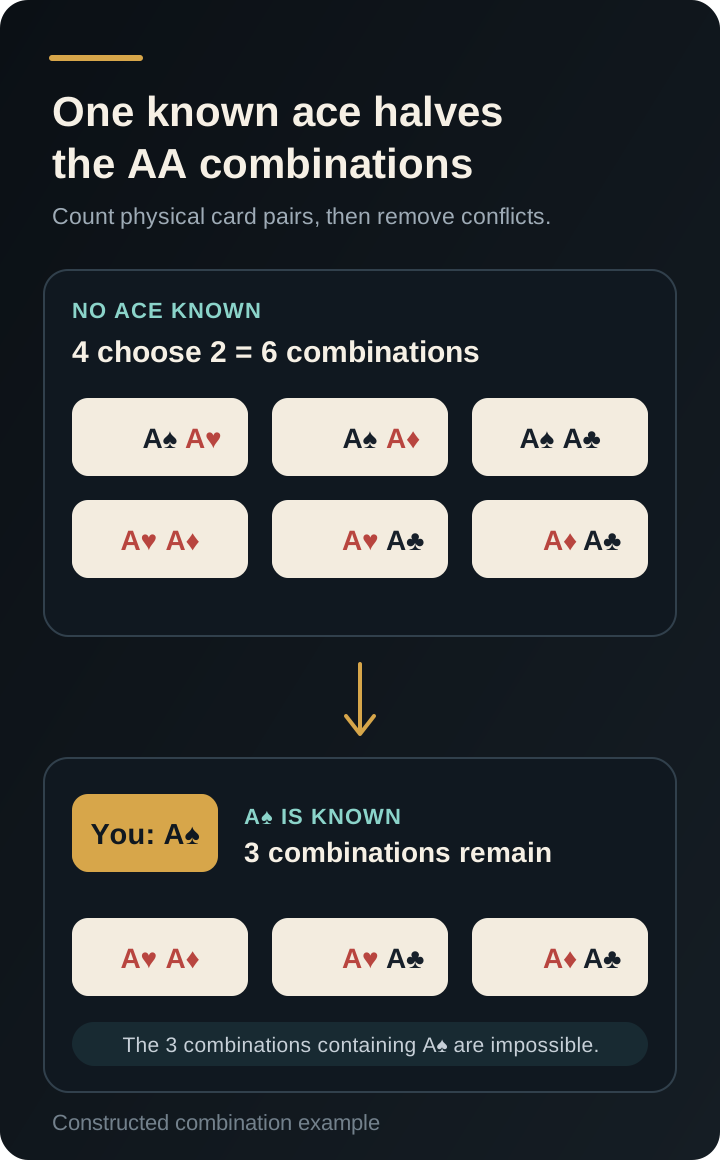
Start with pocket aces before any ace is known. Four aces can be paired in six distinct ways: A♠A♥, A♠A♦, A♠A♣, A♥A♦, A♥A♣, and A♦A♣. This is the combination formula 4 choose 2, which equals 6.
Now suppose you hold A♠. The three combinations containing A♠ are impossible for an opponent. Only A♥A♦, A♥A♣, and A♦A♣ remain. One known ace reduces pocket aces from six combinations to three.
The same physical rule applies to suited hands, offsuit hands, draws, and made hands. Count the original combinations, remove every holding that conflicts with a known card, and then apply any frequency weights supported by the action. Do not remove a hand merely because it feels unlikely; that is a range assumption, not card removal.
Why is a blocker not proof of an opponent's hand?
A blocker changes the number of available combinations; it does not identify which remaining combination is present. If pocket aces fall from six combinations to three, an opponent is less able to hold pocket aces than before. They are not unable to hold them.
Action still does most of the filtering. Position and preflop choices create the starting range. Flop, turn, and river actions change the weight of different hands. Board cards and your hole cards then remove conflicts from that working range. Reversing this order encourages dramatic blocker stories that the betting sequence never supported.
Use careful language in review: “This card removes three value combinations from the range I built” is testable. “I block the nuts, so they must be bluffing” skips every remaining value hand, every frequency assumption, and the price of the decision.
How do blockers affect a bluff-catching call?
A pure bluff catcher wins against bluffs and loses against value. Under that simplified model, a card that removes value combinations increases the bluff share of the opponent's betting range and can improve a call. A card that removes bluff combinations does the opposite.
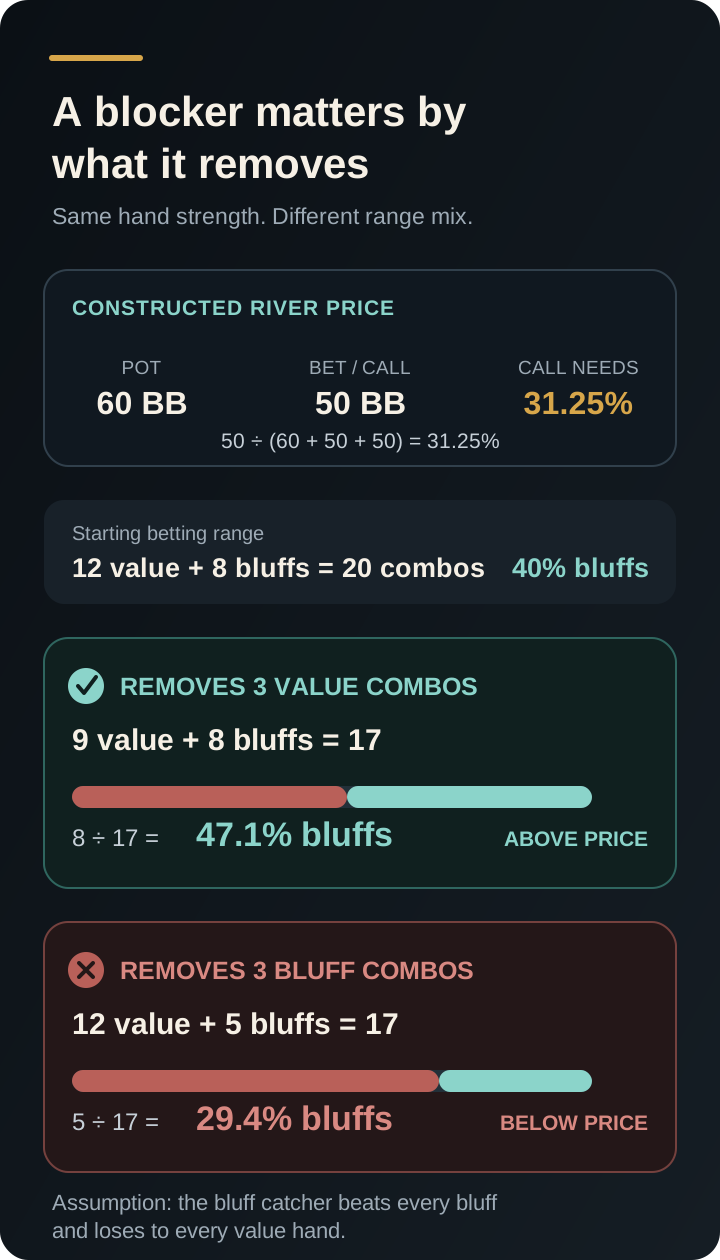
Consider a constructed river example with 60 BB in the pot. The opponent bets 50 BB, and calling 50 BB would create a final pot of 160 BB. The call therefore needs 50 divided by 160, or 31.25 percent equity. Suppose the proposed betting range starts with 12 value combinations and 8 bluff combinations. Its bluff share is 8 divided by 20, or 40 percent.
Now compare two same-strength bluff catchers. Candidate A removes three value combinations, leaving 9 value and 8 bluffs. The bluff share becomes 8 divided by 17, or about 47.1 percent. Candidate B removes three bluff combinations, leaving 12 value and 5 bluffs. The bluff share becomes 5 divided by 17, or about 29.4 percent—below the 31.25 percent price.
The arithmetic explains direction, not a universal call. The original range, the number of combinations removed, and the win-all-bluffs assumption are constructed inputs. Change any of them and the conclusion can change.
How do blockers affect a poker bluff?
When you are considering a bluff, useful blockers often remove hands that would call or raise. If your card makes the opponent's strongest continuing hands less available, the remaining range may contain a larger share of folds. That can make the bluff candidate more attractive than an otherwise similar hand.
But a blocker can also remove the hands you want the opponent to fold. A card from a missed draw may reduce the opponent's own missed draws, which were already likely to fold. In that case, the card is sometimes called an unblocker problem: your hand blocks folds instead of calls.
Do not ask only, “Do I have a blocker?” Ask, “Which calls does this card remove, which folds does it remove, and how many combinations are affected?” A blocker that points in the wrong direction is still a blocker; it is simply not helping the proposed bluff.
What is the difference between blockers and hand strength?
Hand strength describes how your cards rank against another holding or range. Blocker value describes how your known cards change the opponent's available combinations. The two can point in different directions.
Two bluff catchers can have the same pair and therefore similar ordinary hand strength, yet one may remove value while the other removes bluffs. A weak hand can be a better bluff candidate than a slightly stronger one if it gives up little showdown value and removes more likely calls. None of this means blockers outrank hand strength; they refine decisions that already depend on both ranges.
Keep the concepts separate in your notes. First state what the hand beats and loses to. Then state what its exact ranks and suits remove. This prevents the phrase “good blockers” from hiding whether the hand can actually win at showdown or make better hands fold.
Do blockers matter before the river?
Yes, but earlier streets contain more future branches. A card can block current made hands, draws, raises, and future runouts at the same time. That makes a one-line blocker conclusion less reliable than it may be on the river.
For example, holding a suit card can reduce an opponent's flush-draw combinations, but it can also give your own hand backdoor or direct equity. Holding a rank can reduce sets or two-pair combinations while changing which future cards improve you. Evaluate those effects alongside fold equity, realization, position, and remaining stacks.
On the river there are no future community cards, so the range-removal comparison is often easier to isolate. Easier does not mean automatic. The final action and size still decide which value hands and bluffs belong in the range before blockers are applied.
What blocker mistakes are most common?
The first mistake is treating any ace or suit card as a good blocker without naming the affected hands. The second is counting a blocked hand as impossible when only some of its combinations were removed. The third is applying blockers to a range that was built backward from showdown.
Another mistake is counting physical cards twice. Once A♠ is known, every conflicting opponent combination is gone; do not remove it again in a later category. In multiway pots, the visible cards remove combinations for every player, and no two opponents can hold the same physical card.
Finally, avoid fake precision. A correct combination count inside an implausible range does not create a reliable answer. If the action supports several range versions, run the blocker check on each and record whether the decision changes.
How should you review blockers after a poker hand?
Use a five-step review. First, reconstruct the board, hole cards, positions, stacks, sizes, and action. Second, build the opponent's range from the sequence without looking at the result. Third, separate that range by role: value, medium hands, draws, and bluffs. Fourth, remove the exact combinations that conflict with known cards. Fifth, compare the decision before and after removal.
If the result changes, write down the dependency. For example: “The call becomes attractive only if my river card removes at least three value combinations and the missed draws still bluff.” If it does not change, the blocker may be interesting but not decision-relevant.
End with one portable question: “What does my card remove from the continue range and from the fold range?” That prompt works for bluffing, bluff catching, raising, and range construction without turning card removal into a magic rule.
How can Tells Poker support a blocker review?
In the current Tells Poker iOS app, Replay moves through a saved hand action by action while keeping the seats, board, pot, wagers, folds, and remaining stacks together. Pause before the decision and verify the exact ranks and suits before counting what they remove.
The Analysis tab can provide a structured second opinion around the key decision, with conditional range groups, combination counts, equity, street review, and deterministic spot math when the recorded hand supports them. Compare that debrief with your own value-and-bluff list, especially when a blocker changes only one part of the proposed range.
Tells is designed for completed-hand capture and post-session study, not real-time assistance. Its analysis is not perfect or definitive play. Use it to expose assumptions and bring a clearer blocker question to your own review or poker friends.
Frequently asked questions
Is an ace always a good blocker in poker?
No. An ace is useful only when it removes hands that matter to the decision. It can block value, likely calls, or bluffs depending on the board and action, so the direction must be checked each time.
Can a blocker make an opponent hand impossible?
Yes, if that holding requires an exact card you can see. More often, a blocker removes some combinations of a hand class while leaving others available.
What is an unblocker in poker?
An unblocker is a card relationship that leaves useful opponent combinations available. For a bluff, you may want to unblock hands that can fold; for a bluff catcher, you may want to unblock hands that can bluff.
Should blockers decide a close poker call?
They can change a close range estimate, but they should not replace the price, action, and plausible value and bluff regions. Treat blockers as an adjustment to a supported range, not the starting point.