
A polarized range in poker contains two separated regions: very strong hands betting for value and weaker hands betting as bluffs. Many medium-strength hands sit between those regions and take another action, often checking. The range is polarized because it is concentrated near the top and bottom rather than spread continuously through the middle.
Polarization describes a range used for one action at one decision point. It does not mean every large bet is polarized, every weak hand should bluff, or every strong hand should use the same size. Earlier action, the board, stack depth, and the hands that can credibly reach the spot determine whether the two regions make sense.
Use polarization as a post-session review model. Name the value region, name the bluff region, count the combinations where useful, and compare them with the price offered to a bluff catcher. The result is a structured estimate, not proof of perfect or definitive play.
What does a polarized range mean in poker?
A range is polarized when the hands taking an action are clustered around two different purposes. The strongest hands want calls from worse hands. The weakest chosen hands want better hands to fold. Hands with moderate showdown value may prefer to check because betting does not clearly improve their outcome.
The definition is relative. Top pair might belong near the value end on one river and in the checking middle on another. A missed draw may be a sensible bluff candidate in one sequence but a poor candidate in another because it removes hands you want the opponent to hold.
Describe the actual regions instead of applying the label alone. “Full houses for value and missed straight draws as bluffs” is a testable model. “The bettor is polarized” is only a starting claim until the hand classes and action support it.
What is the difference between a polarized and merged range?
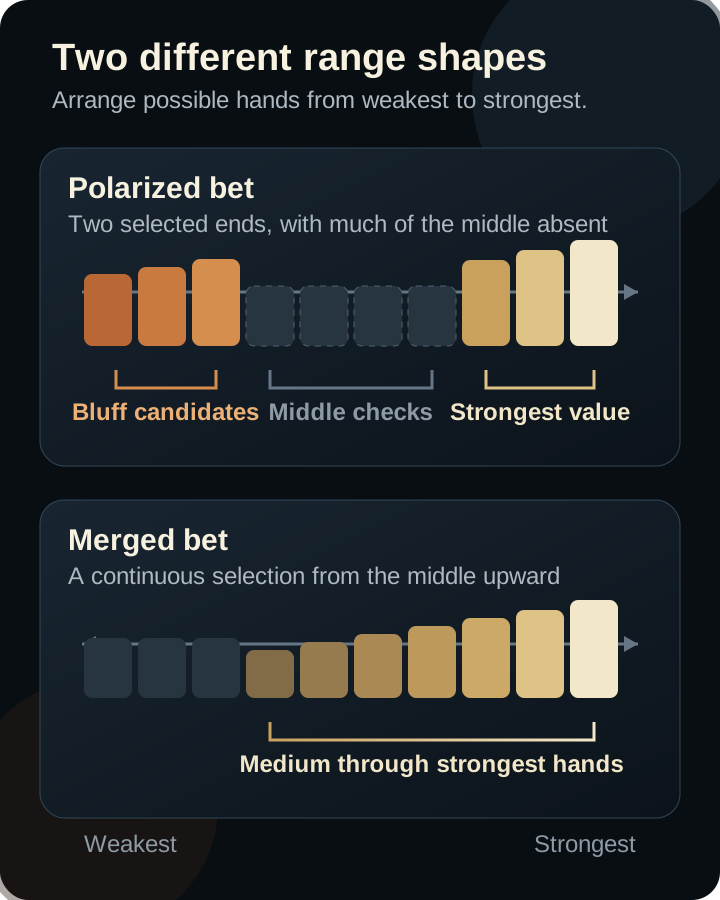
A polarized betting range leaves a gap between its value hands and bluffs. A merged, or more linear, betting range includes strong hands plus a continuing band of medium-strength hands. Those middle hands bet because they can still receive calls from enough worse hands, deny useful equity, or support the chosen strategy under the review's assumptions.
Imagine arranging every possible holding from weakest to strongest. A polarized selection takes hands from both ends and skips much of the center. A merged selection begins at the strong end and continues through adjacent good and medium hands without a large empty gap.
Neither shape is automatically superior. The board, positions, earlier action, remaining stacks, and opponent response determine which construction is credible. The comparison is most useful when it explains why a specific hand bets, checks, or changes size.
Why do medium-strength hands often check in a polarized strategy?
A medium-strength hand may already beat the opponent's weakest holdings but struggle to get called by worse when it bets. If better hands continue and weaker hands fold, the bet does little useful work. Checking can preserve the hand's showdown value and keep stronger hands in the checking range.
That does not make checking automatic. A medium hand may still value-bet against a wide calling range, bet to deny equity before the river, or fit inside a smaller merged size. The important question is what better result the bet expects to create compared with checking.
During review, list the worse hands that call, the better hands that fold, and the hands that raise. If those lists do not support a clear value or bluff purpose, the hand may belong in the middle rather than at either pole.
Does a large bet always represent a polarized range?
No. A large bet often creates an incentive to use strong value hands and bluffs because medium hands risk more while receiving fewer calls from worse. But size alone cannot prove the range shape. A player can use a large merged bet, omit bluffs, overuse bluffs, or choose hands that do not fit the board and sequence.
Treat size as evidence to investigate. Ask which value hands want this amount, which worse hands can call, and which bluff candidates benefit enough from a fold. Then compare that proposed range with the hands available after the earlier streets.
Small bets are not automatically merged either. A player can use a small polarized range in a particular spot. The action's composition defines polarization; the number of chips does not.
What does a polarized river example look like?
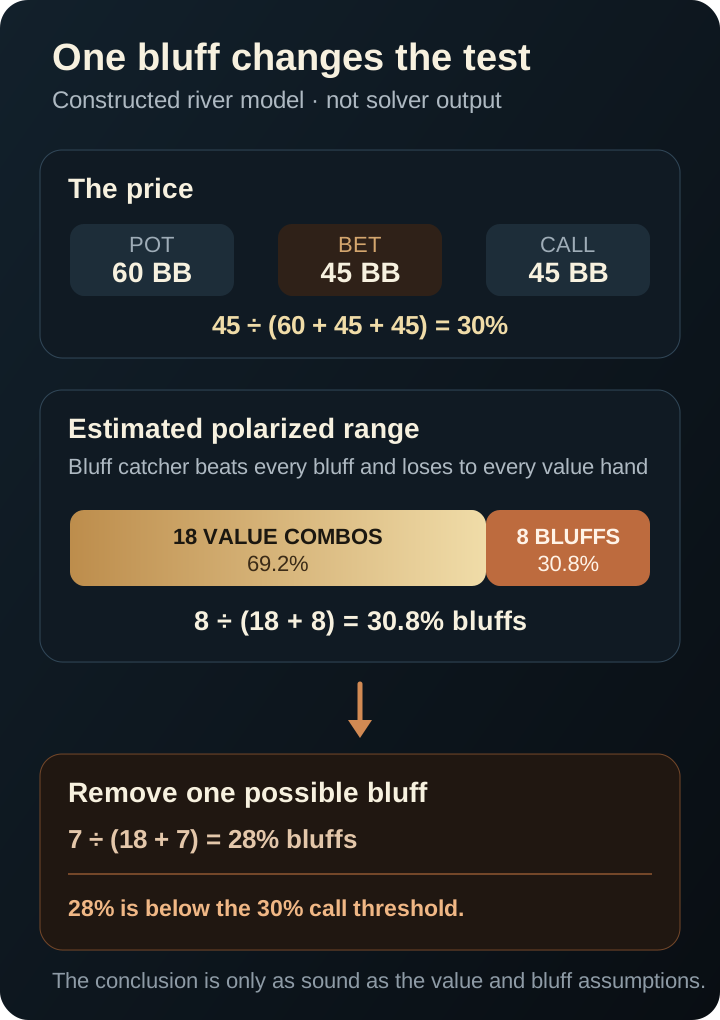
Consider a constructed heads-up river checkpoint with 60 big blinds in the pot. The button bets 45 big blinds and the big blind holds a hand that beats every bluff but loses to every value bet. Calling 45 creates a final pot of 150, so the immediate equity threshold is 45 divided by 150, or 30 percent.
Suppose the button's estimated betting range contains 18 value combinations and 8 bluff combinations. The bluff share is 8 divided by 26, or about 30.8 percent. Under the simplified assumption that the bluff catcher always wins against the eight bluffs and always loses against the eighteen value hands, the call sits just above its 30 percent threshold.
The illustration does not prove a call. Removing one bluff changes the share to 7 divided by 25, or 28 percent, below the threshold. Adding a thin value hand, changing a frequency, or finding that one supposed bluff actually beats the caller also changes the result. The point is to expose the range estimate the decision depends on.
Which hands make good bluff candidates in a polarized range?
Start with hands that are unlikely to win by checking. A hand with little showdown value gives up less when it becomes a bluff than a medium hand that can already beat missed draws or weak pairs. Then ask whether the hand can make better hands fold for the proposed size.
Card removal can separate two otherwise weak candidates. A card that removes plausible value calls may help a bluff. A card that removes the opponent's likely folds can hurt it. The direction depends on the exact value and folding regions, so “having a blocker” is not enough by itself.
Earlier action must also support the story. A missed draw cannot become a river bluff if that holding would not reasonably take the prior line. Build candidates from the range that actually reaches the decision rather than inventing convenient bluffs at the end.
How should you respond to a polarized bet?
First calculate the price. A bluff catcher has value only against the bluff region, so the required equity becomes the minimum bluff share it needs under the simplified win-all-bluffs, lose-all-value model. Next build the opponent's credible value and bluff combinations from the action.
Then examine your exact cards. Some bluff catchers remove value and improve the call; others remove bluffs and make it worse. Do not rank bluff catchers only by their ordinary hand strength when their blocker effects interact differently with the two poles.
Finally, keep uncertainty visible. If the opponent may value-bet thinner than expected, the supposed middle has entered the betting range. If likely bluffs are missing, the range may be value-heavy rather than balanced. Use several plausible versions instead of forcing one precise answer from incomplete information.
What are the most common polarization mistakes?
The first mistake is treating “polarized” as a synonym for “large.” The second is calling every non-value hand a bluff, even when it has useful showdown value or does not expect better hands to fold. The third is assuming the bluff and value regions are balanced without counting or estimating them.
Another mistake is forgetting the missing middle. If several medium hands plausibly bet the same size, the range may be merged, thinly value-heavy, or simply inconsistent. Rebuild the composition rather than protecting the label.
Avoid using the showdown to design the range backward. One revealed bluff does not prove enough bluffs exist, and one strong value hand does not prove they are all value. Review from the information available before the cards were shown.
How do you review polarization after a hand?
Reconstruct the hand to the decision with the board, positions, pot, effective stack, and every earlier action visible. Hide the result. Write the bettor's strongest credible value hands, then write the weakest hands that reach the spot and might benefit from bluffing. Place medium hands in a separate column instead of forcing them into either pole.
Check the size and price, then count combinations where the decision is close enough to require precision. Test one change at a time: remove a questionable bluff, add a thinner value hand, or move a medium hand from checking to betting. Record whether your response changes.
Save a conditional lesson, such as “against this river size, my call needs at least 30 percent bluffs, and removing the missed flush draws drops the estimate below that mark.” A narrow cue is more useful than “large bets are polarized.”
How can Tells Poker support a polarized-range review?
In the Tells Poker iOS app, Replay lets you move through a saved hand action by action while keeping the seats, stacks, board, pot, and recorded wagers together. Pause before the bet you want to study and build the value, middle, and bluff regions without letting the showdown rewrite the range.
The Analysis tab provides a street-by-street structured second opinion, including deterministic spot math when it is available for the recorded decision. Compare that debrief with your own range construction and trace disagreements back to a card, size, action, or range assumption.
Tells is designed for completed-hand review and post-session study, not real-time assistance. If a stack, board card, or wager is missing, correct the hand record or keep the conclusion conditional rather than inventing precision.
Frequently asked questions
Is a polarized range always balanced?
No. Polarized describes the separation between value hands and bluffs. It does not guarantee the two regions appear at a theoretically balanced frequency; a range can be value-heavy or bluff-heavy.
Can a small bet be polarized?
Yes. Size may influence which hands prefer to bet, but composition defines polarization. A small betting range can still contain strong value and bluffs while leaving much of the middle out.
What is the opposite of a polarized range?
A merged or linear range is the usual comparison. It selects a more continuous band of strong and medium-strength hands instead of combining two separated extremes.
Does a polarized bet mean a bluff catcher should call?
Not by itself. The call depends on the price, the credible value and bluff combinations, frequencies, blocker effects, and uncertainty in the range estimate.