
Range advantage in poker means one player's entire range is stronger on average than the other player's range at a specific point in the hand. The advantage comes from the combinations each player can plausibly hold after the earlier action and how those combinations connect with the board.
Range advantage is not the same as having a strong exact hand, and it does not automatically require a bet. A player can hold a range advantage while checking some individual hands. The other player can lack the overall advantage while still holding many strong hands and some of the strongest possible hands.
Use range advantage during post-session review as an organizing question: who arrives with more strong combinations, how much of each range is medium or weak, and what changes when the board or action changes? Treat the answer as a structured model, not perfect or definitive play.
What does range advantage mean in poker?
A poker range is the collection of hands a player could reasonably hold. Range advantage compares two of those collections. If one range contains more very strong hands, fewer weak hands, or a higher average share of the pot across its combinations, that range may have the advantage on the current board.
The comparison belongs to the decision point, not to a player forever. A preflop raiser may begin with more high-card strength than a caller, but a low connected flop can interact well with the caller's suited and connected holdings. A turn or river can change the distribution again.
Use conditional language when the ranges are estimates. “The opener likely retains a range advantage on this flop” is a review hypothesis. It is more honest and useful than saying the board always belongs to one position regardless of the actual action and players.
Where does a range advantage come from?
Start with the actions that shaped the ranges. Position, raises, calls, folds, stack depth, and raise size determine which combinations can plausibly arrive. An opening range, a calling range, and a re-raising range are filtered in different ways before any community card appears.
Next place those ranges against the exact board. High cards may connect with one player's concentrated high-card region. Low or connected cards may create more pairs, two pair, straights, or draws for a caller who retained more suited and connected hands. Paired and monotone boards change the comparison in other ways.
Finally, update after every action. A flop check, bet, call, or raise changes which hands remain and how often you expect them. Range advantage is not a label you assign preflop and carry unchanged to the river.
What is the difference between range advantage and nut advantage?
Range advantage describes the full distribution. Nut advantage describes the top end: which player can hold more of the strongest hands, especially hands comfortable building a very large pot. The two ideas can point in the same direction, but they do not have to.
One player may have more strong one-pair hands across the range while the other has more straights or two-pair combinations at the very top. In that case, the first player can have the range advantage while the second has the nut advantage. That tension matters when comparing small bets, large bets, and checks.
Do not reduce nut advantage to one possible combination. Compare the strongest credible region of each range and whether the earlier action supports those holdings. A hand that is theoretically possible but inconsistent with the sequence should not control the review.
What does a simple range-advantage example look like?
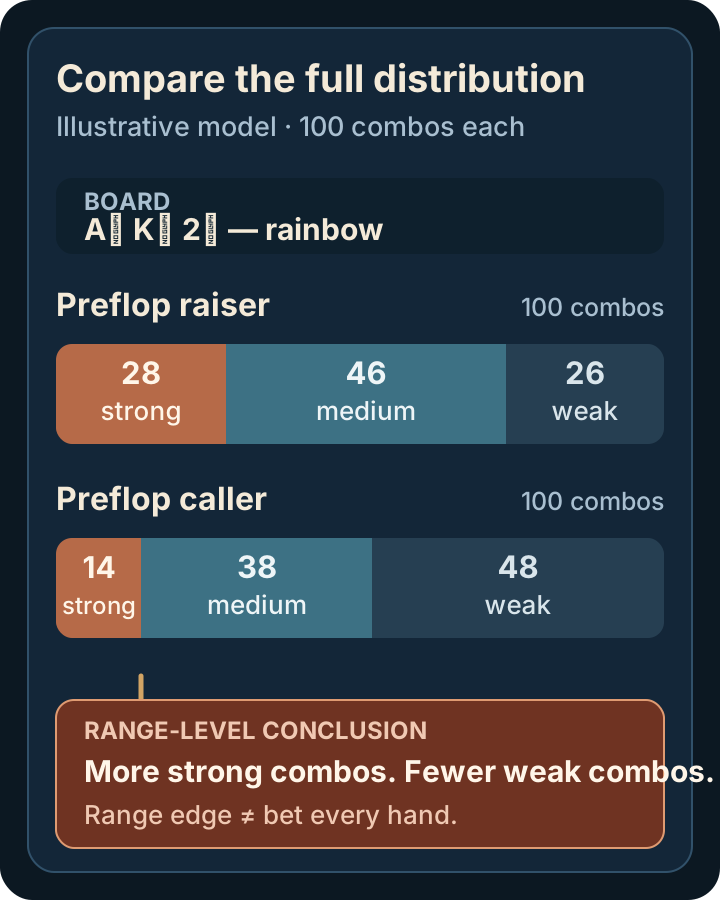
Imagine a constructed postflop model with 100 combinations in each player's range. On an ace-king-two rainbow flop, the preflop raiser's model contains 28 strong combinations, 46 medium combinations, and 26 weak combinations. The caller's model contains 14 strong, 38 medium, and 48 weak combinations.
In this illustration, the raiser's range is stronger overall because it has twice as many combinations in the strong bucket and far fewer in the weak bucket. That is a range-level observation. It does not say that every hand in the raiser's range should bet or that every hand in the caller's range should fold.
The buckets are deliberately simplified and are not solver output. A real review must define what strong, medium, and weak mean for the actual board, then test whether the preflop and postflop actions support the combinations placed in each group.
Can the player with range advantage still check?
Yes. Range advantage changes the menu of credible strategies; it does not choose one action for every holding. Some strong hands may bet for value, some medium hands may prefer pot control, and some weak hands may bluff or give up. Checks can also protect the checking range by keeping some strong hands in it.
Bet size matters too. A broad advantage may support frequent small bets in one model, while a concentrated nut advantage may support a more polarized large-bet strategy in another. Those are possibilities to compare after the session, not universal recipes.
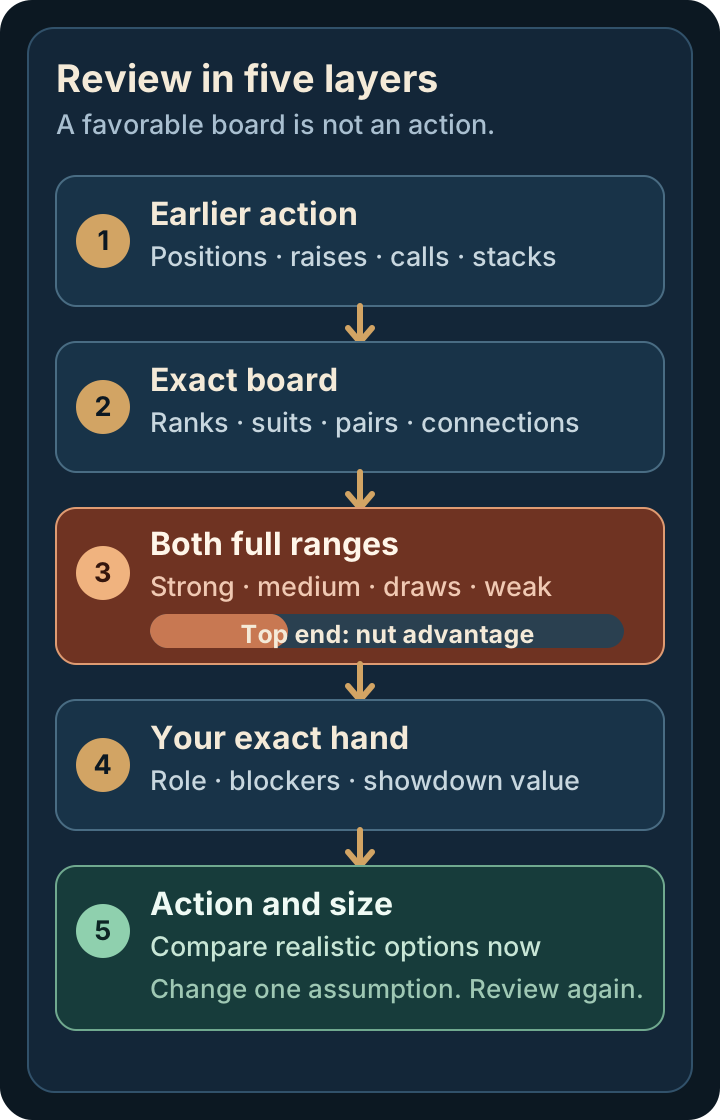
Move through five layers in order: the earlier action, the board, both full ranges, your exact hand, and the available actions. Skipping from “this board favors me” directly to “therefore bet” hides the decisions that still need to be made.
How can the board change who has range advantage?
Compare two flops after the same preflop sequence. An ace-king-two rainbow board may preserve more top-pair and overpair strength for a raiser whose range contains many big cards. A seven-six-five two-tone board may connect more evenly with a blind caller's suited and connected region.
That comparison is a starting hypothesis, not a rule about every opening and calling range. The positions, open size, stack depth, and player tendencies decide which hands were available before the flop. A caller who folds many suited connectors reaches seven-six-five differently from one who defends them.
Later cards can reverse or narrow the earlier advantage. A turn that completes a straight, pairs the board, or adds a third suit may strengthen a smaller part of one range sharply. Rebuild the strong, medium, draw, and weak regions rather than repeating the flop conclusion.
How should you review range advantage after a hand?
First, pause at the decision and rebuild the exact positions, stacks, pot, board, and prior actions. Second, write a plausible range for each player without looking at the showdown. Third, sort both ranges into a few useful groups: very strong hands, ordinary made hands, draws where relevant, and weak hands.
Fourth, compare the distributions. Ask who has more strong combinations overall, who owns more of the strongest combinations, and which hands are likely to continue against each realistic size. Fifth, place your exact hand back into the model and compare betting, checking, calling, raising, or folding as appropriate.
Finish with a sensitivity check. Widen one player's preflop range, remove a questionable strong hand, or change how often a medium hand reaches the decision. If the conclusion changes quickly, save the uncertain assumption instead of a rigid rule.
Which range-advantage mistakes are most common?
The first mistake is confusing your hand with your range. Holding top pair does not prove your full range is stronger, and holding a missed draw does not prove it is weaker. The second is treating range advantage as permission to bet every combination at one size.
Another mistake is counting only the strongest possible hands. That answers a nut-advantage question while ignoring the middle and bottom of both ranges. The reverse mistake is comparing average strength while ignoring that one player controls more of the hands willing to play a very large pot.
Avoid learning the range from the showdown. The revealed cards are one sample, not a map of everything each player could hold. Build the distributions from the information available at the decision, then use the result only after the first review is complete.
How can Tells Poker support a range-advantage review?
In the Tells Poker iOS app, Replay lets you move through a saved hand action by action with the seats, remaining stacks, board, pot, and recorded actions together. Pause before the decision you want to study so later cards and the showdown do not rewrite the ranges you would assign at that moment.
The Analysis tab provides a street-by-street structured second opinion. When the saved debrief includes range detail, it can show grouped opponent holdings and equity-versus-price context. Compare that explanation with the range you built yourself, and trace any disagreement back to the recorded facts or assumptions.
Tells is designed for completed-hand review and post-session study, not real-time assistance. If a card, size, position, or action is wrong, correct the record before relying on the range comparison. A precise-looking distribution cannot repair an inaccurate hand history.
Frequently asked questions
Does range advantage mean you should bet every hand?
No. Range advantage describes the full distribution, not the best action for every holding. Your exact hand, bet size, stacks, position, and the opponent's continuing range still matter.
Are range advantage and nut advantage the same?
No. Range advantage compares the overall strength of two ranges. Nut advantage compares their strongest credible hands. One player can have the range advantage while the other has more of the very strongest combinations.
Can a preflop caller have range advantage?
Yes. Some boards connect better with the caller's retained holdings than with the raiser's range, and later actions can shift the distributions further. The answer depends on the complete sequence.
Can you know range advantage exactly?
Only inside a fully specified model. In a real hand, ranges and frequencies are estimates. State the assumptions, compare the distributions, and test whether a reasonable change alters the conclusion.