
Pot control in poker means choosing a line that keeps the pot from growing faster than your hand, range, or position can support. It often involves checking one street or using a smaller bet, especially with a medium-strength made hand. The goal is not to avoid every difficult decision. It is to reach later streets with a pot size and range interaction you can still manage.
A smaller pot is not automatically better, and checking is not automatically pot control. You can give up value, allow free cards, or face a large delayed bet. Good pot control compares the value of betting now with the value of preserving weaker hands, limiting raise exposure, and keeping future branches open.
Review pot control only after the hand is complete. It is a way to organize tradeoffs, not a rule that produces perfect or definitive play. The right line still depends on ranges, board texture, stack depth, position, sizing, and the player tendencies you are willing to assume.
What does pot control mean in poker?
Pot control means influencing pot growth across a line. If several bets and calls can make the river pot much larger, checking a street or choosing a smaller size can reduce the amount at risk and leave more room to respond later. The concept applies to the whole sequence, not just one isolated action.
Medium-strength made hands are the usual example. They may be ahead of enough hands to continue but too weak to welcome a large raise or three streets of value betting. A controlled line can keep worse hands in the opponent's range while avoiding a pot that becomes dominated by stronger continuing hands.
That does not make pot control a hand-strength label. The same top pair can bet for value against one range and check behind against another. Start with the opponent's plausible hands and responses, then decide whether smaller pot growth serves the decision.
What is pot control not?
Pot control is not passive play for its own sake. A check that abandons clear value, lets many worse hands realize equity, or invites an uncomfortable river without a plan may simply be a missed bet. The fact that the pot stayed smaller does not prove the line was better.
It is also not a promise that the pot will remain small. You can check and face an overbet on the next street. You can make a small bet and get raised. In position, you may decline one bet but still face another decision later. Pot control changes the available branches; it does not control the opponent.
Finally, it is not the same as playing scared because the previous hand ended badly. A sound review names the value targets, the stronger hands, the draws, the raise risk, and the future cards. Fear names only the amount you might lose.
When can pot control be useful?
Pot control can be useful when your hand has meaningful showdown value but cannot comfortably play a large pot against the range that continues. It can also help when betting would fold many worse hands, get called mostly by stronger hands, or expose you to a raise that forces you to abandon useful equity.
The case becomes stronger when a check preserves dominated pairs, missed draws, or bluffs in the opponent's later-street range. It becomes weaker when many worse hands will call now, the board offers numerous free-card opportunities, or a check makes your range too easy to pressure.
Ask what the smaller pot buys. A clearer river decision is a reason. Keeping worse hands available is a reason. Avoiding a raise with a hand that hates being raised is a reason. “I did not want the pot to get big” is only a feeling until it is connected to ranges and future action.
How does position change pot control?
Position makes pot control more reliable because checking behind closes the current street. You know the opponent cannot bet after your check on that street, and you reach the next card without adding chips. You still need a plan for the next street, but one branch has been removed.
Out of position, checking does not close the action. The opponent can check behind, bet small, bet large, or choose a size that changes your plan. An out-of-position check may keep the pot smaller, but it also hands the sizing decision to the other player.
This is why “check for pot control” is incomplete advice. State who acts next and what you will do against likely sizes. A line is controlled only to the extent that its future branches are understood.
How much can one check change the final pot?
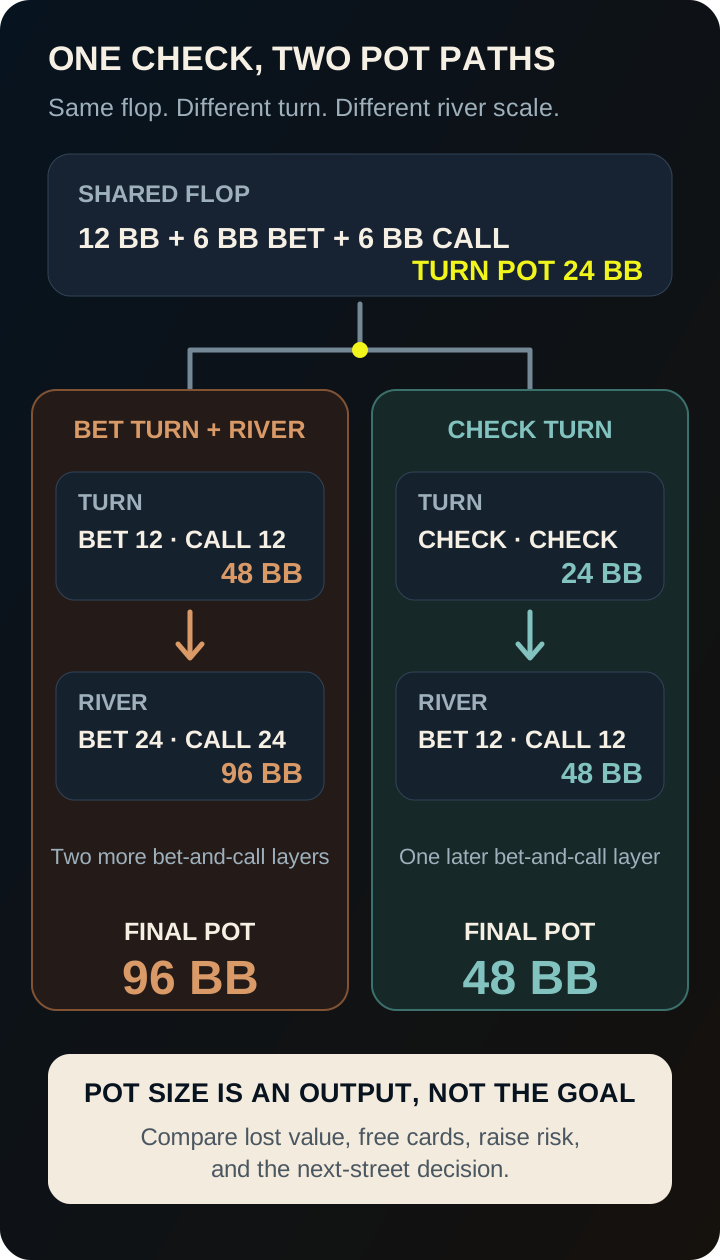
Consider a constructed heads-up hand with 12 BB in the pot on the flop. A half-pot bet of 6 BB gets called, so the turn begins with 24 BB. If the turn and river each repeat the half-pot bet-and-call pattern, the pot grows to 48 BB after the turn and 96 BB after the river.
Now keep the flop action the same but check the turn behind. The river begins with 24 BB instead of 48 BB. A half-pot river bet of 12 BB and a call create a final pot of 48 BB. One checked street halves the final pot in this simplified comparison because it removes one full bet-and-call layer.
The arithmetic shows leverage, not strategy. The check is attractive only if its lost turn value, free-card cost, and effect on both ranges are worth the smaller river pot. Pot size is one output of the line, not the sole objective.
How do you decide between betting and controlling the pot?
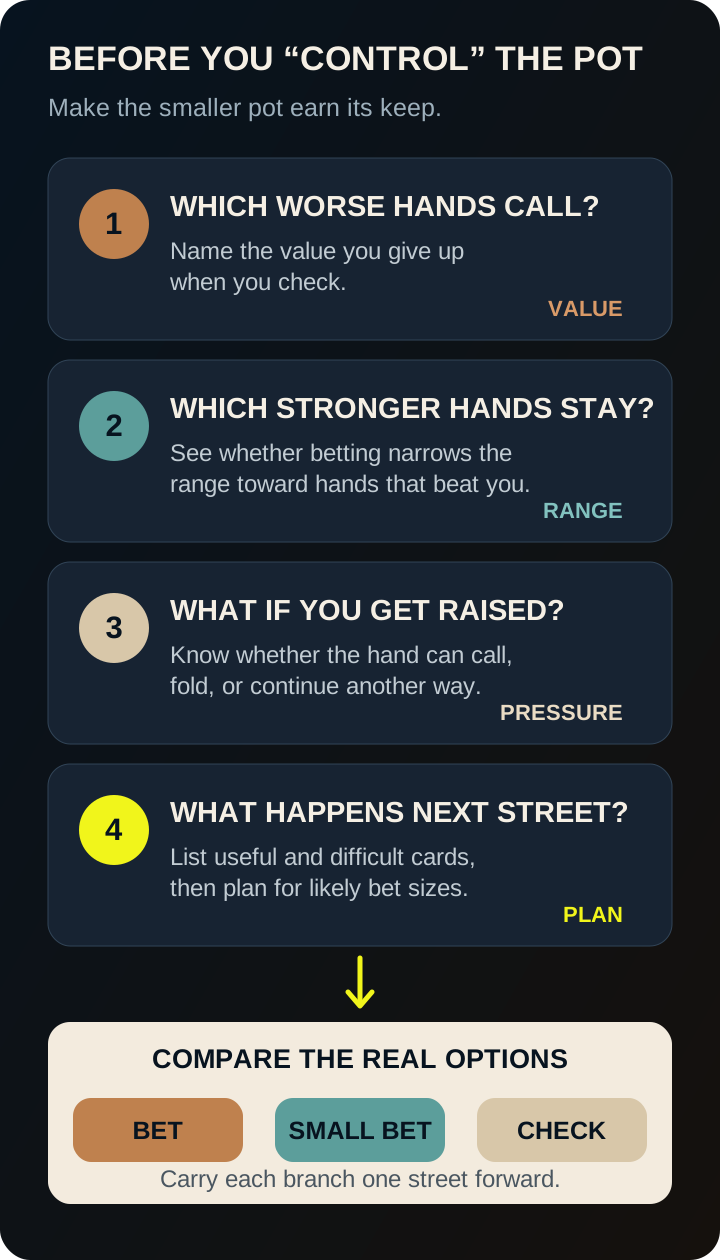
Begin with value. List the worse hands that can call a bet and how often they plausibly reach this street. Then list the better hands that continue and the hands that may raise. If worse calls are plentiful and a raise is manageable, betting may be more useful than controlling the pot.
Next test the check. Which worse hands stay in? Which draws receive a free card? Which river cards improve or weaken your relative hand strength? Which opponent bets can you call? A check becomes a plan only when it includes the next decision.
Finally compare sizes rather than treating bet versus check as the only choice. A smaller bet may collect value and limit pot growth, but it can also invite wider calls or raises. A larger bet may charge draws and extract more from strong bluff catchers, but it can narrow the continuing range toward hands that perform well against you.
Can pot control cost value?
Yes. Every check with a hand that could be called by worse gives up some immediate value. It may also let draws improve for free or allow an opponent to reach showdown with a hand that would have paid a bet. Pot control is therefore a trade, not a free safety feature.
A common review error is to notice only that a large pot felt uncomfortable. Reverse the question: if you check, which exact worse hands no longer put money in? If that list is long and the opponent rarely raises, betting may be the cleaner value line even with a non-nut hand.
Another error is using a small bet without knowing what it targets. A small size can be a value bet, a range bet, a blocker-style bet, or part of a balanced strategy. Calling every small bet “pot control” hides the reason the chips went in.
Does pot control apply to draws and strong hands?
Draws can use controlled lines when taking a free card or avoiding a raise preserves equity, but the label explains only one part of the choice. A draw may prefer betting because it can win immediately, build a pot for favorable runouts, or deny equity. Compare those branches rather than assuming every check is defensive.
Strong hands sometimes check too. A check can protect the checking range, invite later bluffs, or keep weaker hands from folding. That is not necessarily pot control in the narrow medium-strength sense; it may be deception or range construction. The visible action is the same, but the purpose differs.
Name the purpose before evaluating the result. If the goal was to keep worse hands in, ask whether those hands actually reach the next street and bet or call often enough. If the goal was to avoid a raise, ask whether the expected raising range truly made betting awkward.
How do stack depth and multiway pots affect pot control?
Stack depth sets the ceiling on future pot growth. At a low stack-to-pot ratio, even one bet can commit much of the effective stack, so a small change in the line can have a large effect. At a high ratio, a checked street may preserve more maneuvering room without ending the hand's strategic complexity.
In multiway pots, pot control becomes less predictable. A check may pass the decision to two opponents instead of one, and a bet can be called or raised from several seats. Your hand also needs to perform against more than one continuing range, so a smaller pot does not automatically make a marginal holding comfortable.
Use the effective stack for each relevant matchup and note whether your action closes the betting. Those two facts determine how much control your chosen line actually provides.
How should you review a pot-control decision after the hand?
First rebuild the pot, stacks, positions, board, and exact action before the decision. Second, classify your hand by what it can get called by, what beats it, and how it responds to a raise. Third, compare at least three branches: check, the size you used or considered, and one meaningfully different size.
For each branch, carry the line one street forward. Estimate the pot after a call, list the likely next cards, and decide which opponent actions remain. Keep uncertain reads labeled as assumptions. A useful conclusion sounds like, “Checking turn keeps weaker pairs and missed draws available for a river decision,” not, “Top pair should always control the pot.”
End with one portable cue. For example: “Before checking for pot control, name the worse hands that would have called.” The cue preserves the reasoning without pretending that every similar-looking board deserves the same line.
How can Tells Poker support a pot-control review?
In the current Tells Poker iOS app, Replay steps through the saved action with the pot, board, wagers, folds, and remaining stacks visible. Use it to pause before the disputed check or bet and verify how quickly the pot had already grown.
The Analysis tab can provide a structured second opinion around the key decision, including street-by-street review, range reasoning, an alternative line, and deterministic spot math when the recorded decision supports it. Compare that output with your own assumptions about worse calls, raises, and future cards.
Tells is designed for completed-hand capture and post-session study, not real-time assistance. Its analysis is not perfect or definitive play; it is another way to organize the line and bring a clearer question to your next review.
Frequently asked questions
Is checking always pot control?
No. A check may control pot growth, give up, induce a bet, protect a checking range, or take a free card. The purpose and the likely next branches determine whether pot control is a useful description.
Which hands usually benefit from pot control?
Medium-strength made hands are the common candidates because they can beat part of the opponent's range but may not want three large betting rounds. The exact choice still depends on ranges, board, position, and stacks.
Can you control the pot from out of position?
You can choose lines that limit your own contribution, but an out-of-position check gives the opponent a chance to bet. Pot control is therefore less reliable when your action does not close the street.
Does pot control mean using small bets?
Sometimes, but not automatically. A small bet must have a clear target and response plan. Without that, calling it pot control can hide whether the size earns value, folds better hands, or creates an awkward raise decision.