
Showdown value in poker is a hand's ability to win if no more chips go into the pot and the remaining players reveal their cards. A hand has showdown value when it can beat a meaningful part of the opponent's range without needing that opponent to fold.
Showdown value is relative, not a permanent label. Ace-high may have useful showdown value against missed draws, no showdown value against a range made entirely of pairs, and enough strength to value-bet against a different range that can call with worse. The board, action, and plausible holdings determine the role.
Use showdown value during post-session review to compare checking with betting. Ask what worse hands call, what better hands fold, and what you give up when hands you already beat do not continue. The comparison organizes your assumptions; it cannot establish one universally correct play.
What does showdown value mean in poker?
A hand has showdown value when checking can still win against some realistic hands the opponent holds. The concept matters most when checking closes the action, especially on the river, because you can compare an immediate showdown with a bet that may be called or folded to.
The word value can be misleading. Showdown value does not mean the hand is strong in absolute terms, and it does not mean the hand should bet for value. It only means the hand is not empty when checked: some worse hands can reach showdown and lose to it.
Describe the range your hand beats instead of using the label alone. “Ace-high beats the missed draws and lower high-card hands in this river checking range” is useful. “Ace-high has showdown value” is incomplete until the action and opponent range are attached.
How is showdown value different from a value bet or a bluff?
A value bet expects enough worse hands to call. A bluff expects enough better hands to fold. A showdown-value hand can already beat part of the opponent's range by checking, so a bet must be compared with that existing path to the pot.
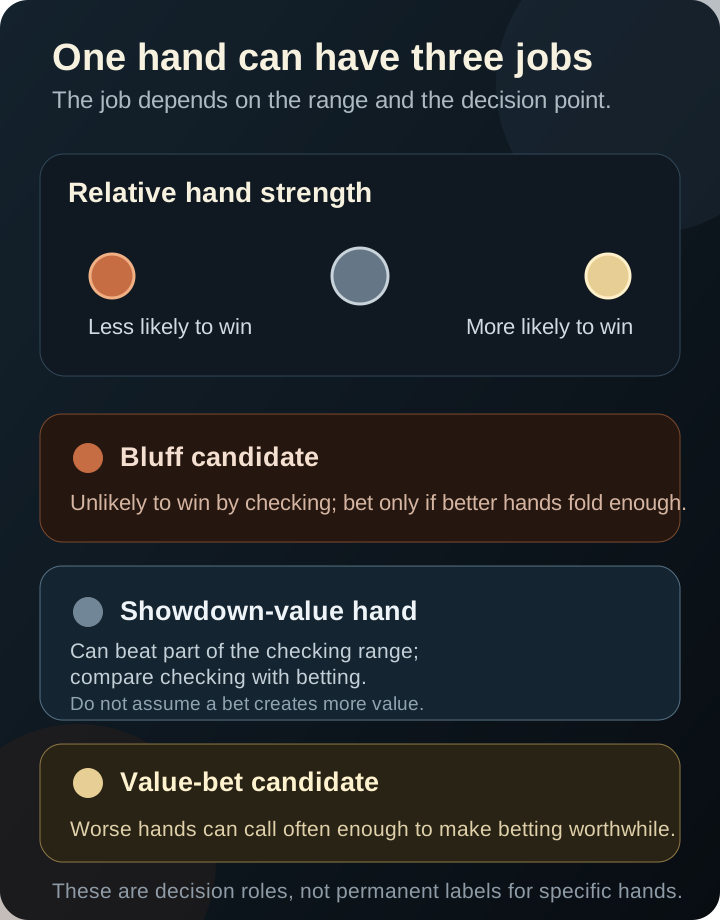
This creates three practical roles. A weak hand that almost never wins when checked may be considered as a bluff. A medium hand that beats missed draws or weaker made hands may prefer to check. A stronger hand that can receive calls from worse may become a value-bet candidate.
The boundaries move from one spot to another. Second pair can earn a bet when many weaker hands continue, become a showdown-value check against a tighter range, or serve as a bluff catcher after facing a polarized bet. Name the action and range before naming the role.
Why does showdown value change from one hand to another?
Showdown value changes because ranges change. Position and preflop action decide which hands can begin the postflop line. Each check, bet, call, and raise filters that set. By the river, the hands still available may be very different from the range that saw the flop.
The board changes which holdings are ahead. A low pair may beat missed overcards on one runout but lose to several completed draws on another. A card in your hand can also remove opponent combinations, changing how much of the remaining range you beat.
Player behavior matters as an assumption, not as certainty. If an opponent checks many medium-strength hands, your hand may beat less of the checking range. If that opponent bets those hands and checks missed draws, the same holding may reach showdown against a weaker set. Keep more than one plausible model when the tendency is unknown.
How can showdown value change a river bluff?
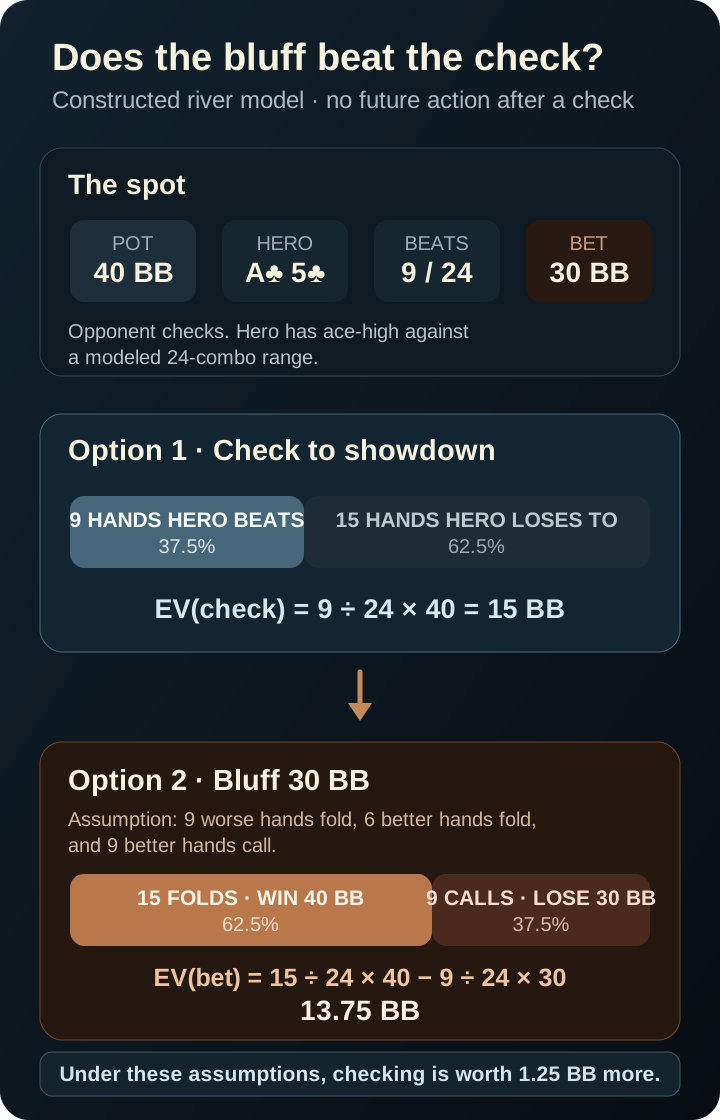
Use a fixed heads-up river scenario. The opponent checks a 40 big blind pot to the button. The button holds A♣5♣ on K♦Q♠8♥3♣7♦, so the hand is ace-high. The estimated 24-combination checking range contains nine missed draws or lower high-card hands that ace-high beats and fifteen pair-or-better hands that beat ace-high. Ignore ties for this illustration.
Checking reaches showdown immediately. Hero wins the 40 big blind pot against nine of twenty-four combinations, so the modeled incremental value of checking is 9 divided by 24 times 40, or 15 big blinds.
Now compare a 30 big blind bluff. Suppose all nine worse hands fold, six of the better hands fold, and nine better hands call. The bet wins 40 big blinds fifteen times and loses the new 30 big blinds nine times. Its modeled value is 15 divided by 24 times 40, minus 9 divided by 24 times 30, or 13.75 big blinds. Under those assumptions, checking is worth 1.25 big blinds more.
The bet does make six better hands fold, but it also risks 30 big blinds against the stronger hands that continue. The nine weaker folds do not create a new win; checking already beat them. If seven better combinations folded instead of six, the modeled bet would rise to about 16.67 big blinds and overtake the check. The useful question is which fold assumption the hand can actually support.
When should showdown value check rather than bet?
Checking becomes attractive when the hand beats a meaningful part of the opponent's range but cannot expect enough worse hands to call a bet. It also gains appeal when better hands are unlikely to fold, because the bet would isolate the hand against the range that already beats it.
A check can also protect the checking range by allowing it to arrive at showdown with more than its weakest hands. That strategic benefit should not become a slogan. First compare the direct purposes: worse calls, better folds, the amount risked, and the value already available by checking.
Before the river, checking does not guarantee a showdown. Future cards and bets remain, so equity realization, position, and the opponent's next action matter. The same principle still helps, but the comparison needs more branches than the closing river example.
Can you bluff with a hand that has showdown value?
Yes. A hand with showdown value can become a profitable bluff when enough better hands fold and the bet earns more than checking. The standard is demanding because the hand gives up an existing chance to win whenever it chooses the bet instead.
Start by listing the better hands that can realistically fold. Then separate them from the worse hands that would lose at showdown anyway. Counting every fold as a success exaggerates the gain from bluffing because some of those folds only replace a pot you could already win by checking.
Card removal may improve or damage the bluff. A blocker that removes likely calls can help. A card that removes missed draws or other worse hands can reduce the hand's showdown value. Trace the exact combinations rather than treating any blocker as automatically favorable.
Is showdown value the same as equity?
No. Equity is a quantified share of possible outcomes against a stated hand or range. Showdown value is a decision description: the hand can win often enough without betting that checking deserves serious consideration. Equity can help measure that value, but the terms do different jobs.
On a closing river action with no ties, the share of the opponent range your hand beats can estimate its check value. Earlier in the hand, equity also includes future runouts, while showdown may not be reached for free. A hand can have equity without being able to realize all of it through checking.
Neither concept decides the action alone. A bet can outperform a check because worse calls or better folds. A check can outperform a bet because the hand already wins enough and the continuing range is too strong. Compare the available actions from the same decision point.
What are the most common showdown-value mistakes?
The first mistake is checking automatically because a hand can sometimes win. Showdown value is not a ban on betting. The second is betting automatically because the hand feels weak, without identifying any better hands that fold or worse hands that call.
Another mistake is counting every opponent fold as value created by a bluff. When a worse hand folds, the bettor may only be replacing a showdown win it already had. Separate folds from better hands and folds from worse hands before praising the bet.
Avoid using the revealed hand to rewrite the range. Seeing one missed draw does not prove the entire checking range was weak, and seeing one pair does not erase the missed draws. Rebuild the decision with the information available before showdown.
How do you review showdown value after a hand?
Reconstruct the hand through the decision: positions, effective stack, board, pot, and every earlier action. Hide the result. Build the opponent's range at that point, then split it into hands your holding beats, ties, and hands that beat you.
Estimate the value of checking. If checking ends the hand, multiply the pot by the share you beat and account for ties when they exist. Then test a bet by listing worse calls, better folds, stronger continues, the amount risked, and any raise branch that matters.
Change one uncertain assumption at a time. Move one better hand from call to fold, add a thin call from a worse hand, or remove a missed draw that your cards block. Save a conditional lesson such as, “This ace-high should check unless at least seven of the modeled better combinations fold to 30 big blinds.”
How can Tells Poker support a showdown-value review?
Open the completed hand in the Tells Poker iOS app and stop Replay on the decision frame. The replay keeps the saved seating order, remaining stacks, community cards, pot, and wagers in one sequence, giving you a stable record for sorting the opponent range into hands you beat, tie, and lose to.
Analysis offers a structured second opinion on the saved hand. Depending on the recorded decision, the debrief can include street-by-street reviews, a range breakdown, and deterministic spot math. Compare its assumptions with your check-versus-bet model, then locate any disagreement in the cards, action, size, or proposed range.
Use Tells only after the hand is complete; it is a study workflow, not live-action advice. Correct an inaccurate card, stack, or wager before relying on a close comparison. When a fact cannot be recovered, preserve that uncertainty in the lesson instead of manufacturing an exact answer.
Frequently asked questions
Does any pair have showdown value?
Not automatically. A pair has showdown value only relative to the range it faces. It may beat many missed draws in one spot and lose to nearly every hand that reaches another spot.
Does showdown value mean you should always check?
No. A value bet may earn calls from worse, and a bluff may fold enough better hands. Compare the expected result of each action with the value already available by checking.
Can ace-high have showdown value?
Yes. Ace-high has showdown value when the opponent can reach showdown with enough missed draws or lower high-card hands. It has little or none against a range made almost entirely of pairs or better.
Is checking a sign of a weak range?
No. A checking range can contain weak hands, medium-strength showdown-value hands, and strong hands. The action alone does not reveal one exact holding or one fixed strength band.