A semi-bluff in poker is a bet or raise made with a hand that is probably behind now but has meaningful ways to improve if called. The action can win immediately when a better hand folds, while draws and overcards can still create a winning hand on a later street.
That two-part structure separates a semi-bluff from a pure bluff. A pure bluff depends mainly on folds because it has little useful equity when called. A semi-bluff combines fold equity with hand equity, but neither part automatically makes the bet profitable.
Use semi-bluffing as a post-session decision framework, not a license to bet every draw. Rebuild the range, estimate which better hands can fold, count clean improvement cards, and compare the full betting branch with checking—including what happens when the opponent calls or raises.
What does semi-bluff mean in poker?
A semi-bluff is an aggressive action with a hand that usually does not want an immediate showdown but is not finished when called. The hand has two ways to succeed: the opponent can fold now, or the hand can improve later and win a larger pot.
Common candidates include flush draws, open-ended straight draws, combination draws, and some overcard-plus-backdoor hands. The label depends on the matchup, not the visual shape of the cards. A nut flush draw may already be ahead of a weaker draw, while a small pair may be behind a calling range even though it is currently a made hand.
The useful review question is therefore not simply “Did I have a draw?” Ask whether the hand was behind the range that continued, how much equity it retained when called, and which better hands the chosen size could realistically fold.
How is a semi-bluff different from a value bet or pure bluff?
A value bet expects enough worse hands to call. A pure bluff expects enough better hands to fold and has little chance to recover when called. A semi-bluff also targets folds from better hands, but it keeps a meaningful called branch because it can improve.
Those categories describe the purpose of an action against a range. They are not permanent labels attached to a hand. The same ace-high flush draw can be a semi-bluff against top pair, a value-heavy bet against a lower draw, or a check against a range that will rarely fold and often raise.
Do not force every bet into one perfectly clean box. Some bets earn value from one part of a range, fold out another part, and retain equity against the strongest continues. The categories help you identify where the expected value comes from; the full range decides which description matters most.
Why can semi-bluffing be stronger than pure bluffing?
When a pure bluff is called, it often has only a narrow escape. A semi-bluff can be called and still win on later cards. That retained equity reduces the cost of the called branch and can make an aggressive line viable with a lower fold rate than a hand with almost no outs.
The draw also creates future value when it completes. A turn semi-bluff may build a pot that your made straight or flush can win on the river. But this upside is conditional: the out must be clean, the opponent must pay often enough after it arrives, and the board must not create a stronger hand at the same time.
Equity is not free permission to bet. A draw that checks can also realize part of its equity. The correct comparison is the extra value created by folds and future pot growth minus the cost of betting, getting called by a strong range, and facing raises that may prevent the draw from seeing the next card.
What does a worked semi-bluff example show?
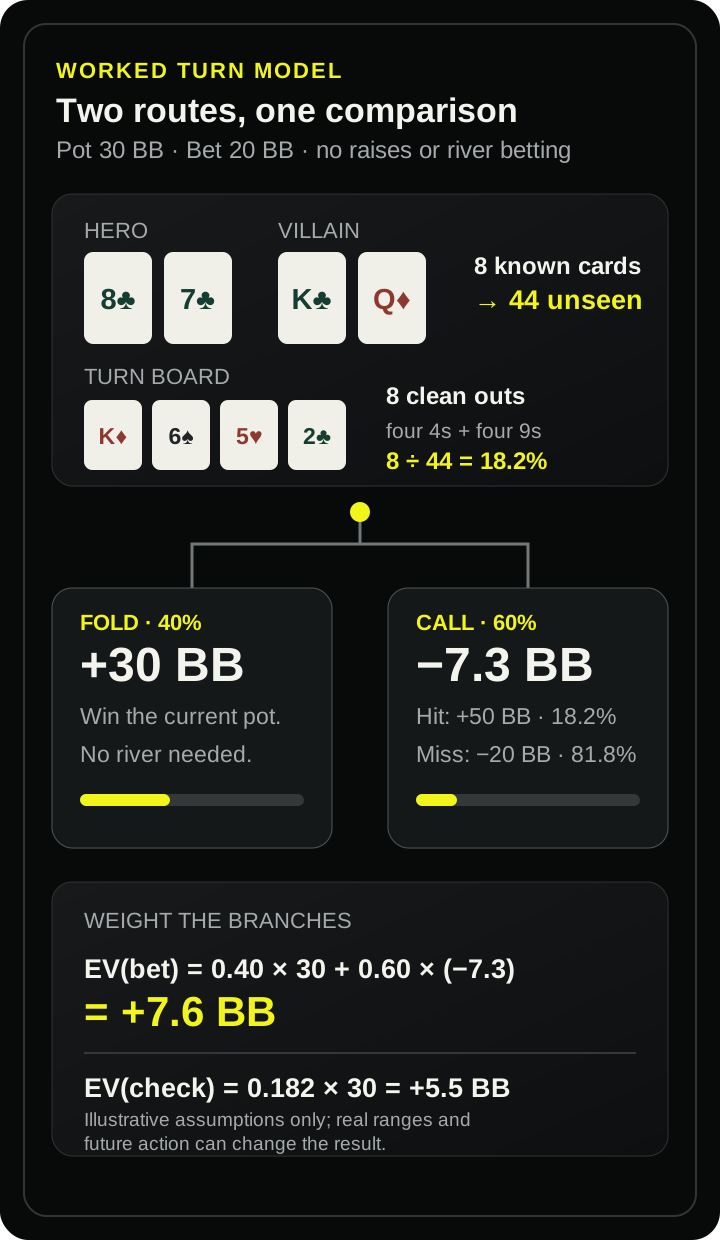
Consider a deliberately simplified heads-up turn model. You hold 8♣7♣ on K♦6♠5♥2♣ against K♣Q♦. The pot is 30 big blinds. Your eight and seven are behind top pair, but any four or nine makes a straight on the river. With eight known cards, 44 cards remain unseen, and eight of them complete the straight. That is 8 divided by 44, or about 18.2 percent.
Suppose you bet 20 BB, the opponent folds 40 percent of the time, calls 60 percent, never raises, and there is no river betting. A fold wins the current 30 BB. When called, a hit earns 50 BB of net profit from the current pot plus the opponent's 20 BB call, while a miss loses your 20 BB bet. The called branch is about 18.2 percent times 50 BB minus 81.8 percent times 20 BB, or negative 7.3 BB.
Weight both branches: 40 percent times 30 BB plus 60 percent times negative 7.3 BB equals about positive 7.6 BB. Checking is worth about 18.2 percent of the 30 BB pot, or 5.5 BB, under the same artificial no-more-betting assumption. The bet wins this constructed comparison because fold equity offsets a losing called branch—not because every open-ended draw should bet.
Which draws make good semi-bluff candidates?
Good candidates combine useful equity with a credible fold target. Strong flush draws and open-ended straight draws often retain several clean outs. Combination draws can have even more ways to improve. Overcards and backdoor draws may qualify when they add enough equity and interact well with the range represented by the bet.
Card quality matters. A draw to the nuts is less likely to improve into the second-best hand. Overcards are cleaner when pairing them does not complete a likely straight or flush. Blockers can also affect which made hands and draws remain available, but card removal should refine a range rather than replace it.
Prefer candidates that can continue across multiple responses. If a hand must fold to every raise, rarely gets paid when it improves, and cannot make a better hand fold, its draw may look attractive while its betting branch remains fragile.
Which hands are you trying to fold?
A semi-bluff needs better hands that can actually fold. Name them. They might be weak pairs, ace-high hands, or capped one-pair holdings that cannot continue against the size and board. If the opponent's range is concentrated around strong made hands that will call, fold equity may be too small to support the bet.
Folding worse hands is not the main bluffing benefit. If your draw already beats a weaker draw, making that hand fold may deny some equity, but it does not accomplish the central job of a bluff: removing hands that currently beat you. Review the folding range in relation to your current hand strength.
Earlier action constrains the answer. Position, preflop ranges, previous bet sizes, and the current board determine whether your story is credible. Do not begin with a desired fold percentage and invent enough folding hands to reach it. Build the range first, then estimate its response.
How do position and stack depth change a semi-bluff?
Position changes how easily a draw can realize equity after the first action. In position, you may check behind on a later street, choose whether to take a free card, or make the final betting decision. Out of position, a called semi-bluff can lead to another difficult decision before showdown.
Stack depth determines how much pressure remains and how expensive a raise can become. With shallow effective stacks, a bet may commit a large share of the chips and leave little room for later decisions. With deeper stacks, future implied value may grow, but so can the cost of building a large pot with a non-made hand.
Measure the pot and effective stack before choosing a size. A semi-bluff should be part of a complete line: what happens after a call on a blank, after the draw completes, and after the opponent raises? If the plan ends at the first bet, the review is incomplete.
When is checking a draw better than semi-bluffing?
Checking can be better when the opponent rarely folds, when your draw realizes equity cheaply, when a raise would force you away from substantial equity, or when your hand has enough showdown value to avoid turning it into a bluff. Not every draw needs fold equity to justify continuing.
A check can also protect your checking range. If every strong draw bets, checks may become concentrated around hands that cannot withstand pressure. Keeping some draws in the checking line gives that range ways to improve and continue on later streets.
Compare specific alternatives rather than applying “bet your draws” as a rule. Estimate the value of checking, a smaller bet, and a larger bet against the same range. The best line can change with one stack, one board card, or one expected response.
How should you review a semi-bluff after the hand?
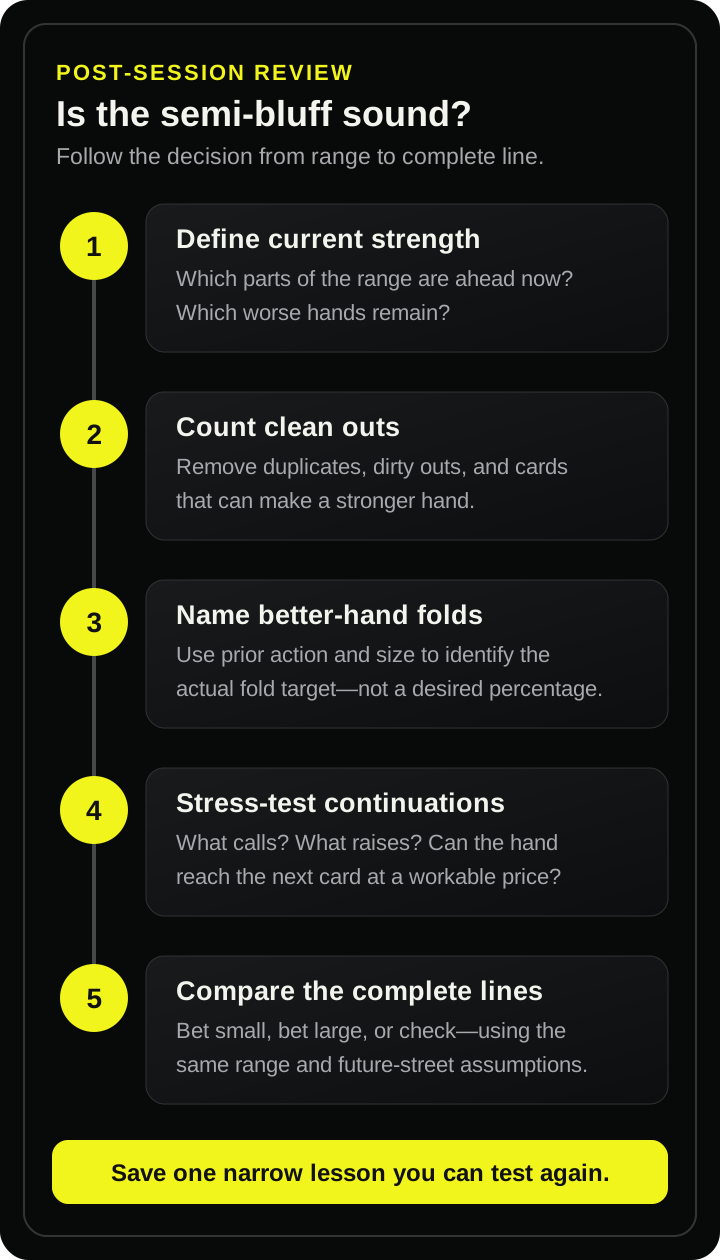
Rebuild the decision without looking at the result. Record the pot, effective stack, positions, board, action, and exact size. Then state whether your hand was ahead or behind each important part of the opponent's range before calling it a semi-bluff.
Count clean outs and separate them from dirty or duplicated outs. Build the folding range from the prior action. Compare the bet with checking, then stress-test a call and a raise. If the conclusion changes after a small adjustment to the fold rate, save that sensitivity as part of the lesson.
Finish with one portable sentence, such as “On turns where my open-ended draw can check to a free river, require a clear better-hand fold target before betting.” A narrow rule preserves the useful logic without pretending one hand solved every similar spot.
How can Tells Poker support a semi-bluff review?
Tells Poker is built for completed-hand study, not real-time assistance. After the hand, use Replay to verify the action order, pot, board, and stack changes before judging whether the aggressive action was a semi-bluff.
In the Analysis tab, the current debrief can organize the key decision, deterministic spot math, range groups when available, street-by-street review, and an alternative line. Treat that output as a structured second opinion. It cannot know an opponent's hidden cards or turn an estimated range into certainty.
Use the saved hand to ask a precise question: “Which better hands could this size fold, and how did my draw perform against the range that continued?” That question connects fold equity, clean outs, and future action without grading the choice by the river card that happened to arrive.
Frequently asked questions
Is a semi-bluff still a bluff?
Yes. A semi-bluff tries to fold hands that currently beat it, but it retains meaningful equity when called. The “semi” describes the backup route through improvement; it does not mean the action is half-hearted or automatically low risk.
Can you semi-bluff on the river?
No. Once every community card is dealt, a called hand cannot improve on a later street. A river bet is evaluated as value, a bluff, or a mixed-purpose bet against different parts of a range, but not as a semi-bluff based on future cards.
Does every flush draw make a good semi-bluff?
No. The opponent may not fold better hands, the draw may be dominated, a raise may be costly, or checking may realize equity more efficiently. Judge the complete betting and checking branches rather than the draw label alone.
Can a made hand be used as a semi-bluff?
Yes. A weak pair can be behind the range that continues while still having outs to two pair or trips. If the bet aims to fold better hands and the hand has meaningful improvement equity when called, the same semi-bluff logic can apply.