
Equity denial in poker means making an opponent fold a hand that still had a chance to win if play continued. When that hand folds, it gives up all of its remaining equity in the pot. A bet can therefore benefit from denying future improvement even when the folding hand is currently behind.
The idea is often called protection, but equity denial is the more precise lens. You are not protecting a made hand from every possible card. You are offering a price, causing part of a range to fold, and preventing those folded hands from realizing their share of future outcomes.
Use equity denial during post-session review as one benefit inside a complete comparison of betting and checking. It is not a rule that says every vulnerable hand should bet, and it is not a substitute for estimating which worse hands fold, which better hands continue, or how the next street will play.
What does equity denial mean in poker?
Equity is a hand's share of the possible outcomes against another hand or range. Realizing equity means reaching those outcomes through the rest of the hand. If a player folds, that player's realized equity becomes zero because the hand can no longer win the pot.
Equity denial is the value created when your action causes that fold. Imagine you are ahead on the turn, but an opponent has six clean river cards that would move ahead. If your bet makes that exact hand fold, those six winning rivers no longer matter. You win the current pot without allowing the draw to reach the river.
This does not mean you know the opponent's cards. In live play you face a range. The review question is how much equity the folding portion of that range would have retained if you checked, and whether your chosen size is likely to fold that portion without creating larger problems against the continuing range.
How is equity denial different from fold equity?
Fold equity is the value your bet gains from the chance that an opponent folds. Equity denial describes what the folding hands surrender: their remaining chance to win. The concepts overlap, but they answer different questions.
A pure bluff may have substantial fold equity because it wins whenever enough better hands fold. A strong made hand may also deny equity when worse hands fold, even though folding those hands can reduce the value it receives from calls. The first lens asks how often the bet wins immediately. The second asks what future winning chance disappears from the folded region.
Keep both ideas inside a full expected-value comparison. A bet can deny meaningful equity and still be worse than checking if it folds out only hands you wanted to keep in, gets action mainly from stronger hands, or exposes you to an expensive raise.
Why can a worse hand still have valuable equity?
Being behind now is not the same as having no chance to win. Overcards can pair, draws can complete, and a weak made hand can improve to two pair or trips. A hand that would lose at the current showdown may still own a meaningful share of the possible river outcomes.
That share matters most when it can be realized cheaply. If you check and the opponent sees the next card for free, many behind hands keep all of their chance to improve. If you bet and those hands fold, you remove that chance. If they call, however, no equity has been denied yet; you have only built a larger pot against the range that continued.
This is why the phrase “bet for protection” is incomplete. A protection story needs a fold target. Name the worse hands, estimate whether they fold to the proposed size, and describe the equity they would otherwise carry forward.
What does a worked equity-denial example show?
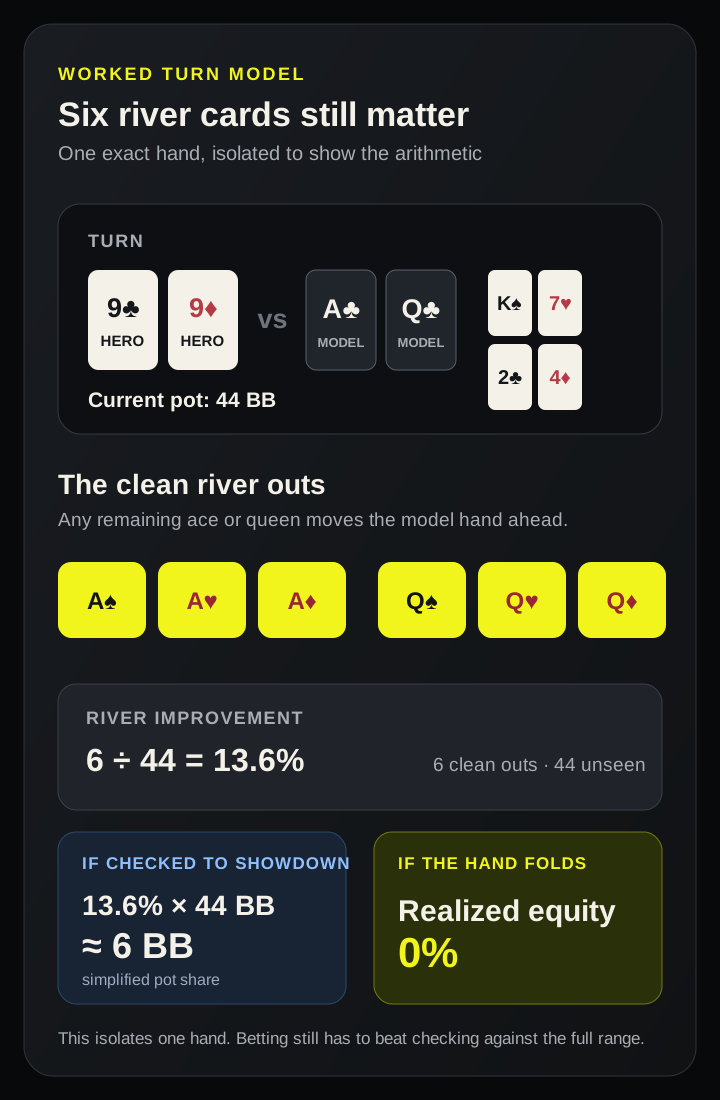
Consider a constructed heads-up turn model. You hold 9♣9♦ on K♠7♥2♣4♦, and the current pot is 44 big blinds. To isolate the arithmetic, suppose the opponent has A♣Q♣ and there will be no more betting if you check. Your nines are ahead, while any remaining ace or queen would move the opponent ahead on the river.
Eight cards are known: your two cards, the opponent's two cards, and four board cards. That leaves 44 unseen cards. Three aces and three queens remain, so the opponent has 6 clean outs. The river improvement chance is 6 divided by 44, or about 13.6 percent.
If both hands always reach showdown, that hand's simplified share of the current 44 BB pot is about 13.6 percent times 44 BB, or roughly 6 BB. If your turn bet makes A♣Q♣ fold, its realized equity becomes zero. The example illustrates the equity removed from one folding hand; it does not prove that betting is best against the opponent's entire range.
Which hands are you trying to fold?
Useful equity denial usually comes from folding hands that are behind now but live enough to improve. That region may include overcards, gutshots, weak flush draws, or small pairs with a few ways to move ahead. The exact candidates depend on the board and the range created by earlier action.
Do not count folds from hands that had almost no chance to win as a major protection benefit. Making a nearly dead hand fold changes little. Also do not celebrate every worse-hand fold: if that hand would have called a smaller value bet or bluffed later, forcing it out can give up a different source of value.
A good review divides the opponent's range into at least three groups: worse hands that fold, worse hands that continue, and better hands that continue or raise. Equity denial lives in the first group. Value comes from the second. Risk concentrates in the third.
How do position and board texture change equity denial?
Equity is easier to realize when a player can reach future cards and showdowns without facing difficult decisions. Position often helps because the player acting last can check behind, control the final action, and respond after seeing what the opponent does. Out of position, the same draw may face another bet before reaching showdown.
Board texture changes both the amount of vulnerable equity and the credibility of a bet. Connected boards create more draws and pair-plus-draw hands. Dry boards may leave the folding region with very little equity. A turn card can add new draws, remove old ones, or shift which range contains the strongest hands.
Review the actual street rather than attaching a permanent label to the flop. Ask what improved, what lost outs, and which hands the action still allows. Equity denial is always specific to the current range and the cards still to come.
Does a bigger bet always deny more equity?
A bigger bet may cause more folds, but it does not automatically create a better decision. Larger sizes risk more chips, can push all weaker hands out, and may leave the continuing range concentrated around stronger hands and high-equity draws.
A smaller bet can sometimes deny the same target region at a lower price while still receiving calls from worse made hands. In other spots, a small size gives draws an attractive call and denies little. The right comparison is not “large bets protect better.” It is which size produces the most useful mix of folds and calls for the amount risked.
During review, write the expected response beside each candidate size. If you cannot name which additional hands fold to the larger size, you have not yet described the extra equity denial you are paying for.
When can checking be better than denying equity?
Checking can be better when the opponent's folding region has little equity, when worse hands are likely to bluff later, when betting isolates you against stronger hands, or when your hand can comfortably respond on many rivers. A free card is a cost, not an automatic disaster.
Strong hands may check to keep weaker hands and bluffs in the pot. Medium-strength hands may check because they cannot get enough value from calls and do not want to face a raise. Draws may check because their own equity realizes well and a bet cannot fold the relevant made hands.
The clean question is comparative: what do betting and checking each earn across the range and future branches? Equity denial strengthens the betting side of that comparison. It never completes the comparison by itself.
How should you review an equity-denial decision?
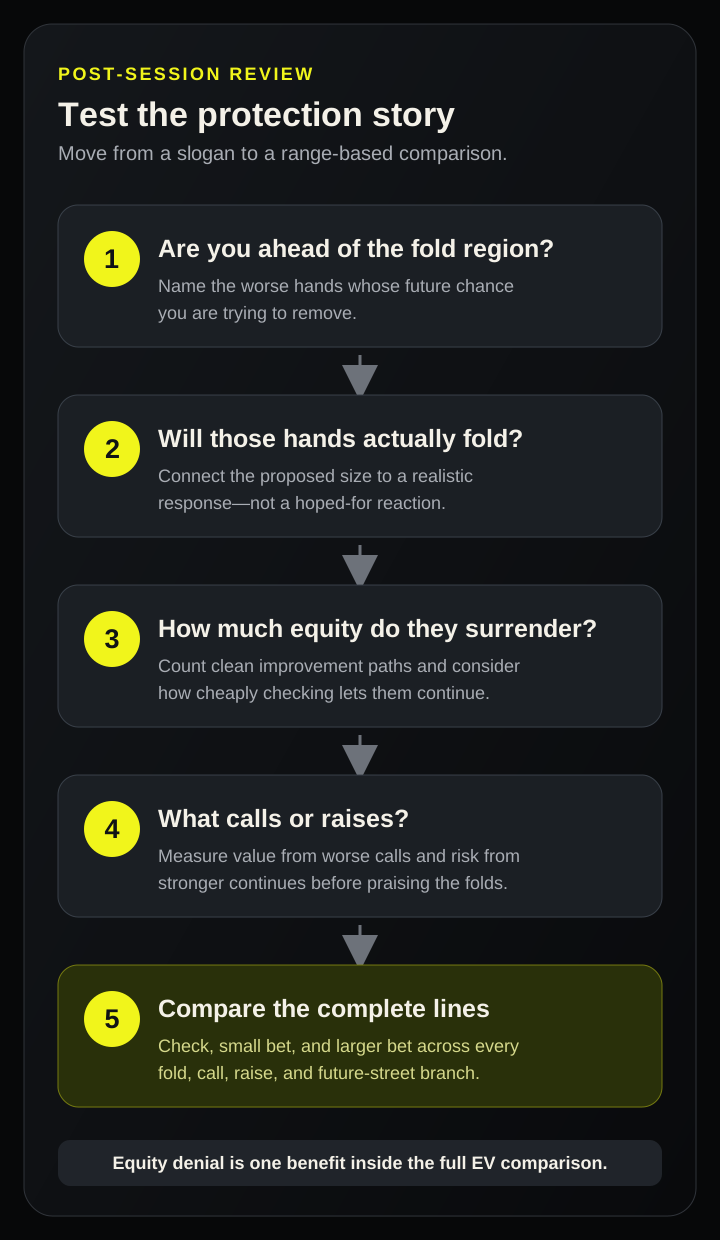
Start by rebuilding the hand through the decision street. Record the pot, effective stack, positions, board, and exact action. Then build the opponent's range from earlier streets before dividing it by response to your candidate bet.
For the hands expected to fold, ask how much equity they had and whether checking would let them realize it cheaply. For the hands expected to call or raise, ask whether your hand is gaining value, creating a difficult later-street pot, or paying too much to remove only a small slice of future outcomes.
Finally, compare at least two sizes with checking. Save one portable lesson such as “On dry turns, name the worse hands with real river equity before betting for protection.” A narrow lesson is easier to test in later hands than “always protect one-pair hands.”
How can Tells Poker support an equity-denial review?
Tells Poker is built for completed-hand study, not real-time assistance. Record the hand after play, then use Replay to verify the action order, board, pot, and stack changes before you analyze the protection story.
In the Analysis tab, the current debrief can organize the pivotal decision, street-by-street review, alternative line, and deterministic spot math. When range groups and equity are available, use them as a structured second opinion on which hands might fold, call, or raise—not as perfect knowledge of an opponent's cards.
The goal is a sharper question for your next review: “Which worse hands did this size fold, and how much equity did they actually give up?” That question keeps equity denial connected to the recorded hand instead of turning protection into a slogan.
Frequently asked questions
Is equity denial the same as protection in poker?
They often describe the same benefit, but equity denial is more precise. It refers to making a hand fold before it realizes its remaining chance to win. Protection is useful shorthand only when you can identify the hands that fold and the equity they surrender.
Can a value bet also deny equity?
Yes. One bet can earn calls from worse hands while causing other worse hands to fold their remaining equity. The tradeoff matters: folding too much of the weak region can reduce value even while it increases equity denial.
Does a caller lose its equity?
No. Equity is denied only to the hands that fold. A calling hand keeps its chance to win and may realize more or less of that chance depending on future action, position, stack depth, and the remaining cards.
Should you always bet when your hand is vulnerable?
No. Compare betting with checking across the full range. Checking may keep bluffs and weaker calls available, avoid a raise, or reach future streets efficiently. Vulnerability is one input, not an automatic betting command.